Author: Ryan Miller

  • Sticking the Landing: What gymnasts teach every athlete about routines

    Sticking the Landing: What gymnasts teach every athlete about routines

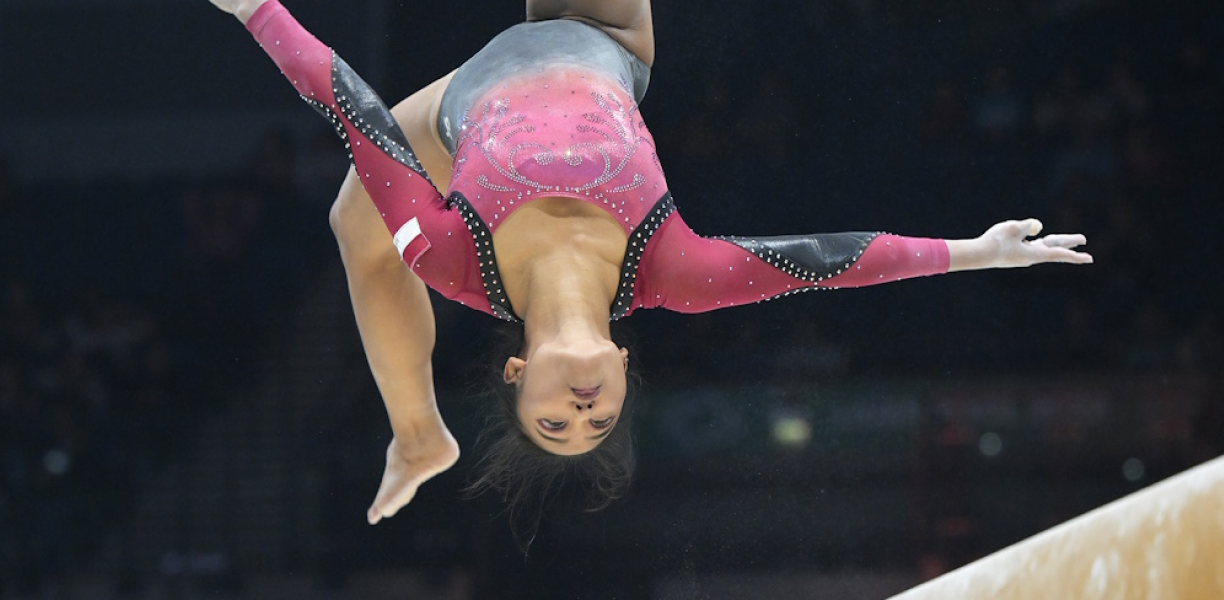
    One attempt. Judges watching. No second chance.

    That is gymnastics at the World Artistic Gymnastics Championships in Rotterdam starting on Saturday.

    It is also a clear picture of something everyone faces, in sport and beyond: performing when it counts, with nothing to fall back on.

    The routine before the routine

    Athletes who stay steady under pressure rarely rely on luck. They rely on a short routine they have repeated many times. Most have three parts:

    • A breath. One slow breath out to settle the body.
    • A cue word. A short word, like “smooth” or “tall”, that points attention at the task.
    • A physical anchor. A spot to look at, or a small action, that signals it is time to go.

    Then they go.

    Why it has to be practiced

    A routine that first appears on competition day is just one more thing to think about.

    The ones that work have been run hundreds of times in training, until they feel automatic.

    Try it this week

    Whether you are an athlete, a parent helping a young athlete, or a coach, you can start in minutes:

    1. Pick a breath, a cue word and an anchor.
    2. Use them before every attempt in practice, not only the big ones.
    3. Afterward, ask what felt natural and what felt forced, then adjust.

    The same routine works before an exam, an audition or a presentation. It does not remove nerves. It gives them somewhere to go.

    Support beyond the session

    A routine fades if nothing reminds you to use it. Short audio sessions between practices help it stick, which is what OMP offers athletes, teams and the people who support them.

  • Win or Go Home: The Psychology of MLB Elimination Games

    Win or Go Home: The Psychology of MLB Elimination Games

    In a best-of-three Wild Card series, there is no time to settle in. One bad inning can end a 162-game season.

    This year’s round delivered exactly that. The Yankees eliminated the Red Sox in baseball’s oldest rivalry. Fernando Tatis Jr. carried the Padres past the Cubs. The Phillies and Braves went the distance to a winner-take-all Game 3.

    The players on both sides of those games were equally skilled. The difference often came down to who could keep their skills working when the stakes made everything feel heavier. That’s a mental skill, and it can be trained.

    Why pressure breaks good swings

    Pressure doesn’t make athletes forget how to play. It makes them think too hard about how they play.

    A swing or a pitching delivery is built over thousands of reps until it runs on autopilot. Under high stakes, athletes start consciously checking those movements: Is my hand path right? Am I opening up early? Psychologists call this explicit monitoring, or reinvestment. Research led by Sian Beilock and Rich Masters found that skilled athletes perform worse when they turn attention inward onto well-learned mechanics.

    In an elimination game, that shows up as the hitter who suddenly looks late on a fastball he crushed all season. Or the reliever who aims the ball instead of throwing it. The skill is still there. The athlete’s attention has gone to the wrong place.

    Routines: making Game 3 feel like Game 63

    The best defence against overthinking is a routine that gives attention a job. Watch any hitter in the box this October: the batting-glove adjustment, the step out, the same breath, the same look at the pitcher. That’s not superstition. It’s a pre-performance routine.

    Good routines do three things:

    1. Narrow focus. They pull attention to a small number of external cues, like the release point, instead of the scoreboard or the crowd.
    2. Create familiarity. The routine is identical in a May road game and a winner-take-all October game. The situation changes, the process doesn’t.
    3. Trigger the automatic skill. The final step signals “thinking is over, now execute.”

    The key is that routines are built in practice, not invented in the postseason. If an athlete only does it when the stakes are high, it becomes another thing to think about.

    One pitch at a time: the reset

    In a short series, the most dangerous pitch is the one after a mistake. A walk, an error or a three-run homer can hijack attention for the rest of the inning.

    The late sport psychologist Ken Ravizza, who worked with MLB clubs including the Cubs and Angels, taught players to recognise their own “red lights”: the signs they’re speeding up, tightening up or dwelling on the last play. Then they use a physical reset to get back to “green” before the next pitch.

    A reset can be simple:

    • Release the last play with a physical cue, like wiping the dirt, adjusting the cap or stepping off the rubber.
    • Breathe once, slowly.
    • Refocus on one controllable target for the next pitch, like “hunt the heater middle-in” or “hit the glove.”

    The goal isn’t to feel calm. It’s to make sure the next pitch gets 100% of the athlete’s attention, not what’s left after the last one.

    Turning the dial down (or up)

    Postseason adrenaline is real. Heart rate climbs, grip tightens, and fine motor control, the feel a pitcher needs on a breaking ball, starts to slip. Hitters often feel it as rushing: jumping at pitches and chasing out of the zone.

    The fastest lever an athlete controls is their breath. Slow breathing with a longer exhale than inhale engages the body’s “rest and digest” response and takes the edge off. Something as short as a four-second inhale and six-second exhale between pitches can help.

    It works in the other direction too. A flat, under-aroused player in a quiet road park might need energising cues: quicker movement, upbeat self-talk, a sharp clap. The aim is each athlete’s own best zone. Knowing where that zone sits is something they learn long before October.

    What this means for your program

    Your athletes will face their own win-or-go-home moments, whether that’s a conference tournament, an NCAA regional or a bases-loaded at-bat in the ninth. The players who handle those moments best won’t be the ones who “want it more.” They’ll be the ones who trained their minds the way they trained their swings.

    That means building routines, resets and breathing skills into the regular season, so they’re automatic when the pressure arrives.

  • Visualization has Nathan Seeing Clearly

    Visualization has Nathan Seeing Clearly

    What does one of the world’s best rugby league players do when he’s too sore to physically practice a key skill ahead of a playoff game?

    He turns to visualization.

    Australia NRL star Nathan Cleary is nursing a damaged foot bone, meaning he is on light duties for practice ahead of his team’s do or die playoff game.

    Instead of getting in physical reps, he’s focused on the mental.

    “One thing he has learned over the years is I know he prioritizes actual kicking time. He spends more time now doing mental reps as well,” his father and coach Ivan Cleary told Australian Radio.

    “He is really going to have to lean on that mental side over the coming weeks, because he is going to have to pull back.

    “So, it’s good that he has been preparing that way.

    “He knows he has kicked enough balls. He’ll just spend enough time going through mental rehearsal, and that will do the trick.”

    Cleary has used visualization before preparing for matches when hurt, using it ahead of a representative game in 2025.

    But what is visualization? What does it do and does it really work?

    Visualization, also called mental rehearsal or imagery, is the practice of running a skill through your mind in vivid detail without moving a muscle.

    Done well, it isn’t just looking at a picture. It’s feeling the physical elements of executing a skill, like the positioning of feet, the feel of the ball in hand or striking a foot.

    And the brain barely knows the difference, when you imagine the movement, it activates the same parts of your brain (the frontal motor areas) that fire when physically doing it, which is why researchers describe imagery and action as functionally equivalent.

    In 1994 a landmark meta-analysis by Swedish researchers found mental practice had a statistically significant effect on performance.

    Cleary is also in good company. At the Paris Olympics, Team USA’s pommel horse specialist Stephen Nedoroscik went viral for sitting motionless with his eyes closed and head tilted back while he waited to compete.

    While people on social media thought he was sleeping, he was mentally rehearsing his routine, before delivering a clutch performance that ended a 16-year medal drought for US men’s gymnastics.

    Ivan Cleary said it himself; his son has kicked enough balls.

    The reps are already banked.

    Mental rehearsal keeps the pattern sharp while the body gets the recovery it needs.

  • The Last 48 Hours: Mental Prep for College Football Week 1

    The Last 48 Hours: Mental Prep for College Football Week 1

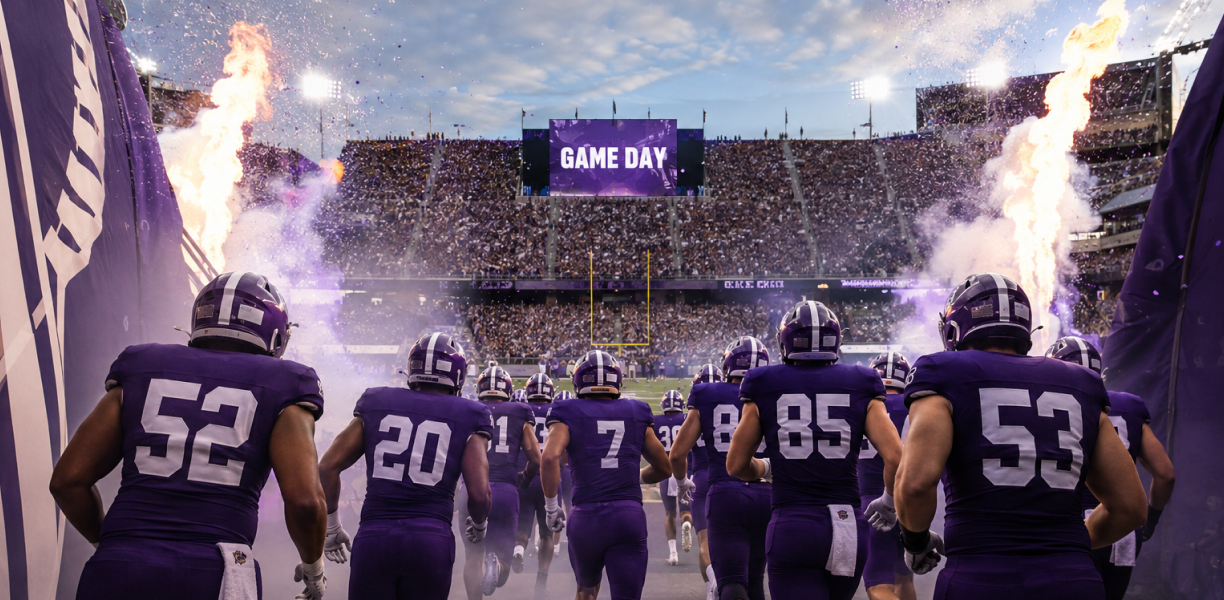
    College football is back and with the opening game comes the moment all team’s physical preparation is benchmarked in real competition.

    But while the players are physically ready for the season to kick off, they need to convert these months of preparation and being mentally ready for whatever is thrown at them.

    Players who have a defined and refined pre-game routine are more likely to be ready for the big occasion.

    Here’s the thing. You can’t add any more fitness in the last 48 hours, but you can absolutely subtract from your performance if you’re not mentally ready.

    Process goals over outcome goals

    Outcome goals (“win,” “have a big game”) are largely uncontrollable and spike anxiety in the hours before. Replace with two or three execution targets that you can fully control.

    This could be first-step timing, communication on every set, and effort on the second phase. Written down the night before, reviewed once pre-game.

    This gives you something to succeed at regardless of the scoreboard. Shifting your focus from outcome to process transforms your mindset, allowing you to enter the season with a renewed sense of purpose and clarity.

    Arousal regulation

    Openers produce two problems: some athletes are flat from over-thinking, others are wired. It’s important to find a happy medium. Calm your heartrate and mind with extended exhales (4 in, 6–8 out) for 60–90 seconds.

    Fire up with sharper breathing, movement, and a short activating cue. The skill is knowing which one you need, which requires the athlete to have paid attention to how they feel in training.

    Mental rehearsal / imagery

    In the 24 hours before, rehearse the first two minutes specifically, be it your first contest, the first touch, the first mistake and the reset after it.

    Including the mistake in the imagery is the part most athletes skip and the part that matters, because it means the real one isn’t a surprise.

    Research shows mental rehearsal activates the same neural pathways as physical performance meaning practicing in your mind trains your body to perform as though you’re doing it in real time.


    The physical work is already done, now what separates good openers from great ones is the mental preparation in the final 48 hours.

    Process goals, regulated arousal, and rehearsed imagery aren’t extras; they’re the difference between showing up ready and merely showing up.

  • 3 Mental Skills to Staying Focused During Race to Playoffs

    3 Mental Skills to Staying Focused During Race to Playoffs

    September is fast approaching and with it brings Fall and for Baseball players and fans, the playoffs!

    This makes the games over the next month crucial as teams push to clinch their place in the post-season.

    While teams chase these goals of extending their season for a few more weeks, the players within are faced with one of the greatest mental challenges an athlete can face: Pressure.

    Be it a pitcher giving up a walk and the top of the order up next, a hitter needing to drive in a run to keep a game alive or an outfielder running for a high fly-ball, players are going to need to call on their mental skills as much as their physical skills to guide them through.

    Here are three things that baseball players can do to ensure that they’re able to perform at their best when pressure mounts.

    1 – Channel Your Focus

    When games start to become close, the mind can start to wander and begin asking those “what if” questions.

    Staying focused on the here and now, and what you can do is most important.

    However, Focus is a finite resource. It’s impossible to focus 100 per cent of the time, all the time!

    So, when there are breaks in play where you can direct your attention to something in the crowd or a conversation with a teammate, do it.

    2 – Breathe

    When you start to feel pressure, the butterflies in your belly can get pretty active and your heart rate can start to climb.

    While these are normal reactions to pressure, they can be overwhelming.

    A simple controlled breathing exercise, like box breathing or belly breathing, can help to slow your heart rate and focus your attention on your body rather than the situation of the game.

    Royals Shortstop Bobby Witt Jr. uses controlled breaths before batting to settle his nerves as part of his pre-bat routine while All Star pitcher Josh Hader also uses breathing to help him think clearly on the mound.

    3 – Trusting your Routine

    Preparation equates confidence. When pressure builds, it can be easy to change your approach or forget what you usually do. You might start doing more, doing less, or focusing on things that aren’t important or necessary.

    Instead, trust the routines and processes that have helped you prepare in the past.

    Whether it’s a pitcher taking a moment to reset, a hitter going through their usual pre-at-bat routine, or simply taking a breath, routines can help generate a sense of familiarity and control when the stakes are high.

    You can’t control the outcome of the game, but you can control how you prepare, your routines, and how you respond to each moment. When pressure mounts, trust your routine and focus on what you can control.


    As the pressure of making the postseason builds, remember that your mental skills are just as important as your physical ones.

    Stay focused on the moment, use your breath, trust your routine, and give yourself the best chance to perform when it matters most.

  • “I Don’t Belong Here”: 4 Mental Skills for Freshman Athletes

    “I Don’t Belong Here”: 4 Mental Skills for Freshman Athletes

    Across America, millions of students are starting their college journey. 

    For many, the feeling of not belonging as well as homesickness can make the first days and weeks at college extremely challenging. 

    Add to that the commitment of entering a new sporting team and for student athletes those nagging self-doubts can become especially intense.

    The “I don’t belong here” self-talk can become overwhelming, especially for those athletes who are used to being the big fish in a small pond.

    This is where mental skills can be applied to overcome these feelings and ensure that athletes can perform at their best even if they’re now the small fish in a big pond. 

    Here are four techniques a freshman can use to overcome these feelings. If four feels too overwhelming, pick just one to use and master in the first week. 

    Use Evidence

    Any athlete on a roster was selected by a coaching staff who watched them play. The knowledge that your athletic program has asked you to join them is the greatest evidence there is that you belong where you are. 

    Identify the strengths in your athletic performance that earned you this opportunity and remind yourself of them.

    Acknowledge

    Notice those “I don’t belong here” thoughts and relabel them as “I’m having the thought that I don’t belong”. 

    Sounds like semantics, but changing the relationship you have with those thoughts is powerful. They are just thoughts and not reality. 

    Separating the Mistakes from Identity

    If you’re in practice and make a mistake you can quickly get the feeling that “I’m not at this level”. 

    Here are three things you can do inside 10 seconds that can narrow your focus back to the next rep. 

    1. Name it. That’s the doubt talking. Don’t argue with it, just label it and let it pass. 

    2. Reset your body. One long breath out or one physical action like a tap of the helmet or a tap the bottom of your shoes. That’s the physical moment you say that the mistake is behind you. 

    3. Shrink the frame. Don’t answer “do I belong” Answer “win the next ball” or “make the next pass” 

    Compare Fairly

    There’s the age old saying “comparison is the thief of joy” and it rings true in a sporting sense. 

    Freshmen can catch themselves comparing their week-one self to a senior who has had four years to hone their craft. 

    Naming that distortion directly “you’re comparing your start to their finish” can help break this. Why not ask that senior what they did in their first year? 


    Self-doubt in those first weeks is a normal part of stepping up a level.

    The athletes who thrive aren’t the ones without doubt, they’re the ones who’ve learned what to do with it. 

  • University of Arkansas Partner with OMP

    University of Arkansas Partner with OMP

    Optimize Mind Performance is delighted to announce its partnership with the University of Arkansas.

    The Razorbacks will use OMP’s platform to scale the services of their Mental Health & Performance team across all 19 varsity teams, including their 2026 NCAA National Champion Men’s Track & Field program.

    Boasting 55 national championships across all sports, the University of Arkansas is the second SEC institution to partner with OMP, following Vanderbilt University.

    Dr. Chris Bader, Associate AD for Mental Health & Performance, said he is delighted that his team will be using OMP with its student-athletes.

    “Providing our student-athletes with mental skills training and sport psychology support is crucial as they strive to perform at their best and continue to compete for and win championships,” he said.

    “That’s why we’re delighted to be using OMP to ensure we can provide all of our teams with another way to access our services and connect with our student-athletes, anytime, anywhere.”

    Jack Preddey, CEO & Founder of Optimize Mind Performance, said:

    “We’re excited that the Razorbacks are now using the OMP platform, and we can’t wait to see how Dr. Bader and his team use it to support Arkansas’ Division I student-athletes.”

  • Mentally Preparing for a New Football Season

    Mentally Preparing for a New Football Season

    The new NFL and College Football seasons are approaching fast. 

    A new season brings new pressures, new opportunities and a way to move past last season’s disappointments.

    With teams moving into their pre-season camps and starting their physical preparation for the approaching grueling games that come thick and fast, it’s important that Football players also focus on their mental preparation. 

    Here are three things that players can do to mentally prepare for the new season: 

    1. Goal Setting 

    Setting goals for the is a powerful tool for athletes of all sports to use as a source of motivation throughout the ups and downs of season.

    While most Football players will have the goal of winning the championship, they need to ensure that their own goals focus on the process of getting there rather than the outcome itself.

    That’s why it is important to employ a technique like S.M.A.R.T goal setting.

    The goal must be SPECIFIC. I.e. you know exactly what the goal is and the steps you need to take to achieve it. 

    Your goal should be MEASURABLE. What data, results, or achievements show that your goal is tracking towards success. 

    Is your goal ACHIEVABLE? If it’s not, then it shouldn’t be your goal.

    Your goal should be RELEVANT to you, your broader life and what truly matters to you. 

    Finally, your goal should be TIME sensitive, have a clear deadline by which it should be achieved. 

    2. Figure Out Your Routines 

    Having a refined and consistent pre-game routine can assist you in entering a game at your optimal level of mental arousal.

    Think through and refine how you want to mentally prepare before a game.

    Do you need time to think about your goals or mentally rehearse/visualize your movements and actions for specific plays?

    Do you get anxious, and think negative thoughts, so need a breathing exercise or a self-talk statement to bring your heart rate down and boost your confidence. 

    Deciding this now will give you more control on game day! 

    3. Identify Sources of Confidence

    Look back on last season and find moments, no matter how big or small, that you can call back on that made you feel strong, powerful, excited, confident or like you belonged at the level you’re competing at. 

    These moments are great sources of confidence and validation that you can achieve great things.

    When times get tough during the season, calling on small moments of success and visualizing your successes can help you face adversity or regain your composure with confidence and clarity. 

  • The Ohio State University Enters Agreement with OMP

    The Ohio State University Enters Agreement with OMP

    The Ohio State University has entered into an agreement with Optimize Mind Performance, supporting its athletic program.

    Ohio State’s Sport Psychology & Wellness Services Team will use OMP to scale their delivery of mental skills training to The Buckeyes’ 36 varsity teams, including the 2025 National Championship Football team.

    Ranked 8th for all time Division I national championships, Ohio State student-athletes have also won 52 Olympic Gold medals, including one gold, two silver and two bronzes at the 2024 games in Paris.

    The Buckeyes are the fourth Big 10 Conference school to contract with OMP joining USC, Wisconsin-Madison and Nebraska-Lincoln.

    Dr. Jamey Houle, Director of Sport Psychology and Wellness Services said:

    “It’s great that our team is able to better deliver our services to all of our athletes.

    Jack Preddey, OMP CEO & Founder:

    “We are delighted to engage with yet another powerhouse Division I NCAA athletic program in The Ohio State University.

    “We are excited to with Jamey and his staff as they deliver crucial services to their teams and individual student-athletes.”

  • Processing Heartbreak

    Processing Heartbreak

    A last gasp winner.

    A missed penalty.

    Both gut-wrenching ways to go out of the World Cup.

    For Japan and Germany on Monday evening, both nations left the 2026 edition heartbroken.

    The Blue Samuri looked destined to push Brazil to extra time with the game level at 1-1 before Gabrielle Martinelli scored in the 96th minute to progress his team to the round of 16.

    In Boston, Germany were favorites against South American side Paraguay, but after 120 minutes of football the two nations were level at 1-1.

    A nail-biting penalty shootout was needed to determine who would progress and who would be sent packing.

    The underdogs squandered two chances to end Germany’s world cup campaign, but a miss from Antonio Sanabria and a save by Manuel Neuer kept Die Nationalelf alive.

    Jonathan Tah put one over the bar and then José Canale finally ended the shootout as Paraguay claimed the first true ‘cupset’ of the tournament.

    While Brazil and Paraguay march on, what now for Germany and Japan, what now?

    Here are three ways they can process their losses and turn these setbacks into opportunities:

    Celebrate the wins

    Being eliminated is undoubtedly disappointing, but it shouldn’t overshadow everything the team accomplished to get there.

    Simply qualifying for a World Cup is a remarkable achievement that many nations never experience.

    Taking time to acknowledge that success helps athletes maintain perspective and recognize the dedication, sacrifice, and hard work that made the journey possible.

    Reframe

    Rather than defining the journey by its final result, view it as an opportunity for growth.

    Reflect on the moments where the team performed well, overcame challenges, and showed progress.

    Identifying the lessons learned and experiences gained helps shift the focus from disappointment to development and provides a foundation for future success.

    Reflecting on Past Performances

    Watching back positive moments, strong team performances, or individual highlights can help reinforce confidence and motivation.

    Instead of allowing the final match to define the tournament, athletes can remind themselves of the qualities, strengths, and resilience they demonstrated throughout the competition.