Blog

  • The Pressure of the NBA Playoffs

    The Pressure of the NBA Playoffs

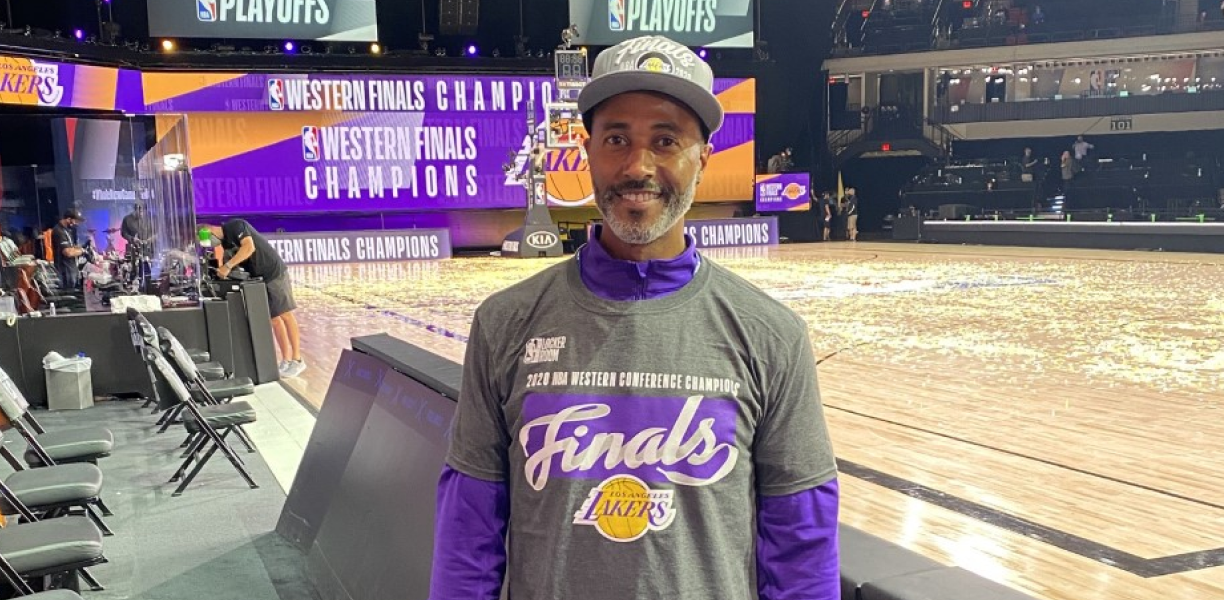
    Dr Ross Flowers is a sport psychologist with over 20 years of experience in high-performance sport including working with both the Los Angeles Clippers and the Lakers.

    In this exclusive blog for OMP Coach Flowers speaks about what it takes for NBA players to perform at their best during the pressure of the NBA finals, based off his experience working with the Lakers during their 2020 Championship winning season.

    The intensity and highly competitive environment of the NBA playoffs can be overwhelming. For some, high pressure situations create questions, doubts, fears and concerns about the present and an unknown future outcome. Some will question their readiness, training, personal strengths or abilities, and team competitiveness.

    The Pressure of the NBA Playoffs
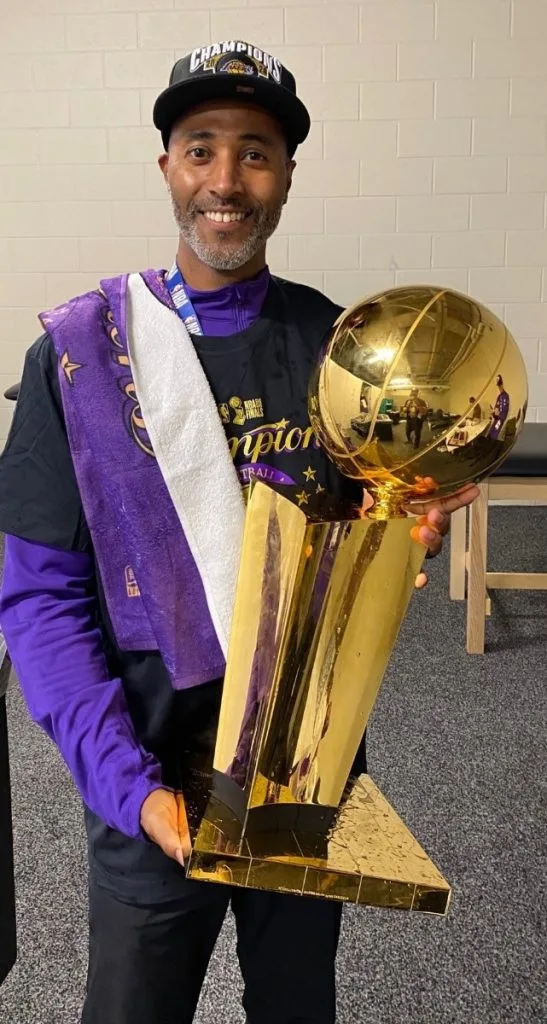
    Dr Flowers poses with the Larry O’Brien Championship Trophy in 2020.

    High pressure playoff environments are ample playgrounds for mental performance skills. Individually, players can use effective breathing to manage unwanted emotions and help refocus attention in the moment; reinforcing positive cues and successful visualization can help support confidence and focus on successful performance behaviors; and engaging in positive distractions to ease tension and feelings of pressure.

    For some players, watching highlights of games is a helpful tool to learn what works well for in-game situations and what can be learned about an opponent. For others, using healthy social outlets to get way from the game are helpful to separate from the intensity of the game. Yet, others prefer rest and relaxation of the mind and body with sleep, meditation, or just being still to rejuvenate and reload for the next game.

    Whether it’s a team competing in a bubble for a championship, on the road in a hostile opposing team environment , or at home with a supporting fan base the methods of establishing competence to become confident in performance is necessary for playoff success.

    The NBA playoffs offer teams the opportunity to come together and use the attributes of competency that have been developed during the 82 game season to have confidence in every member of the team to perform.

    As players become familiar with one another, get to know each other’s strengths, motivators, distractions, commitments and methods of follow through, a trust and belief in one another is built Playing through close games, exciting wins and tough losses helps a team build self-awareness and knowledge about what behaviors to develop, reinforce and trust.

    Those trusted behaviors become favorable skills that teams can have faith in executing with a high percentage of confidence.

    Being in the 2020 NBA Orlando Bubble I saw teams who made a commitment to grow together and strengthen their individual and team awareness, knowledge and skills into a higher level of competency. Those who invested themselves, their knowledge, energy, trust and talent into their team and how they collectively play the game we’re rewarded as the sum of their individual talents evolved into a greater outcome of a championship.

    Let’s see how mental performance skills impact performance in this year’s NBA playoff pursuit of the Larry O’Brien Championship Trophy!

  • Research Shows Rituals Have Positive Impact on Mental Performance​

    Research Shows Rituals Have Positive Impact on Mental Performance​

    It is not uncommon for athletes to embrace ritualized behaviors as part of their pre performance routines.

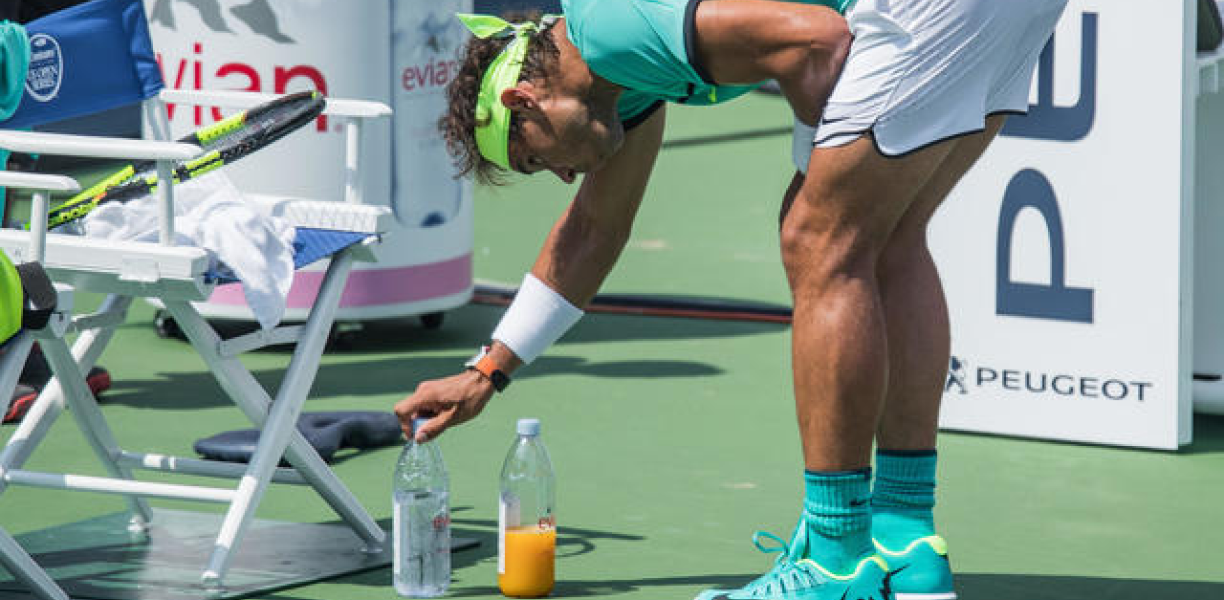
    From Rafael Nadal’s widely known short pulling and water bottle actions to LeBron James throwing chalk or Serena Williams wearing the same pair of socks during an entire tournament, millions of athletes partake in ritualized behaviors.

    While these behaviors may appear to be insignificant to outside observers a series of experiments conducted by researchers in China explores the psychological and physiological benefits of ritualized behaviors on an athlete’s performance.

    Ritualized behavior is characterized by its rigidity, stereotyping and repetition. It encompasses three main components: the physical process or structure, the psychological symbolism and the lack of direct instrumental purpose.

    Despite their seemingly arbitrary nature, empirical evidence has shown that ritualized behaviors have several benefits including increased social connectedness, improved emotional regulation, enhanced goal management and ultimately, better performance.

    The 2023 study conducted by Dongting Yun, Liwei Zhang and Yue Qiu focused on the impact of ritualized behaviors on athlete’s psychological state and performance. Athletes who engaged in ritualized behaviors reported feeling more focused, confident and in control during their performance.

    The study also revealed that engaging in ritualized behavior’s led to an increased inhibitory self-control, emphasizing the importance of their psychological features.

    These findings shed light on the potential benefits of ritualized behaviors in the realm of sport performance. Engaging in rituals that promote physical self-control before competition can have a significant impact on an athlete’s psychological state, resulting in improved performance.

    Rituals serve as a tool for athletes to channel their focus, confidence and control ultimately leading to better performance on the field or court.

    Understanding the effects of ritualized behaviors can empower athletes, coaches, and sports psychologists to incorporate rituals into training programs unlocking their potential to optimize performance and achieve success in their sport.

    To build a Routine that you can put to use to improve your performance, head to the OMP App and listen to Geoff Miller’s course on Routines to build yours. Download the OMP App.

  • Wynn Loves Being a 1st Rounder

    Wynn Loves Being a 1st Rounder

    This week, hundreds of NFL draft prospects across America wait anxiously for their futures to be decided. After hours of hard work and grind through high school and college, they’re anxiously awaiting their name to be called in the 2023 NFL Draft.

    Some will be called in the first round on Draft Night, just like Optimize Mind Performance ambassador Isaiah Wynn back in the 2018 Draft when he was selected by the New England Patriots with the 23rd pick.

    While being selected with a first-round pick is an accomplishment, it also brings with it the pressure of expectation.

    As Wynn explains in his exclusive content series now available on the OMP App, he never really felt that pressure despite being selected by an organization that had won two Super Bowls in the four seasons prior and who was coming off a loss in Super Bowl LII.

    “I love being a first-round pick,” he said.

    “To understand how I have this mindset, we need to go back to the beginning.

    As a kid I never in my wildest dreams thought I’d become a professional football player. When I was playing in high school, I didn’t even consider myself a college prospect until my senior year.”

    Wynn explains that once he started to receive college offers in his senior year, he realized that he could have a future in football, but never once dreamt about going to the NFL. It took until his junior year at Georgia when he found out he was being watched closely by NFL scouts. This motivated Wynn to make the most of his opportunity.

    “The thought of just going to a team in the fourth round didn’t motivate me,” Wynn explains in his Athlete Insight.

    “I didn’t want to hear that I could go fourth round, I may as well not even go. I wasn’t going to settle for anything other than the first round.

    “Now that I had my goal, I had to achieve it. It wasn’t going to just happen. I reached out to my coaches to see what I could do to boost my draft stock.” While a large portion of that plan was the physical work Wynn would put in, it took great mental strength, resilience and commitment for it to truly work.

    Along the way, Wynn kept a journal which helped him process his thoughts and feelings after each gruelling day. He also made sure to take time away from the game by reading and committing time to his studies so that he could mentally refresh and release the pressure of playing NCAA Division One Football.

    Finally, come draft night, once his name was called, Wynn was able to relax and enjoy the moment. “It was a reward for all of my hard work during college,” he said.

    “Every year there are only 32 players who go in the first round, and I was one of them. Taking in that moment and living in it has allowed me to look past any pressures associated with being a first-round pick.”

    “When I’ve experienced hard times in my career, I’ve used what I’ve achieved as motivation, proof of what can happen when you work hard and have goals you want to achieve. It’s important to reflect on your successes when you’re going through a hard time.” To get Isaiah Wynn’s top three tips to help you exceed your expectations as well as more of his Athlete Insights series, download the OMP App from Google Play and the App Store.

  • Why Mental Skills Training is the Next Big Thing in Athletic Performance

    Why Mental Skills Training is the Next Big Thing in Athletic Performance

    David Joyce is an internationally recognized high-performance expert, having worked with thousands of athletes, many of whom have gone on to win some of the world’s biggest prizes in sport. He is the co-author of three bestselling performance texts including High-Performance Training for Sports. David is a highly sought-after performance thought leader and consultant, and is Optimize Mind Performance’s strategic advisor.

    Over my two-decade long journey in elite sport across the world, I’ve seen all the waves of innovation crash on the shore of athletic performance. Some have genuinely transformed athletic performance (think of the Nike Vaporfly as a recent example), whilst many other are incremental upgrades of their ancestors (such as the boom in massage guns, for instance).

    For those of us involved directly in enhancing athletic performance, what is consistent, however, is the fact that most new innovations seem to focus on the physical side of things. I suspect there will always be gains to be had here, but they are likely to be incremental in comparison to the greenfield opportunities that lay ahead in the field of mental skills training.

    We’ve all heard the rhetoric that winning happens between the ears, and yet the problems unlocking the black box in an athlete’s head remain almost unchanged. Sure, part of this is the complexity of the mental side of the game, but too often we hide behind this complexity excuse. One of the biggest issues is the fact that for all the value that sport psychology provides to our athletes (some of it is genuinely transformative), the delivery model compromises its ability to scale its impact.

    I have had the opportunity to conduct over 500 hours of interviews with people all around the world in the field of elite human performance, seeking to divine the future forces of sporting performance. After all these conversations have been analyzed, it’s evident that mental skills training is one of the top two forces expected to transform the playing field over the coming decade.

    Never being one to sit idly by and wait for the waves to crash, I wanted to be able to take advantage of movements in the mental skills space, which is why I started working with the team at Optimize Mind Performance around two years ago.

    I’m delighted to be involved in something truly revolutionary, using technology to scale and amplify the wisdom of the world’s leading mental skills coaches, allowing anyone to enhance their knowledge and practical skills in this area.

    I’ll always be wanting to get athletes fitter, faster, and stronger, but I recognize that now, the greatest impact will be enhancing their mental skills. After all, winning happens between the ears.

  • NFL Scouting Combine: Managing Pressure

    NFL Scouting Combine: Managing Pressure

    Dr Sam Maniar writes an exclusive blog for Optimize Mind Performance ahead of next month’s NFL Scouting Combine.

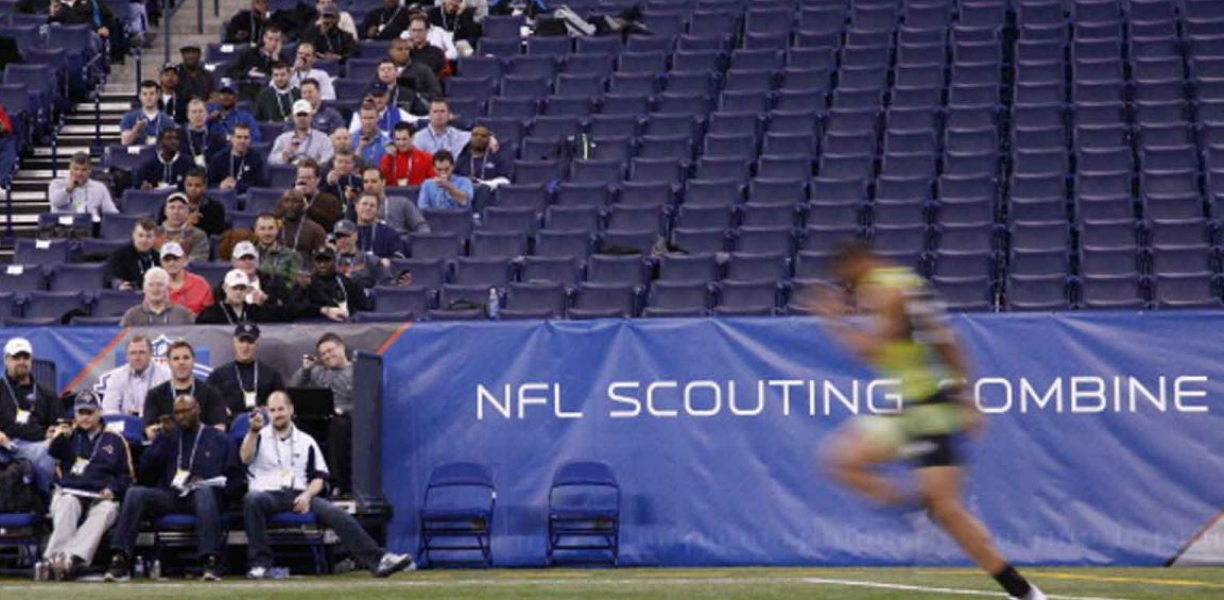
    During the first week of March, I will be attending my 8th NFL Scouting Combine. I serve as a consultant to an NFL team that hires me to assess prospective players’ risk on and off the field.

    In total, 319 professional (American) football hopefuls will head to Indianapolis, Indiana to attend the 2023 Combine. Millions of dollars in future contracts will literally be made or lost based on performance in drills, answers to interview questions, and even body measurements.

    It’s no understatement to say that it will be the most important few days in these prospects’ football careers.

    It also goes without saying that in order to perform well, athletes will need to manage their emotions and handle the immense pressure and scrutiny they will face.

    But what are some ways these athletes, or any athlete, can overcome pressure?

    Strategies for Managing Pressure

    One of the biggest mistakes I see athletes make is practicing under ideal or near-perfect conditions. If you want to learn to perform under pressure, you have to practice under pressure. Making a free throw in an empty gym is one thing, but learning to slow your heart rate and block out the crowd noise in order to make a free throw is much more challenging. It’s for the same reason that many golfers do great on the driving range and then their swing falls apart on the golf course. So, in order to add pressure to your training, make sure you practice with distractions. You might even consider implementing consequences for not performing well, such as burpees or push-ups.

    Another strategy that can help is to learn to regulate your breathing. When we are experiencing a perceived threat, our sympathetic nervous system (SNS) kicks into overdrive. This is commonly referred to as the “fight or flight” reaction. In order to ready our bodies to fight or run, the SNS tries to get as much oxygen to our muscles. The way it does this is by speeding up our heartbeat in order to pump more oxygenated blood throughout our bodies. Here’s the problem, though: it’s difficult to perform a skill with a rapid heart rate. So, one of the best and easiest ways to calm ourselves down is to slow down our breathing, which will in turn slow down our heart rate.

    I have also found that athletes feel more pressure when they are focusing on things outside of their control, such as statistics, wins/losses, playing time, etc. You must learn to control the controllables. While it is a major sports cliché, it is also true. When you feel pressure, try to redirect your focus on things that are in your control.

    Do You Struggle with Pressure?

    If you’d like more help on handling pressure, check out the many suggestions and tips from top sport psychologists in the Optimize Mind Performance app. It’s like having your own mindset coach on your phone! The app can be downloaded from the App Store or Google Play.

  • Can Star NFL Kicker Overcome the Yips?

    Can Star NFL Kicker Overcome the Yips?

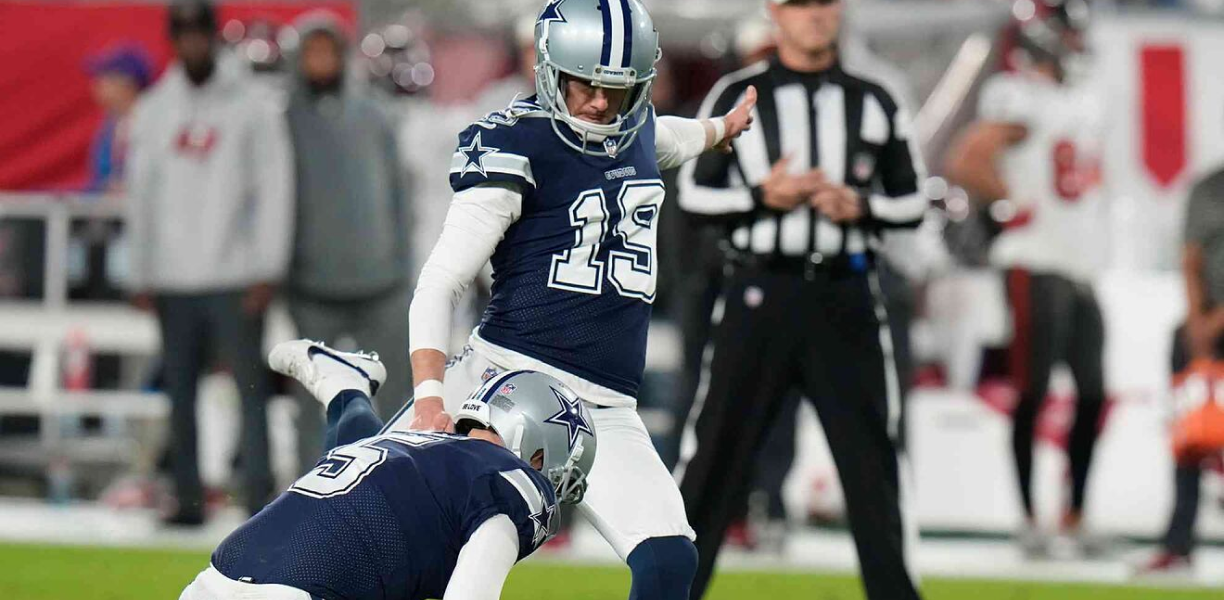
    If you watched the Dallas Cowboys defeat the Tampa Bay Buccaneers in Monday night’s Wild Card game, you would have seen Cowboys kicker Brett Maher have one of the worst nights of his career.

    Maher set an unenviable record when he became the first man ever to miss four extra-point attempts in a single game. For Maher, who completed 94.3 percent of extra-point attempts in the regular season, it was a clear case of the dreaded yips. 

    His kick has led to some commentators questioning whether Maher should be the Cowboys starting kicker when they take on the San Francisco 49ers on Sunday night. 

    What are the yips?

    There are few people better qualified than coach Dr. Mike Rotheram who can explain what the yips are. Coach Rotheram completed a PhD on the yips at Sheffield Hallam University in the UK and has worked with the English Cricket team as well as countless professional athletes at the English Institute of Sport. 

    “In basic terms the yips are a sudden and unexplained loss of ability to execute certain skills in experienced athletes,” he said. 

    “In doctor speak that’s a psycho-neuromuscular impairment affecting the execution of fine motor skills during sporting performance.”

    “If you have the yips, you can experience jerking movements, feeling body parts becoming stuck and locked and generally it’s accompanied by feeling fear, self-consciousness, panic, anxiety, and embarrassment.”

    While the yips are commonly associated with golf, there have been notable cases of baseball players, basketball players, darts players, gymnasts, and cricketers suffering the crushing affliction.

    What’s next for Maher?

    While some athletes across golf and cricket have had their careers curtailed by the yips, the good news is that they aren’t always recurring. 

    Cowboys Special Teams Coordinator John Fassel spoke to the media on Wednesday and has backed Maher on being their starting kicker against the 49ers. Their method for overcoming his yips: just get back to kicking. 

    “This week will give him confidence, just getting back out there,” Fassel said. 

    “He’s probably going to be mentally hurting pretty bad until he can kind of sweat and kick again. There’s no medicine like being back on the practice field. I am optimistic. A good, professional man who really gives a damn… leads me to be optimistic about a good rebound.”

    This approach is what’s called flooding. Coach Rotheram explains it is one of the few methods used to treat the yips. The other notable method being graded exposure. 

    “It takes a very brave person to take on flooding,” Rotheram said. 

    “With flooding you’re going straight back to kicking with pressure. With a graded exposure approach, you strip the skill of kicking right back to the basics. No pressure. No opponents. No ball. 

    “You then work your way back, step-by-step, until you can complete the skill in match simulations where there is pressure attached to the outcome of your kick.”

    “Flooding does work but it is risky while research shows that graded exposure is the most effective method to overcome something that provokes anxiety or fear.”

    With time being of the essence for Maher and the Cowboys, they’re hoping it was a one off and the NFL’s third highest scoring player can bounce back to his best on Sunday night. 

    Are you suffering from the yips?

    Dr. Mike Rotheram has an exclusive series on dealing with the yips on the Optimize Mind Performance App. Download the app from the App Store or Google Play and find a few strategies to help you combat the dreaded yips. 

  • An Introduction to Mental Skills Training

    An Introduction to Mental Skills Training

    This is an excerpt from Geoff Miller’s book – Intangibles: Big-League Stories and Strategies for Winning the Mental Game — in Baseball and in Life.

    Coach Miller’s content is available now in the Optimize Mind Performance App – download it from the App Store or Google Play now.

    …

    I met Bobby Kingsbury on my first day as the Mental Skills Coach for the Pittsburgh Pirates. I had been hired halfway through Spring Training of 2005 and there were only two weeks left in camp, so my first objective was simply to get to know as many major league and minor league players as I could before they left Florida to begin playing their respective seasons. 

    The Pirates Minor League Field Coordinator, Jeff Banister, had been introducing me to coaches and players and we shook hands with Bobby outside of one of the batting cages.

    “Hey, when can I schedule some time with you?” he asked like he was ordering a sandwich or arranging to have his car detailed.

    Bobby had a cocky grin and an even cockier walk, but he had some substance to him as well. A native of Cleveland, he was selected in the 8th round of the 2002 Draft out of Fordham University in New York. He was equal parts sharp guy and wise guy and I couldn’t quite tell if he’d picked up his New York swagger in his three years at Fordham or if it was a personality trait that drew him to a school in the city.

    I only knew of one major league player who had gone to Fordham, Frankie Frisch, and I only knew that because he had been nicknamed “The Fordham Flash.” I asked Bobby if he had ever heard of Frisch as we sat down to start our conversation.

    “Who, the Flash?” Bobby said with a confident smirk. “Yeah, I’ve heard of him.”

    I asked Bobby to give me a brief history of his career, which included some impressive accomplishments. He had just established career highs in doubles (24) and home runs (19) while contributing to a Hickory team that won the South Atlantic League Championship. He had also taken time out of his season to play for the Greek Olympic Team at the 2004 Summer Games in Athens. Host countries are allowed to field a team in every sport without having to qualify and since there was only one baseball field in Greece and barely any Greek nationals who even know how to play the game, the Greek Olympic Committee allowed any American-born player who had no less than third-generation Greek Heritage to be considered. Bobby was one of the stars of the team.

    After getting some background, I asked him a simple question, “What can I do to help you?”

    Bobby’s face changed from cocky to desperate and his eyes softened from their piercing focus. His body slumped in his chair.

    “I know I can do better.”

    My conversation that first day with Bobby Kingsbury is a perfect example of what I have found to be the hardest part of my job…the emotional highs and lows I end up experiencing with each and every player. Every baseball player dreams of making it to the big leagues, and while it isn’t difficult to identify which players have the most physical talent in a minor league game, every single player in uniform is holding on to the dream that someday it’s going to happen. Someday, he’ll get his 400 at-bats in a season and show everyone what he can do. This year, he’ll stay injury-free and finally realize all his potential. One of these days, he’ll turn the Rubik’s Cube of his talent in exactly the right combination, all the colors will line up, and he’ll be able to command his fastball on every pitch. Every player in the organization, from AAA to Rookie Ball has his own dream. I have the honor and privilege of getting to share that dream with each of them. Even though I know most of their dreams won’t come true, I can’t help them if I don’t believe that each one of them will.

    Sometimes those dreams do come true. Sometimes someone like Shane Youman makes a decision that he’s tired of being ignored, tired of having other people decide his fate, that he’s tired of wasting time and that he’s going to the big leagues. That’s what Shane told me at the beginning of Spring Training in 2006. He began the season in the bullpen at AA Altoona, the same place he had spent the entire 2005 season…now 26 years old, a 43rd round draft pick, never a prospect, with no clear path to the big leagues. A month into the season, he got a spot-start and he never looked back. He went 7-2 with a 1.51 ERA and started the AA All-Star Game that year, then got promoted to AAA Indianapolis, where he went 4-0 in seven starts. In September, he was added to the 40-man roster then called up to Pittsburgh, where he had a 2.91 ERA in five appearances. He started the final game of the season, having gone from the bullpen in AA to starting in the big leagues in one year.

    Most of the time, though, the dreams don’t come true. Sometimes all I can do to help a player is to stay with him until his dream has died…a virtual “hospice care” for terminal dreams. It wouldn’t be so hard to deal with if it was apparent who was destined for greatness in the big leagues from the time he was in A-Ball and who was going to hang around for a while until he went home to search for something else to do with his life.

    This is what my experience has been with sport psychology. It hasn’t been breathing techniques and visualization and positive self-talk. For the most part, it hasn’t been trying to “fix” players who have problems throwing strikes or throwing to first or getting out of slumps. Most often, my work with baseball players has been getting into the complex details of helping them understand themselves so that they can take advantage of the tremendous talent that they possess. It’s not that I don’t believe in the traditional techniques that are prescribed in most of the literature devoted to peak performance. It’s just that I believe those traditional techniques are only short-term fixes. Let me explain what I mean…

    When most players and coaches talk about the mental game of baseball, they are really talking about two basic principles: knowledge and performing under pressure. To have a strong mental game, you have to know what to do and then be able to execute that knowledge when it counts. Most books on sport psychology offer strategies for staying focused, controlling emotions, and developing positive thinking, but they miss the big picture for maximizing talent. When you are comfortable, confident, and in control on the field, you don’t need help staying focused, controlling emotions, or staying positive…that just happens on its own. Instead of learning tricks to help you overcome the tough times, the real key to successful performance is to learn and understand where, when, why and how you experience pressure. If you can know the conditions that make you feel pressure, you can get to the root causes that get you off track and then you won’t need the short-term fixes.

    Unfortunately, it takes time to sort through the complexities that make us feel pressure. We all come to the field with our own life experiences, habits, personalities, families, and preferences. And sometimes, we don’t WANT to know what’s really making us feel the way we feel. Learning to understand why we make the decisions we make and training our minds to move toward long-term success is a process that requires patience and practice.

    In my work with players, I offer short-term and long-term approaches to developing knowledge and abilities to perform under pressure. In the short term, you need to have some weapons to help you stay on track when you’re not feeling confident, comfortable, and in control while playing the game. And in the long term, you need to be able to know who you are, know what you want, and know what to do if you don’t get it.

    The two approaches take the forms of simple concepts that are familiar to all baseball players:

    1. Knowledge
    2. Goals
    3. Dealing with Failure
    4. Short-Term Skills for Performing Under Pressure

    These topics are laid out in this sequence so the following can be answered:

    1. Know who you are
    2. Know what you want
    3. Know what to do when you don’t get it
    4. Know what to do in the meantime before you’ve mastered these concepts

    How are the stories in this book different from the breathing, routines, and positive self-talk you might be used to reading about? On the surface, they might not be that different at all. They are, after all, triggers, reminders, and mindsets that help players breakthrough performance blocks. But the depth of the stories is in how they get to the root of what the players are dealing with, rather than simply helping them get through a tough time. My goal has always been to help players address their realities with honest conversation.

    You might find some of the stories take unique paths to get to their points. But they all end with the player understanding more about who he is, or what he wants, or what to do when he doesn’t get what he wants, or what to do in the meantime while he’s figuring those things out. Bobby Kingsbury was brave enough to face a reality many cannot…he was able to be honest with himself that he could do better. He was even braver when he asked me for help. I owed it to him to help him find the answers to those big questions.
  • What Is Mental Skills Training?

    What Is Mental Skills Training?

    Mental skills training in sport is the act of preparing your mind for optimal performance during competition. 

    There are many key focus areas for athletes when on the field such as confidence, resilience, motivation, and concentration to name but a few.

    By performing mental exercises, an athlete can build up these areas of their mind, helping them to compete at a higher level on game-day.

    MLB Hall of Famer Yogi Berra once said: “Baseball is 90 per cent mental. The other half is physical.” So why do so many athletes focus on training their body but put minimal time and effort into training their mind?

    Optimize Mind Performance is a solution built to assist athletes in training their mind so they can enhance their performance on the field, court, or wherever they may compete. 

    Assembled by a suite of leading sports minds and athletes from across the world, OMP provides a library of industry-backed courses, shorts, and exercises for athletes to gain an edge on their competition.

    Don’t let your mind hold you back from being the best athlete you can be. Start training it and reap the rewards when competition is at its highest.

    “You must expect great things of yourself before you can do them.”
    ― Michael Jordan