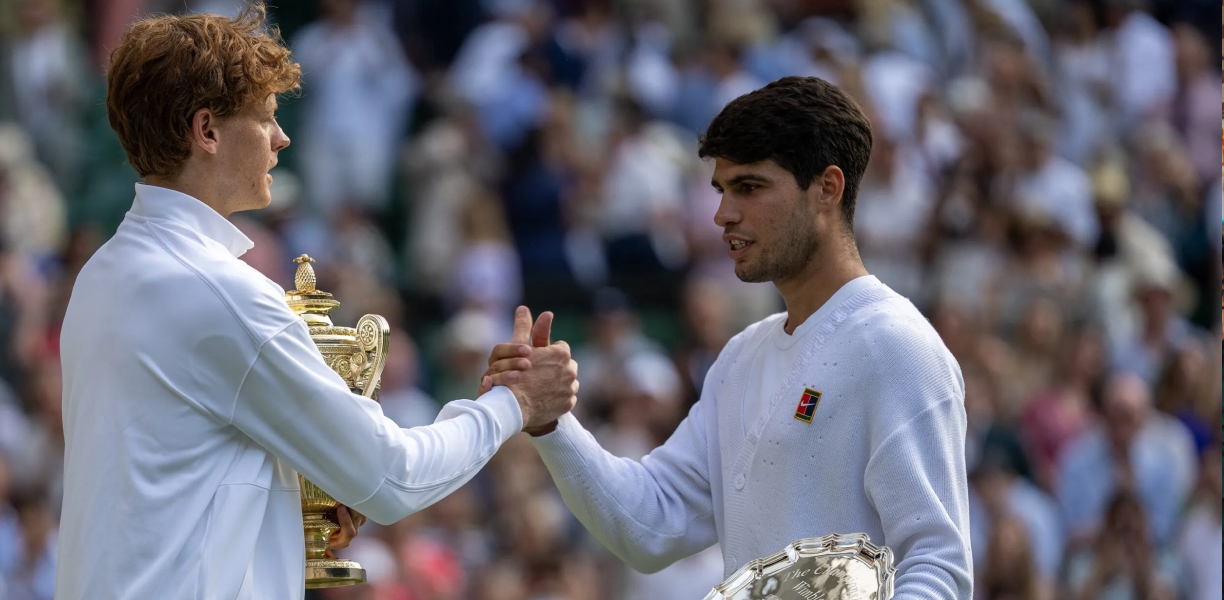
Less than two months ago, Jannik Sinner and Carlos Alcaraz battled it out in a French Open final that had fans on the edge of their seats.
Sinner had 3 championship points – but couldn’t close and Alcaraz went on the lift the trophy.
Fast forward to July 13. Same players. Even bigger stage: the Wimbledon final.
This time, Sinner didn’t just show up – he overcame a previous heartbreak and an elbow injury to win his first Wimbledon title.
From a mental performance perspective, this wasn’t just a win on the scoreboard it was a story about overcoming past failures and resetting the narrative.
Facing the same opponent, under similar high-stakes conditions, just weeks after a painful loss, Sinner had every reason to get stuck in the past.
Here are a few key mental strategies that likely played a role:
- Resetting the Narrative: Instead of carrying the emotional weight of losing championship points in Paris, Sinner mentally reset.
He didn’t approach Wimbledon as a rematch with revenge on the line but as a new opportunity.
This ability to shift the internal story from “I have to redeem myself” to “I get another chance to compete” helps reduce pressure and free up performance.
- Staying Locked in the Present: Ruminating on past mistakes is a mental trap that can pull athletes out of the moment.
Sinner’s ability to stay present – point by point, moment by moment – shows strong attentional control.
This skill allows athletes to fully engage with what’s in front of them, rather than being distracted by what’s already behind them.
- Regulating Emotions Under Pressure: In high-stakes environments, emotional regulation can be the difference between clarity and chaos.
Sinner showed remarkable poise in the Wimbledon final, especially against a player who had previously beaten him.
Sinner’s Wimbledon victory is more than just a career milestone – it’s a reminder that resilience isn’t about forgetting the past; it’s about using it.
His ability to regulate emotions, stay present, and reframe pressure into opportunity is what separated him on that court.
For athletes at every level, this performance highlights a powerful truth: mental skills aren’t just add-ons to physical training – they’re often the difference between falling short and breaking through.
And in Sinner’s case, they helped turn heartbreak into history.