Blog

  • Overcoming the Pressure of Penalties

    Overcoming the Pressure of Penalties

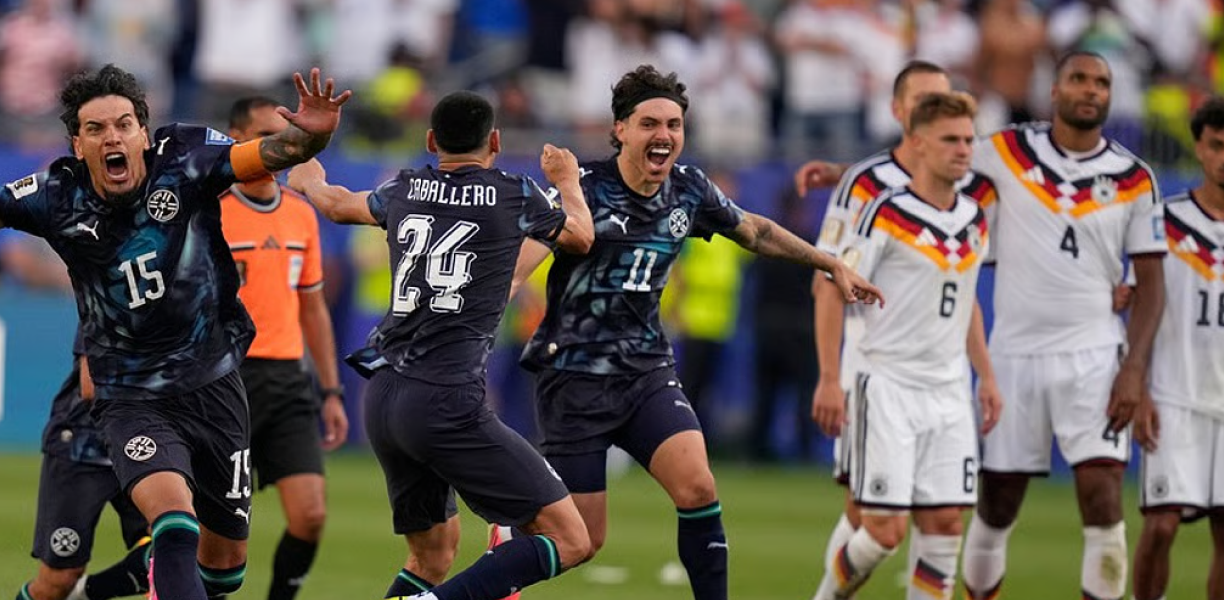
    Of the four matches in the Round 32 so far, there have been two penalty shootouts.

    Morocco and Paraguay both held their nerve and executed under the greatest pressure, while Germany and Netherlands were sent packing.

    Penalty Shootouts at the World Cup are one of, if not, the most intense pressure moments in sport. 

    Thousands of fans in the stadium, millions watching at home. 

    All their attention is on the one player about to take a kick. 

    The moments before the kick are one of the greatest mental tests in all of sport. 

    For the kick taker, being mentally prepared for the moment is crucial. 

    Here are three simple strategies soccer players can use to calm their minds and stay focused when the hopes of a nation rest on their shoulders.

    Don’t focus on the Outcome 

    During a penalty, it’s easy to get caught up in thoughts about the consequences. 

    If I miss, are we out?

    If I score, do we stay in?

    At the World Cup, the stakes are incredibly high, with players representing their country on the biggest stage in football.

    Instead of focusing on what the kick means, shift your attention to what you can control in the present moment: your routine, your technique, and the process of taking the penalty. 

    Breathing exercise to regulate emotions

    Pressure naturally triggers a stress response, increasing heart rate, and muscle tension.

    Simple breathing exercises, such as box breathing (inhale for four seconds, hold for four, exhale for four, hold for four), can help calm the nervous system and improve composure before stepping up to the ball.

    Even one or two slow, controlled breaths can help players reset and refocus. 

    Many players who stepped up to the spot during both the Germany-Paraguay and Netherlands-Morocco employed this tactic. 

    Trust your Preparation

    The World Cup shouldn’t change the routine that has helped you score penalties throughout training and in the past.

    Rely on the same pre-kick routine you’ve practiced repeatedly – whether that’s placing the ball a certain way, taking the same number of steps back, or using familiar cue words.

    Consistent routines reduce uncertainty and help keep your focus on execution rather than the occasion. 


    Penalty shootouts will always be defined by pressure, but pressure does not have to dictate performance.

    By staying present, regulating emotions, and trusting preparation players can give themselves the best chance to deliver when it matters the most. 
  • Overcoming the Mental Impact of Teammate Injury

    Overcoming the Mental Impact of Teammate Injury

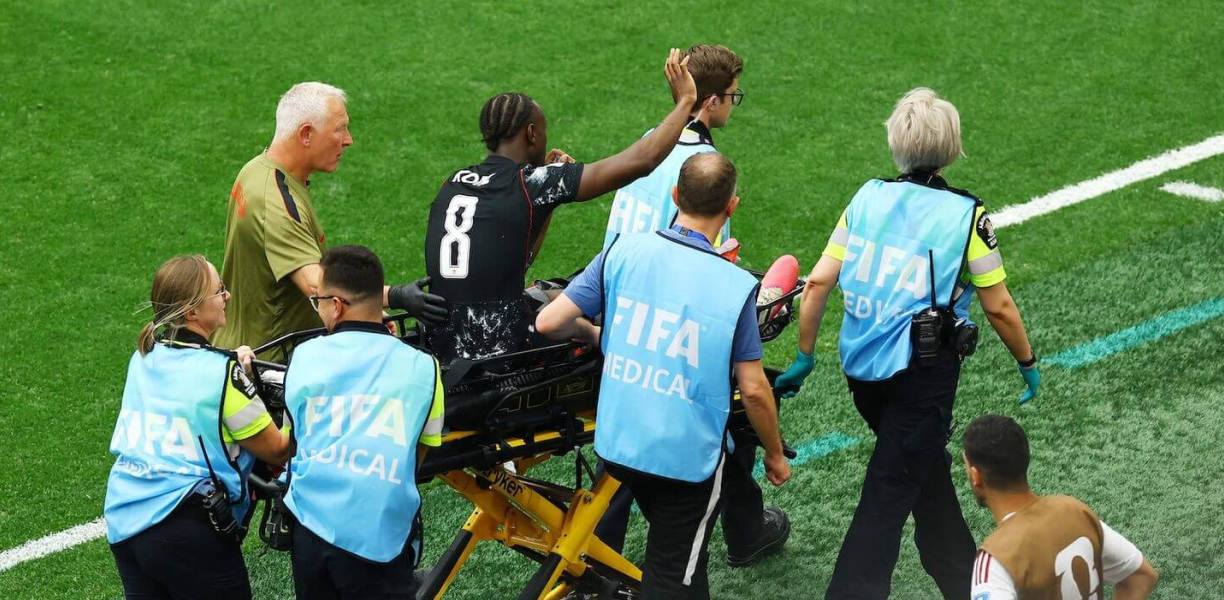
    Canada’s historic 6-0 World Cup win over Qatar has come at a grave cost. 

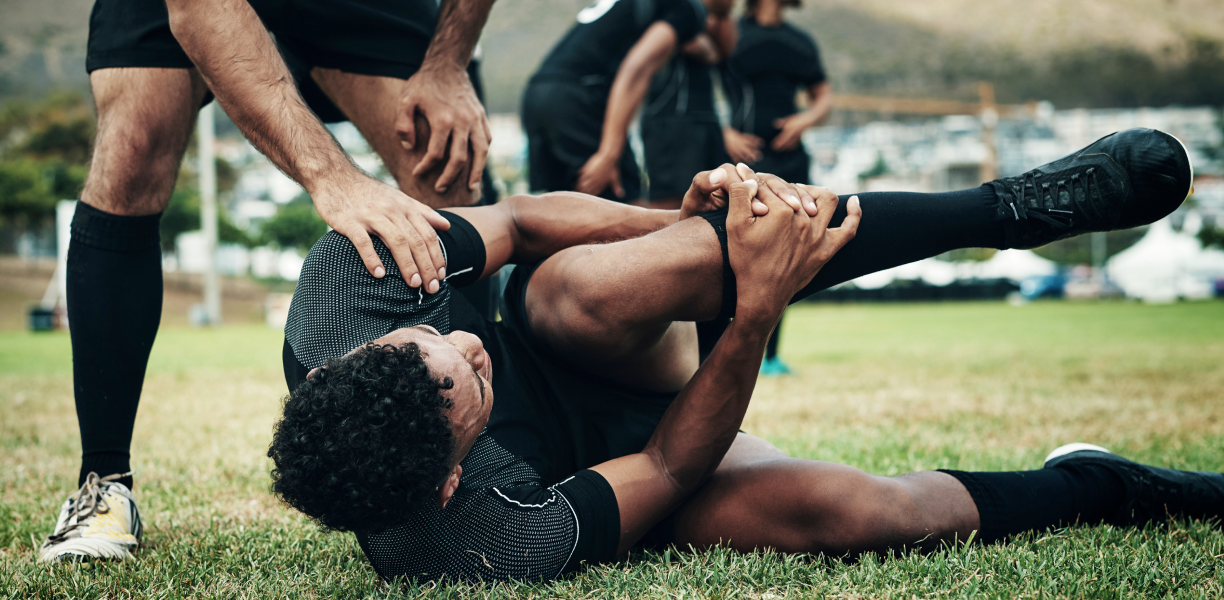
    Key playmaker Ismaël Koné suffered a broken leg after a horror tackle by Assim Madibo which marred an otherwise perfect day for the co-hosts in what was Canada’s first win ever at a world cup. 

    The incident, which happened in front of the 55th minute as Canada led 3-0, didn’t derail their performance as Canada added a further three goals against the nine-man Qatar. 

    “It happened right in front of the bench; we could all hear it,” Canada’s manager Jesse Marsch said after the match. 

    “Your heart goes out to him, and everyone is a little shaken by the whole experience, because of the nature of the injury and because Ismael is a big part of the heart of our team. 

    “… Everybody was crushed when it happened, but we had to find a way to stay focused.” 

    While Canda was able to stay focused and performing at a high level, witnessing graphic injuries like Koné’s can have profound effects on athletes. 

    Here are mental skills that athletes can use to overcome fear of injury or the impact that witnessing injuries can have on performance. 

    Refocus on the Task

    After witnessing an injury, athletes can find themselves start thinking negatively: 

    “What if that happens to me?”, “I need to avoid contact.” or”I shouldn’t go into that challenge.”. 

    These thoughts pull attention away from performance. 

    A useful strategy is to identify a simple performance cue to focus on what matters most. 

    “Next play”, “Win the ball”, “Stay aggressive” or “Strong first touch”

    The goal is not to eliminate fear but to redirect attention toward the task at hand. 

    Positive Imagery to Redirect Thoughts

    After seeing a traumatic injury like Koné’s, athletes may involuntarily replay the incident in their minds. 

    Quick structured imagery exercises during breaks in play can help replace those images with positive ones: 

    • Successfully making tackles
    • Landing safely after a jump
    • Cutting, turning, and accelerating confidently
    • Competing aggressively and remaining healthy

    The brain responds strongly to repeated mental rehearsal, making imagery a powerful tool for restoring confidence and reducing hesitation. 

    Acceptance and Emotional Regulation

    Fear following a serious injury is a normal human response and the mistake many athletes make is trying to suppress it: 

    • “I shouldn’t be thinking about this.”
    • “I need to stop being scared.”

    Instead, athletes should acknowledge the emotion: 

    “I’m feeling nervous after seeing that injury, and that’s understandable.” 

    Then focus on controllable actions such as breathing, preparation, communication, and skill execution. 

    Athletes don’t need to eliminate fear before they perform. They need to learn how to perform effectively alongside it. 


    The goal isn’t to convince yourself that injuries can’t happen.

    It’s to accept the risk inherent in sport while maintaining confidence in your preparation, skills, and ability to execute under pressure.

    The athletes who recover quickly psychologically are usually those who acknowledge the fear, refocus on the present, and continue committing fully to their performance. 

  • Grella vs Socceroos: Motivation or Distraction

    Grella vs Socceroos: Motivation or Distraction

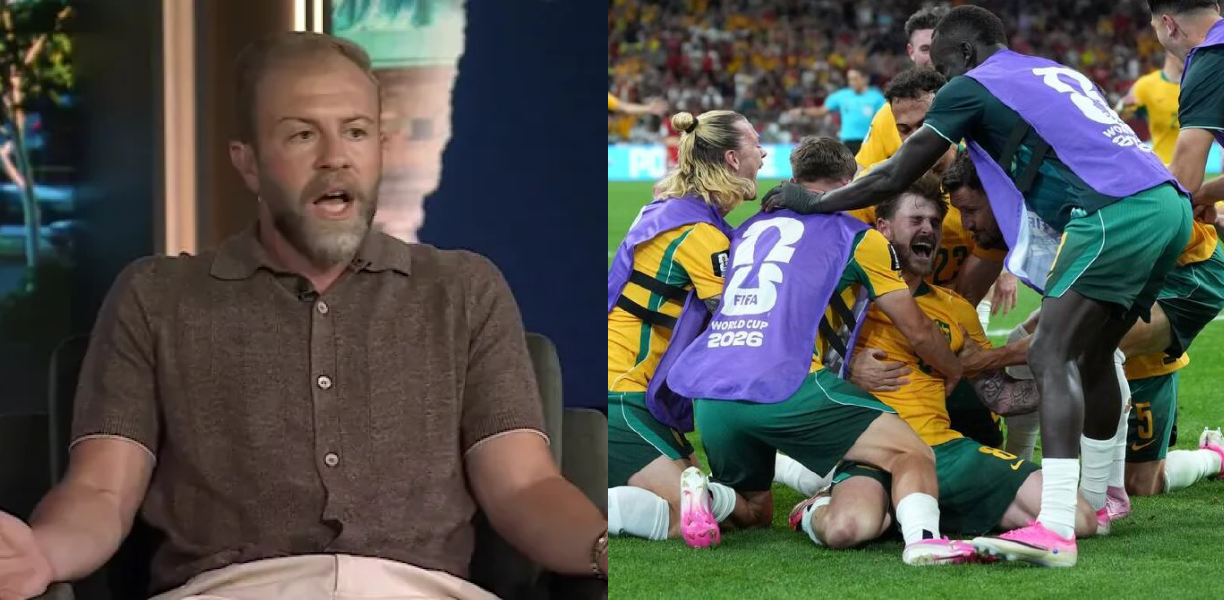
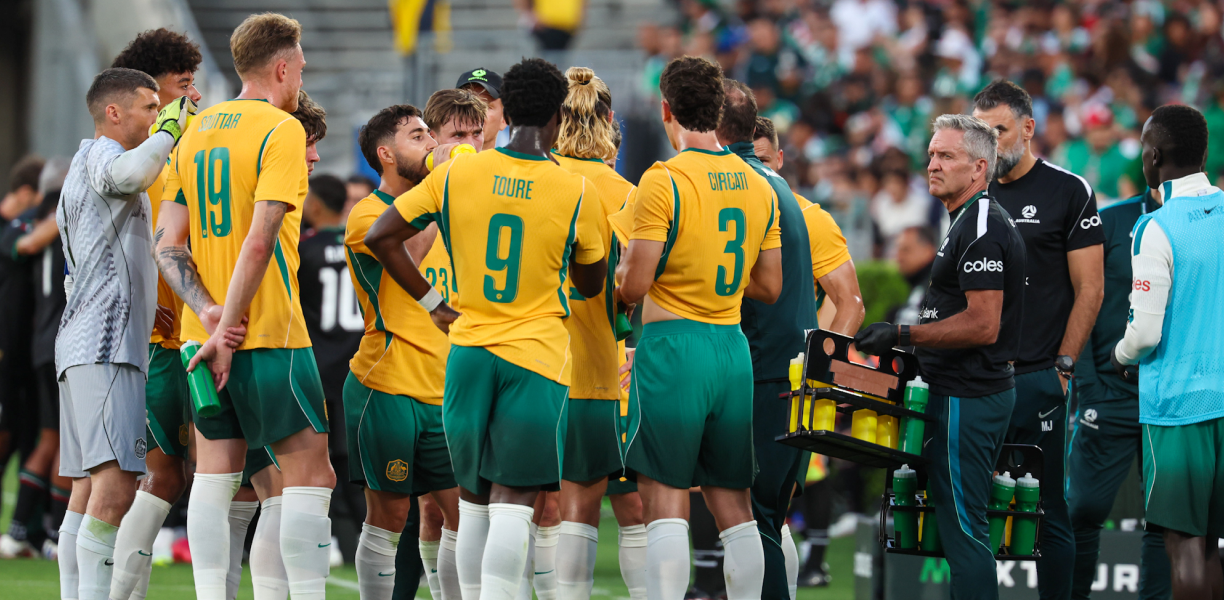
    The United States – Australia Group Game is providing one of the most tantalizing match ups of the World Cup.

    From the moment the two nations were drawn together in Group D, the match has been circled as one to watch and has been amplified following comments from several US Media pundits.

    When the host nation was matched with the lower ranked Australia a number for former players turned TV and Podcast hosts celebrated the result, claiming that the US should easily beat Australia.

    Mike Grella has been one of the most vocal, saying the fixture was a “Lay up” for the US during the draw and doubled down more recently, saying the Australians “have no shot of doing anything at the World Cup” and “They are the weakest team in the group”.

    In Australia much of the commentary has been around the Socceroos using the comments as motivation to win.

    Sure, the Australians can use it as motivation, but it’s a fine balance.

    Comments from opponents or media personalities can increase emotional energy and motivation, but athletes still need to channel that energy effectively.

    If emotions become overwhelming, they can interfere with decision-making and execution.

    Sources of Motivation

    The Socceroos and football teams in general have numerous sources of motivation: representing your country being a key one, family, success, growth, and a move to a prestigious club.

    The comments from the likes of Grella can be used as additional motivation but cannot be the sole source of motivation.

    For the Socceroos the motivation is likely to simply be to perform at their best (note we didn’t say beat) against the United States so that they can progress to the next stage of the World Cup.

    Athletes perform best when their focus is on executing their role and delivering their best performance rather than obsessing over the result.

    Ironically, focusing on winning often reduces the likelihood of performing well enough to win.

    Distracting from the Process

    The key reason that the Australians and all other teams shouldn’t be focusing on external noise is that it can distract from what really matters, which is the process.

    Australia’s 2-0 upset over Türkiye in the opening fixture came from their focus on the task at hand and maintaining their game plan – tightly structured defense, coolness under constant pressure and then finding opportunities on the counterattack.

    Using criticism as fuel can be effective, but only when it sits alongside a clear focus on preparation, execution, and the team’s game plan.

    Problems arise when proving others wrong becomes more important than doing the things required to perform well.

    Impact on Emotions

    Public criticism can create feelings of frustration, anger, or a desire for revenge.

    Those emotions are normal and can even provide energy for performance.

    The key is ensuring emotions are working for the athlete rather than against them.

    The best performers acknowledge how they feel, then redirect their attention toward the actions, decisions, and behaviors that will help the team succeed.

    External Noise

    When it comes to a World Cup or any major tournament, it’s almost impossible to block out all external noise.

    The important part is to acknowledge it is there, while recognizing that it only impacts performance if athletes allow it to influence their attention, emotions, or decision-making.

    Too much focus on blocking external noise and moving too far away from normal habits and routines can be derailing.

    For a player who regularly reads the newspaper or scrolls through social media in-season to then abandon all social media once a tournament arrives can narrow focus, but it can also increase the pressure they place on themselves.

    It is crucial that athletes have an off-switch and can find places to direct their attention outside of the sport they play, be it spending time with family, playing an instrument or some other hobby.


    The best teams don’t ignore external noise, nor do they become consumed by it.

    They acknowledge it, accept it, and then return their focus to what matters most: preparation, communication, effort, and execution.

    Whether the Socceroos use the comments as motivation or not, their success against the United States will ultimately be determined by how well they execute their game plan under pressure, not by what was said before kickoff.

  • High Mental Skills Engagement = Improved Performance

    High Mental Skills Engagement = Improved Performance

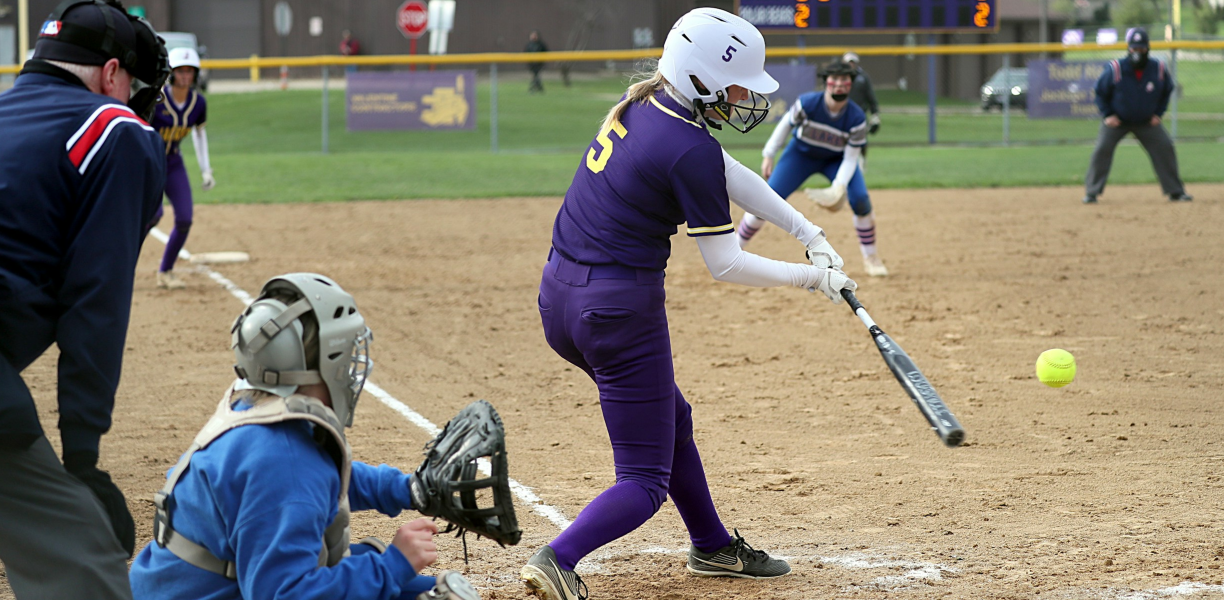
    In 2025, a Division I softball program partnered closely with its in-house sport psychologist to integrate structured mental performance training throughout the season.

    The result: higher engagement with mental skills training coincided with improved performance in the field. 

    Using the OMP platform, athletes engaged with targeted mental skills content consistently throughout the year – starting with preseason and then continuing in-season, making mental training a regular part of the competitive process rather than an occasional intervention. 

    Over a four-month period, the program recorded strong and sustained engagement.

    Athletes collectively spent 20 hours, 5 minutes, and 45 seconds engaging with mental performance content, completing 799 content plays and generating 136 app opens.

    This reflects consistent exposure and repeated interaction with mental skills resources embedded into the rhythm of the season. 

    Across the group, engagement varied while still showing strong overall consistency. Athletes completed an average of 12.1 content items each, with usage ranging from 6 to 19 items per athlete.

    Most athletes clustered within the 10–15 range, while a smaller group demonstrated higher engagement levels (16–19 items), highlighting both team-wide participation and individual differences in engagement depth. 

    Several mental skills sessions stood out for particularly high engagement. These included Not Letting Sticky Thoughts Become Sticky Feelings (93.75% of athletes), Build Your Imagery Script (87.5%), and Getting Comfortable with Being Uncomfortable (87.5%). 

    Additional high-engagement content included Build Your Mental Routine (81.25%) and Guided Imagery Exercise (75%).

    These topics reflect key performance themes such as emotional regulation, imagery, adaptability, and routine development under pressure. 

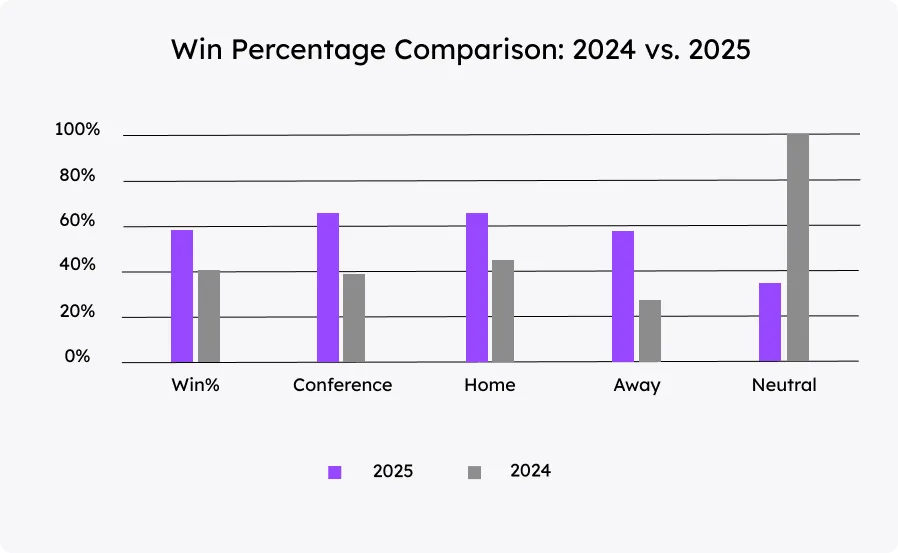
    Notably, this consistent mental performance engagement coincided with meaningful improvements in team performance outcomes compared to the previous year.

    The program saw a 17.9% increase in overall win percentage, a 27.8% increase in conference win percentage, along with gains in home (+23.8%) and away (+29.8%) performances. 

    High Mental Skills Engagement = Improved Performance

    While performance is always influenced by multiple factors – including physical preparation, coaching, and competition dynamics – mental performance served as a consistent layer of support throughout the season. 

    Rather than being positioned as a standalone initiative, mental performance was embedded into the broader training and competition ecosystem.

    Athletes regularly engaged with tools designed to support focus, emotional control, imagery, and routine execution, reinforcing key performance skills across the season. 

    The key takeaway: mental performance is not a one-time intervention, but a consistent part of the performance process.

    In this case, it acted as one important piece of a larger puzzle – contributing alongside coaching, training, and athlete development to support overall growth and competitive performance. 

  • Confident, Composed, Focused. All Season Long.

    Confident, Composed, Focused. All Season Long.

    A Division III women’s soccer team used OMP to integrate mental performance into training, helping players become more confident, composed, and focused throughout the season.

    One of our Division III partners used the platform to deliver a fully customized mental skills training program to their women’s soccer team across both preseason preparation and in-season competition.

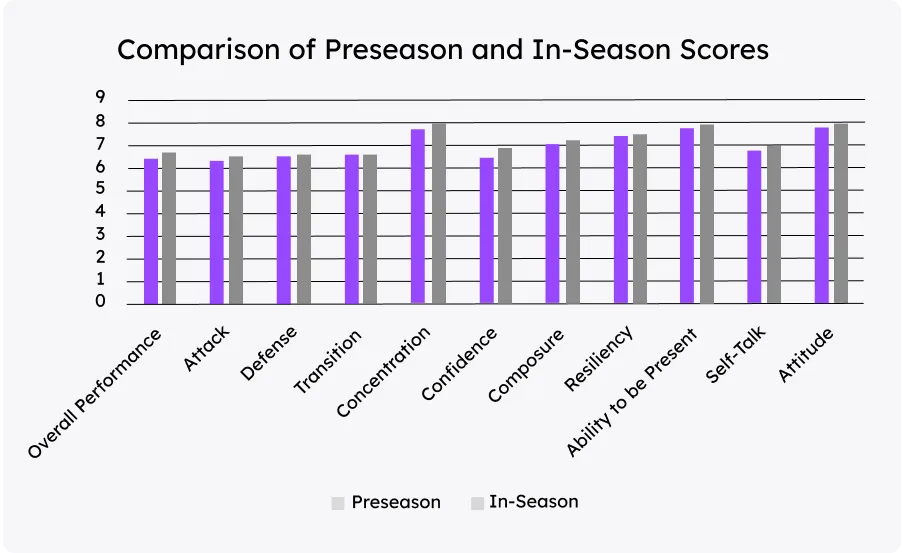
    Across all measured focus areas, self-reported scores improved from preseason to in-season.

    The largest improvements were seen in confidence (+0.49), self-talk (+0.27), composure (+0.24), and concentration (+0.22). Gains were also observed in resilience, present-moment focus, and attitude.

    Performance-related areas improved as well, including overall performance (+0.21), attack (+0.17), defense (+0.09), and transition (+0.03).

    Confident, Composed, Focused. All Season Long.

    The program was created and monitored by the team’s mental performance coach and consisted of exercises, post-game reflections, weekly check-ins, and game-specific visualization activities designed to reinforce learning and build self-awareness.

    All content was fully customized by the practitioner based on the team’s specific needs.

    Over the five-month program, athletes accumulated:

    • 6 hours and 22 minutes of content engagement

    • 151 content plays

    • 302 completed weekly reflections

    The mental performance coach used the preseason period to establish foundational mental skills before athletes began applying them under pressure during competition.

    Athlete reflections showed clear progression throughout the season. During preseason, athletes focused on building confidence, developing positive self-talk habits, managing injuries, and strengthening team connection.

    As the season progressed, those same skills became increasingly performance-oriented, with athletes referencing the importance of maintaining composure, adopting a next-play mindset, and relying on confidence during key moments in competition.

    These findings reinforce that mental performance development is not a one-time intervention, but an ongoing process that evolves throughout a season and becomes embedded within team culture.

  • Hydration Breaks are Mental

    Hydration Breaks are Mental

    The 2026 FIFA World Cup is a tournament of firsts.

    First tournament to have three hosts, first to have 48 teams participating and the first to have mandatory hydration breaks in each half.

    The latter has the most dramatic impact on player performance, allowing players to stay in the game physically and mentally.

    In case you missed it, all matches, regardless of the temperature, will have a three-minute hydration break at or around the 22-minute mark of each half.

    This gives teams the opportunity to refuel and refresh to combat the potential harsh conditions of playing during summer.

    From a mental game perspective, it could be a great leveler.

    Teams that have conceded early may be able to use the break to refocus and reframe, while teams that are leading may fall into the trap of enjoying the rest and easing off.

    The key for teams will be to keep in the here and now, and for managers and coaches to keep their messaging simple.

    Here are three simple things teams can do to make the most hydration breaks at the world cup:

    Hydration breaks are a valuable reset point for teams.

    Players and coaches can use this time to share simple, solution-focused feedback – what’s working, what needs adjusting, and where the next advantage can be found.

    From a sport psychology lens, this helps maintain collective focus, reinforce tactical clarity, and prevent emotional drift after key moments in the game.

    Keep routines flexible but consistent:

    Because this is a new and unique feature of the tournament, adaptability will be key.

    Pre-performance and in-game routines should not be rigid, but instead flexible enough to adjust to stoppages without losing structure.

    Maintaining familiar cues (breathing, body language resets, or cue words) helps players quickly re-enter performance mode and avoid disruption to rhythm or concentration.

    Use the break for physical and mental recovery:

    Hydration breaks should be treated as intentional recovery windows, not just pauses in play.

    Physically, this is a chance to refuel, rehydrate, and regulate body temperature in potentially extreme conditions.

    Mentally, it is equally important – players can use this moment to reset attention, release frustration, and refocus on the next phase of the game.

    This supports emotional regulation and helps prevent lapses in intensity after stoppages.


    Hydration breaks may seem small, but they can have a big psychological impact on performance. The teams that stay focused, adaptable, and intentional in these moments will be best placed to perform consistently across 90 minutes.

  • The Clear Impact of Delivering a Program Using OMP

    The Clear Impact of Delivering a Program Using OMP

    What happens when a Division I gymnastics team uses OMP to fully integrate mental performance into their training program?

    The numbers tell a clear story.

    One of Optimize Mind Performance’s Division I partners used the platform to deliver a mental skills training program to their Women’s Gymnastics team.

    Led by the team’s embedded Sport Psychologist, mental skills training was given clear space in the athlete’s physical training program.

    When engagement in the mental performance program was higher, the team won.

    When engagement dropped, they lost.

    Across the season, a consistent pattern emerged:

    Wins → 68% usage

    Losses → 50% usage

    The difference in numbers reflects how consistently athletes engaged with mental performance content leading into and around competition.

    How did they do it?

    The team’s in-house sport psychologist combined her own bespoke mental performance content with items from OMP’s content library to build a program for the gymnastics team, and delivered it through the OMP app.

    The Head Coach then embedded this into the training environment by allocating dedicated time for athletes to engage with the program.

    Athletes also completed structured pre and post-performance reflections using OMP, helping them connect preparation, mindset, and performance in real time.

    The Performance Link

    The same pattern showed up when looking at performance scores.

    • Wins → 68% usage | 197.43 average score
    • Losses → 50% usage | 196.64 average score

    Once again, the key difference wasn’t just whether mental performance tools were available – it was how consistently they were used in the build-up to competition.

    Higher engagement aligned with higher performance outcomes.

    Lower engagement aligned with lower outcomes.

    There are many pieces that make up an athlete’s story, and these numbers make one thing clear: mental performance training is one of them. It is an essential piece of the puzzle.

  • Psychological Factors Play a Critical Role in Injury Cause & Recovery

    Psychological Factors Play a Critical Role in Injury Cause & Recovery

    Over the past 20 years, there has been growing concern around what many have referred to as an “injury epidemic” in certain sports.

    Traditionally, the focus has been placed heavily on physical load – how much athletes train, how often they compete, and how their bodies are managed across a season.

    While load management is undoubtedly important, recent research suggests that it does not tell the full story.

    In fact, studies drawing on the William and Andersen stress-injury model highlights that psychological and environmental factors also play a critical role in injury risk.

    This model suggests that an athlete’s response to stress is shaped not only by physical demands, but also by personal and life-related stressors that accumulate over time.

    One of the key contributors identified is the impact of major life events.

    These can range from changes in relationships, academic or career pressures, family dynamics, financial stress, or identity-related challenges.

    These stressors do not exist in isolation, but they interact with physical load and can influence both susceptibility to injury and recovery outcomes.

    In today’s sporting environment, athletes are also navigating a level of scrutiny that previous generations did not experience.

    The rise of social media means performance is constantly visible, analyzed, and commented on.

    Alongside this, athletes are balancing expectations from coaches, teammates, fans, and themselves, while also managing life outside of sport – relationships, education or work commitments, and personal identity beyond their athletic role.

    When all of these factors are combined, it becomes clear that athletes are not only under physical pressure, but also significant psychological and emotional pressure on a daily basis.

    Injury is not just physical

    This is why injury and return-to-play should not be viewed purely through a physical lens. While rehabilitation, strength work, and medical care are essential, the mental side of injury is equally important.

    An athlete’s thoughts, emotions, stress levels, and ability to cope with uncertainty all play a role in how they experience injury and how effectively they return to performance. Confidence, fear of re-injury, motivation, and patience can all influence the rehabilitation process in meaningful ways.

    What athletes can do

    While athletes cannot eliminate stress entirely, they can develop tools to better manage it and support both performance and recovery. Some key strategies include:

    1. Reframing injury as an opportunity

    Injury, while difficult, can also be a period for growth.

    It can provide space to develop other areas of performance such as mindset, game understanding, leadership, or physical weaknesses that are often overlooked during competition periods.

    2. Managing life stress more effectively

    Practices such as meditation, breathing exercises, and journaling can help athletes process stress more effectively.

    These tools support emotional regulation and create more awareness around how external stressors may be impacting recovery and performance.

    3. Seeking support from mental performance professionals

    Working with a mental performance coach or sport psychologist can help athletes navigate the psychological challenges of injury, build coping strategies, and stay mentally engaged throughout the rehabilitation process.

    4. Understanding the rehab process

    Uncertainty often creates anxiety. Having a clearer understanding of what the rehabilitation journey looks like, including timelines, setbacks, and milestones, can help athletes feel more in control and reduce unnecessary stress.

    5. Staying present and managing expectations

    One of the biggest challenges during injury is managing expectations about return timelines and performance levels.

    Learning to focus on the present stage of recovery, rather than rushing ahead mentally, can significantly improve both mental well-being and physical outcomes.

    Ultimately, if we want to better understand injury in modern sport, we need to move beyond purely physical explanations and look into the psychological aspect of injury that will ultimately help with return to play.

  • Messi & Ronaldo: Mentally Preparing for the End

    Messi & Ronaldo: Mentally Preparing for the End

    For the past two decades, football fans have argued over the simple question: Who is the GOAT, Messi or Ronaldo?

    Sadly, with Lionel Messi turning 39 mid tournament and Christiano Ronaldo already 41 this is almost certainly the final time that two of the greatest players in the history of the game will represent their country at a World Cup. 

    Messi & Argentia

    Messi – alongside Diego Maradonna – is like a deity in Argentina and has withstood the weight of expectations by leading Argentina to victory in 2022.

    Ranked 3rd heading into the tournament the expectations are that Messi and his team will go back-to-back and send Messi off in the perfect way.

    Read More About Messi’s Greatness: Messi’s Mental Game Makes Him Great

    Ronaldo & Portugal

    Portugal has enjoyed major international success, including winning the Euros, but their World Cup journey with Ronaldo has been defined by near-misses and moments of promise.

    Since his World Cup debut at the 2006 tournament where they finished 4th, their best finish came in 2022, when they reached the quarter-finals.

    Ranked 5th heading into the tournament, Portugal are amongst the tournament favorites.


    So, can Messi or Ronaldo finish their international careers in the perfect way?

    For both of these legendary players and their teammates, the mental side of performance is key to ensuring they perform at their best and aren’t overawed by the attention that the final tournament for two greats will bring.

    Present

    The biggest challenge is staying present.

    With so much attention on legacy and “finals,” it becomes easy to get pulled away from the moment.

    Focusing on the process like preparation, decision-making, effort, and execution can help anchor performance in what can actually be controlled.

    Perspective

    Equally important is perspective.

    Stepping outside of the footballer identity and remembering other roles such as a parent, a son, a teammate, a person can reduce pressure and create emotional freedom.

    It allows them to approach the tournament not with weight, but with clarity.

    Playing for their nation at this level is about balance: confidence in preparation, emotional control under pressure, and the ability to handle the mental load of expectation.

    Reflection

    It also involves reflection – recognizing how far they’ve come, reconnecting with their “why,” and understanding what first drew them to the game.

    And through it all, football remains a team sport.

    Supporting teammates, staying connected, and sharing responsibility ensures that the focus is not carried alone, but distributed across the group.

  • Wake Forest Partners with OMP

    Wake Forest Partners with OMP

    Wake Forest University has become the latest Division I school to partner with Optimize Mind Performance.

    The Demon Deacons of Winston-Salem, North Carolina have won 11 National Championships and become the sixth Atlantic Coast Conference school to partner with OMP.

    Led by Dr. Javier Martin-Fernandez, Wake Forest’s Sport Psychology Department will use OMP to scale the delivery of their services across their 18 varsity teams.

    “Bringing OMP into our daily operations wasn’t just about adding a new tool, it was about making sure our student-athletes, staff, and department actually have what they need, when they need it, how they need it.,” Dr. Martin-Fernandez The McIlvaine Family Director of Behavioral Health and Performance at Wake Forest said.

    “Mental performance support works best when it’s accessible, practical and meaningful to each person.

    “OMP helps us close the gap between what we know clinically and empirically and what happens on the field, and that connection is what will help drive real results for our coaches and athletes.”

    OMP CEO & Founder Jack Preddey said: “We are delighted to welcome Wake Forest as a partner, and we look forward to assisting Dr. Martin-Fernandez and his team as they engage with their teams, coaches and individual athletes through our platform.”

    “Being the sixth ACC school to use OMP, it reflects the impact that we are having across organizations we work with.”