Blog

  • An Athlete’s Purpose is More than Medals

    An Athlete’s Purpose is More than Medals

    With the Winter Olympics just days away, athletes from around the world have spent years training to represent their countries on sport’s biggest stage.

    The sacrifices are immeasurable, countless hours in the gym, early mornings, sacrifices, and unwavering dedication. 

    For many, this becomes their entire identity, their singular goal is to win a medal for their country.

    But what happens when it’s all over?

    British cyclist Jack Carlin knows this feeling all too well.

    When asked about his two silvers and two bronze medals, he admitted something surprising.

    “I made the mistake of thinking that my purpose was this medal, and I achieved that purpose, and then I was lost,” he told The Endurance Podcast.

    “I remember coming off of that podium and going straight to the BBC, and the BBC asked me ‘How do you feel, you must be so elated?’.

    “They’re putting all these words in your mouth and I was just so perplexed by everything that was going on that I just said yes.

    “This moment is everything I’ve dreamed of, and it wasn’t.”

    His true purpose lies in his friends, family, and other pillars of support. 

    “The Olympics was a goal, a huge goal but it was a goal, it wasn’t a purpose,” he said.

    “Purpose is other things, purpose should be friends and family, whatever it is for whoever it is.”

    This realization is crucial, especially as thousands of athletes approach these Winter Olympics.

    Many will pour everything into their performance, only to feel lost once the competition ends regardless of if they achieve their goals or fall short.

    So how can athletes and anyone chasing ambitious goals protect themselves from this emptiness? 

    Find Your Why

    Reconnect with the reason you started in the first place.

    Was it the pure joy of movement? The thrill of pushing your limits? The camaraderie with teammates?

    Understanding your deeper motivation creates a foundation that outlasts any single competition. 

    Clarify Your Values

    Determine what truly matters to you beyond performance metrics.

    Is it connection, creativity, growth, or contribution?

    Once you identify these values, seek experiences and relationships that align with them outside your sport. 

    Cultivate Hobbies Beyond Your Sport

    Just because there’s a competition around the corner doesn’t mean you should abandon the things that bring you joy. 

    Other hobbies aren’t distractions from your goals; they’re essential parts of who you are.

    Build Genuine Pillars of Support

    Surround yourself with people who value you for who you are, not just what you achieve.

    The relationships that matter most are the ones that remain steady when you’re struggling, not just when you’re winning.

    These are the people who make the journey worthwhile. 


    As large events approach and the pressure intensifies holding onto your why, protecting the hobbies and relationships that ground you, and not lose sight of who you truly are is crucial to ensuring a greater purpose holistically.

  • The Mental Skills Powering Alex Honnold

    The Mental Skills Powering Alex Honnold

    On January 24, Alex Honnold climbed Taipei 101 free solo scaling all 101 floors of the skyscraper without ropes. 

    This wasn’t his first historic climb. Honnold famously became the first person to free soloed El Capitan in Yosemite National Park.

    The skyscraper is a completely different feat.

    The structure is fully vertical, repetitive, physically taxing, and unpredictable in ways natural rock faces aren’t.

    Pulling off a climb like this requires another level of mental prowess.

    The climb was streamed live on Netflix, and in interviews leading up to the event, Honnold spoke openly about his mindset and the mental skills that allowed him to complete this task. 

    So, what mental skills did he use?

    Visualization

    During the broadcast, Honnold revealed that visualization is a key part of his preparation for every climb, and that his mental preparation is crucial to his physical preparation. 

    “When I visualize a climb like Taipei 101, I’m thinking about what it’ll feel like, and that’s kind of the whole point of doing the visualization, is to experience those emotions ahead of time so that I don’t experience them while I’m doing the climb,” he said. 

    “It’s this mental preparation that informs my physical training.

    A lot of my training for Taipei 101 is different than rock climbing. It’s more around simulating the feeling in my body, which is sort of deep fatigue.” 

    Self-talk

    When something unexpected happens, Honnold’s internal dialogue isn’t motivational or emotional – it’s practical and regulating.

    As he explains, “My self-talk just has to do with taking some deep breaths and calming down my body.”

    He stays anchored in the present moment by focusing on breathing and composure.

    He also reframes the situation in a calm, reality-based way, noting that “once you’ve registered that it’s happened, it’s already happened… you didn’t fall off.”

    This helps him shut down panic and return attention to the task. 

    Mindfulness and acceptance

    Honnold describes fear not as something overwhelming, but as a physical sensation that closely resembles excitement or nervous energy.

    “In your body it feels a lot like excitement or nervousness… it’s just like a tingling energy,” he explains.

    Rather than fighting these sensations, he observes them without judgment.

    As he puts it, “Just because you’re feeling something in your body doesn’t necessarily have to have an impact on the way you act.”

    This reflects a meditative, non-judgmental awareness that allows fear to exist without controlling behavior. 

    Present-moment awareness

    Throughout the climb, Honnold’s focus remains on executing the next movement rather than thinking about the height, the risk, or the audience watching live.

    He minimizes external pressure by reframing the situation: “I don’t really care who’s watching. I care about doing what I’m doing and doing it well.”

    When his rhythm is disrupted, he intentionally slows down, emphasizing that “there’s never any time pressure, so you can spend as long as you need just hanging in one space basically trying to compose yourself.”

    Process goals

    While reaching the top is important, Honnold defines success by how he performs and feels during the climb.

    “I want to feel good while I do it. I want to smile and enjoy myself,” he says.

    Drawing parallels to ultramarathons, he explains that his goal is to “not injure myself and comport myself with dignity… cross the finish line with a smile.”

    He focused more on the process than the outcome. This helped him complete this task with calmness and composure.

    — 

    Honnold’s climb shows that elite performance isn’t about being fearless, but about responding to pressure with calm self-talk, presence, and a focus on the process.

    When the stakes are highest, mental skills are what helps athletes perform at their best.

  • How USOPC is Using Tech to Navigate 8 Athlete Villages

    How USOPC is Using Tech to Navigate 8 Athlete Villages


    Every Olympic games, be it winter or summer, presents logistical challenges.

    With the 2026 Winter Olympics being held across northern Italy, Team USA (and other competing nations) are stretched across eight different athletes’ villages.

    While they’ll have plenty of support staff on the ground in Milano-Cortina, the US Olympic and Paralympic Team’s Psychological Services Team are leaving nothing to chance.

    Speaking on Optimize Mind Performance’s Podcast, Senior Director, Psychological Services Dr Jess Bartley explained how they’ve used technology to ensure that every athlete across eight athletes’ villages gets the assistance they need.

    “We’ve done a really good job of using our education of identifying signs and symptoms and who are our allies and who could help us,” she said.

    “You can easily push someone to Headspace or to Optimize. One of the things that we’ve done in the past is on every athlete’s pillow we have these eye masks and neck pillows, and we actually called out our apps like, ‘hey, this is actually a module on sleep, go to optimize and do this or go to headspace and do this’.

    “We’re already forward thinking around where we can push people to technology.”

    All of this preparation comes after Dr Bartley and her team were “slammed” during the 2024 Paris Summer Olympics.

    There the Psychological Services had a large, centralized resource center that included many comforts of home were available to athletes and coaching staff.

    “We had huge bean bags and couches. If athletes forgot their shampoo, their conditioner, every snack under the sun that was American that maybe you would miss,we shipped all of it over there,” Dr Bartley said.

    “That’s where our team posted up with the dieticians. Everybody knew that’s where we were. And during the games, we had 1200 sessions. We were slammed.”

    That’s why technology will be key for Dr Bartley and her team.

    They are expecting to once again be inundated with one-on-one sessions with athletes.

    These sessions don’t just relate to the pressure they’re feeling in their performance.

    As Dr Bartley puts it, life outside of competition doesn’t stop.

    “We’re talking through ‘Hey, I actually just got in a fight with my boyfriend and now I’ve compete’ or, ‘X and Y just happened at home’ or ‘my gosh, I forgot to pay my water bill and my roommates pissed at me because their water shut off’.

    “I think that’s one of the things that I learned during the first few games was life still happens.

    “We have athletes who have very real things happen, experienced a miscarriage or a grandparent dies so things happen that aren’t related to performance and impact performance.”

    You can listen to the full conversation with Dr Jess Bartley below:

  • CFP National Championship: Overcoming the Weight of Waiting & Expectation

    CFP National Championship: Overcoming the Weight of Waiting & Expectation


    It all comes down to this.

    The College Football National Champion is just days away from being decided with the Miami Hurricanes and the Indiana Hoosiers set to face off in Miami.

    With a crowd of nearly 65,000 set to fill Hard Rock Stadium and millions watching around the world, the game comes with a great weight of pressure and expectation.

    While the Miami Hurricanes go in as underdogs (ranked 10th in the country and a 13-2 record), they have the added pressure of having a home final, with the Hurricanes playing their regular season games at the Hard Rock Stadium.

    Playing in a place that is so comfortable to them will bring expectations from fans and fellow students that they can deliver the program’s first national title since 2001.

    On the other hand, the Hoosiers face pressure not yet seen before in their college’s history.

    After winning their first conference title since 1967, they enter the game with an unblemished record and are ranked number one in the country.

    This teams have the chance to deliver the Indiana University Bloomington their first national title since the Hoosiers played their first game 139 years ago.

    Let’s look at how both teams can use mental skills to overcome some of the mental barriers they may face in preparing for their huge game:

    The Weight of Waiting

    When a program has waited decades (or for this moment, athletes carry more than just the game they carry history.

    That weight can pull attention toward what the outcome would mean rather than what needs to be done now.

    Teams perform best when they stay anchored in the present, allowing history to serve as motivation rather than pressure that dictates performance.

    Mindfulness can be a key tool in times like this to remind athletes to stay in the present and not let the past dictate their future.

    Pressure of Playing at Home

    Playing at home brings familiarity and comfort, but it also raises expectations.

    Athletes may feel responsible to fans, students, and the program, creating pressure to perform a certain way.

    Reframing the noise as energy helps transform expectation into intensity, allowing the environment to fuel focus rather than distract from it.

    Favorite Status

    Being the favorite brings pressure to win, making mistakes feel bigger and momentum swings sharper.

    Success depends on staying emotionally steady and sticking to team identity.

    When athletes focus on execution, values, and their purpose for playing, pressure becomes something to manage not something that overwhelms performance.

    Underdog Status

    Underdog teams often play freer, driven by effort, preparation, and belief rather than expectation.

    The key is avoiding the temptation to do too much or step outside defined roles.

    When athletes trust the game plan and focus on controllables, momentum builds naturally and confidence grows with each play

  • Mentally Preparing for the Australian Open

    Mentally Preparing for the Australian Open


    The Grand Slam tennis season kicks off this Monday in Melbourne, Australia, and with it comes a unique set of mental challenges for players.

    It has been just over four months since the US Open last year and while there are tennis competitions all year, the break from major competition has given some players time to recover, reset, and build.

    The Australian Open becomes the first real test of how well those learnings have been integrated.

    Pressures of a new season

    A new season brings fresh expectations, rankings, results, and the pressure to start strong.

    From a sport psychology perspective, it’s important that players don’t let one tournament define the rest of their year.

    The focus should remain on controllables: routines, effort, and execution rather than outcomes.

    Past mistakes can be used as fuel to energize the season ahead; while breathing and mindfulness techniques help players stay present, calm nerves, and manage the pressure that comes with competing on a big stage.

    Learning from the past without living in it

    Players enter Melbourne with memories of last year’s performances, good or bad.

    The key mental skill here is reflection with intention.

    The 3-2-1 rule works well here – 3 things what worked, 2 that did not, and 1 way in how they can improve upon it.

    The mental challenge of the Australian heat

    The Australian Open is notorious for extreme temperatures.

    Beyond the physical toll, heat places a significant mental strain on athletes, fatigue, frustration, and dips in focus and concentration are more likely.

    Managing hydration, recovery, and between-point routines becomes critical.

    Mentally, athletes need strategies to stay calm, conserve energy, and break matches into manageable moments.

    Facing higher-ranked opponents

    Early rounds often bring matchups against higher-ranked players, especially for those coming through qualifiers or wildcard entries.

    The mental edge lies in reframing, treating the match as another opportunity to compete freely rather than a “Grand Slam match” loaded with pressure.

    Using tools like visualization to revisit past strong performances can reinforce confidence and remind players that they belong and are more than capable of performing at this level.

    Making the most of wildcard opportunities

    For wildcard players, the Australian Open is a chance to test themselves on one of the biggest stages in the sport.

    The most effective mindset is one that balances excitement with simplicity: prepare like it’s any other tournament, stick to routines, and focus on competing point by point.


    The Australian Open sets the tone, but it doesn’t define the season.

    Players who stay present, trust their routines, and adapt to the moment give themselves the best chance to build momentum.

    One match, one point, one opportunity at a time.

  • Decompression: England Cricket’s Plan to Bounce Back

    Decompression: England Cricket’s Plan to Bounce Back


    The English Men’s Cricket teams is having a rough Ashes tour in Australia.

    The travelling side that plays with an aggressive and attacking style known as ‘Bazball’ have been far from their best.

    In the two tests so far, they’ve been soundly beaten by their hosts and trail the five match series 2-0 heading to the third test in Adelaide.

    Former England captain Hasser Hussain didn’t hold back in his criticism of the English, saying the team was “out bowled, out batted, out caught, out thought.”

    After their defeat in the second test in Brisbane, their coach Brendon McCullum said they’d “over prepared” so ahead of the next test England is taking a different approach.

    The team has taken a break and are spending time in the seaside town of Noosa to play golf and relax by the beach.

    As captain Ben Stokes explained: “We’ve been here for four weeks, and it’s been pretty full on— on the field and off. As physical as this game is, a huge part of it is also the mental side of it.”

    Why is rest important?

    Stokes pointed out that recent struggles weren’t just about physical fatigue they were also due to mental strain.

    Rest is a critical aspect of athletic performance because it supports recovery, skill development, and expertise.

    Yet, traditional ideas of rest often focus only on inactivity, missing the broader benefits of truly stepping back.

    A study of 18 athletes and four staff members found that athletes achieve genuine rest through a combination of sleep and wakeful rest.

    Wakeful rest includes activities that allow the mind to disengage from sport like watching TV or spending time in a different environment helping athletes recharge mentally and emotionally.

    In this case, the England team is putting these principles into practice – they’re leaving the game behind for a while, decompressing, and doing something entirely different.

    What is decompression?

    Decompression is the process of giving ourselves time and space to recover from intense experiences. It’s not just about physical rest it’s about mental recovery too.

    How can decompression help mentally?

    • Reconnect with the sport: Stepping away from the pressures of performance allows athletes to remember why they love the game.
    • Reconnect with their ‘why’: Time off provides perspective, helping players reflect on their purpose and motivation.
    • Reduce stress and mental fatigue: Decompression gives the mind a break from constant pressure, helping prevent burnout.
    • Improve focus and decision-making: Returning refreshed can enhance concentration and clarity on the field.
    • Strengthen resilience: Mentally recovering from setbacks off the field can translate into stronger, more composed performance during matches.
    • Team Bonding: Spend time getting to know your teammates as people outside of the sport. Building these personal connections off the field can strengthen trust, communication, and chemistry, which often translates into better teamwork and performance on the field.

    In short, rest and decompression are tools for peak performance.

    By taking time away from the grind, England is giving themselves the best chance to bounce back stronger for Adelaide.

  • Penn Manor HS Partners With OMP

    Penn Manor HS Partners With OMP


    Optimize Mind Performance (OMP) is delighted to announce that it has partnered with the Penn Manor School District.

    Penn Manor, located in Millersville, Pennsylvania, will give its student-athletes access to OMP, helping to train the mental side of their performance in interscholastic athletics.

    The Comets have 25 varsity teams across 16 sports with the school boasting nine state championships, the most recent coming in girl’s field hockey in 2017

    OMP is the world’s leading mental performance platform, and is used by leading NCAA Division I schools Stanford, USC and Duke, and professional teams including the Memphis Grizzlies and MLS team Chicago Fire.

    OMP CEO Jack Preddey said, “It’s great to see another high school adopt and implement OMP within their athletic teams.”

    “Penn Manor is the first public high school to partner with OMP, so it’s great that more of the next generation are getting the opportunity to improve such a crucial aspect of their game.”

    Pat Tocci, Penn Manor Athletic Director said, “Our partnership with OMP allows Penn Manor to provide student-athletes and coaches with unrivaled access to mental performance training from leading experts.”

    “This powerful platform is a game-changing resource that will be an invaluable asset to our athletic department’s future success.”

  • Mental Imagery: The Key to Weightlifting Motivation

    Mental Imagery: The Key to Weightlifting Motivation


    Weightlifting is often seen as a pure test of physical strength, but the mental side of the sport is just as crucial.

    Success depends not only on how much an athlete can lift but also on how effectively they prepare their mind through skills like imagery.

    A recent study examined the connection between mental imagery and motivation in 347 weightlifters competing in Junior and U-23 Championships.

    The research aimed to explore how factors such as gender, education, sports experience, and competition level influence athlete’s use of imagery and their overall motivation.

    The findings revealed that mental imagery, particularly Cognitive Imagery (CI), Motivational Specific Imagery (MSI), and Motivational General-Mastery (MGM) is strongly linked to higher motivation.

    While gender did not significantly impact overall motivation, female athletes were more likely to use Motivational General-Arousal (MGA), effectively harnessing confidence and emotional intensity to enhance their performance.

    This suggests that athletes may rely on slightly different imagery strategies based on individual traits, yet all will benefit from integrating mental skills into their routines.

    Education, age, and sports experience were also positively associated with effective imagery use.

    More experienced and educated athletes tended to apply mental strategies more efficiently, demonstrating that both knowledge and exposure to competitive environments strengthen an athlete’s ability to visualize lifts, manage pressure, and maintain focus.

    These insights highlight the powerful role of mental skills in weightlifting.

    Athletes who actively use imagery and motivation can manage competition stress, refine technical execution, and sustain concentration during training and performance.

    Techniques such as cognitive rehearsal, visualization of lifts, arousal control, and goal-focused imagery are particularly valuable, helping athletes mentally rehearse successful outcomes before stepping on the platform.

    This study emphasizes that mental training for weightlifters is an essential component of their training giving athletes the tools to achieve peak performance.

  • Inside Travis’ Head: The Mindset Behind an Ashes Masterclass

    Inside Travis’ Head: The Mindset Behind an Ashes Masterclass


    Over the weekend, the most iconic rivalry in cricket returned – The Ashes, and the opening Test did not disappoint.

    The first match had everything sport lovers could ask for: disappointment, brilliance, collapses, shock twists, and pure drama.

    The atmosphere in Perth was electric, and the cricket matched it ball for ball.

    England, after winning the toss, were bowled out for just 172, but the match was far from one-sided.

    Australia also stumbled, and at one stage it felt like both teams were trying to outdo each other in batting collapses.

    Momentum swung wildly throughout the Test. This is a perfect example of one of those games where the psychological battle was just as intense as the cricket itself.

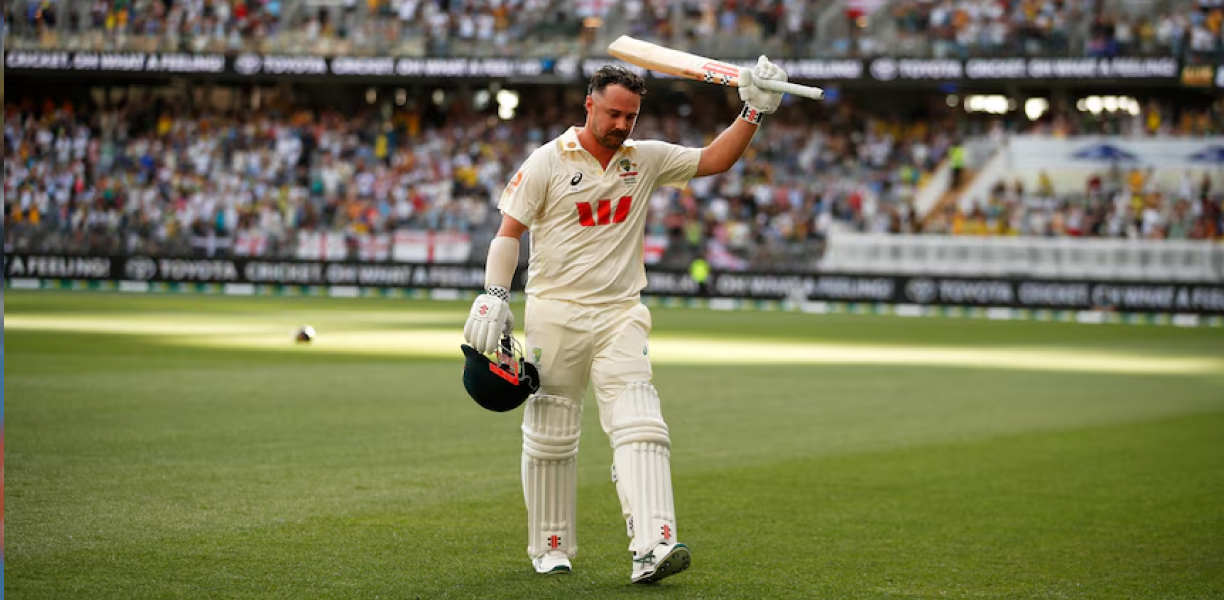
    And then came Travis Head, the innings that changed everything.

    Head walked in and smashed 123 from 83 balls, helping Australia to an eight-wicket win.

    But, his performance was an example of a masterclass in mental performance.

    The Mental Strength Behind Head’s Knock

    What stood out wasn’t just the shots – it was the mindset.

    While others before him tightened up under pressure, Head looked free, calm, and almost playful.

    In an interview after the match, he spoke about his approach:

    “I know what my preparation needs to be. I try to keep mentally fresh. The hardest part about this game is the mental side.”

    That line perfectly sums up why his innings was so special.

    Why Travis Head’s Mindset Worked

    1) Trusting Preparation

    “I trained all four days before the Test because I knew it was a tough wicket. I wanted to be in my rhythm and ready to play. I’m old enough now, I’ve played enough cricket, I know what my preparation needs to be.

    Under pressure, athletes often get caught up in what can go wrong. Head did the opposite – he trusted the work he’d already done. When athletes feel prepared, they perform with clarity and confidence instead of hesitation.

    2) Playing with Freedom

    He wasn’t playing “not to get out” – he was playing to score. That shift in mindset changes body language, decision-making, and flow.

    3) Staying Present

    With 30 wickets having fallen across two days and over 200 runs needed to win, it would’ve been easy to think about the negatives. Instead, Head stayed in the moment, one ball at a time, and because of that, his execution stayed sharp.

    4) Enjoying the Occasion

    This might be the most underrated point. When an athlete enjoys the pressure instead of shrinking from it, their natural game emerges. Head looked like he was having fun, and his performance was a testimony to that.

    This Test perfectly showed how pressure can reshape decision-making, how momentum can swing in a heartbeat, and how the mental game is often the true difference-maker in performance.

  • Deliberate Practice, Kaizen, and the Path to Consistent Elite Performance

    Deliberate Practice, Kaizen, and the Path to Consistent Elite Performance


    Ever wondered how top athletes reach expert levels of performance?

    Is it natural talent? The right coaching environment? Just more hours of training than everyone else?

    While those factors play a role, research by Ericsson, Krampe, & Tesch-Römer (1993) suggests something much more powerful: expert performance is built through years of deliberate practice.

    What Is Deliberate Practice?

    Deliberate practice is not just “training harder” or repeating a skill thousands of times. It is a highly structured form of practice designed specifically to improve performance. It involves:

    • Purposeful, focused effort rather than going through the motions
    • Feedback and correction, not just repetition
    • Targeting areas of weakness, not only practicing what feels comfortable

    In other words, deliberate practice is about quality over quantity.

    It’s training with intention, direction, and reflection.

    And here’s the key: this applies not only to physical skills, but also to mental performance.

    Kaizen: The Power of Continuous Improvement

    Alongside deliberate practice, another useful framework for athletes is the Japanese concept of Kaizen, which means:

    Continuous, steady improvement through small, consistent changes.

    Kaizen is grounded in one core belief: Small improvements, repeated over time, lead to extraordinary results.

    Unlike massive, dramatic transformations, Kaizen emphasizes 1% better every day. For athletes, that can mean refining focus, improving pre-game routines, sharpening self-talk, or building stronger emotional regulation over time.

    How OMP Supports This Development

    1. Consistent, coach-guided mental training

    Athletes follow customized mental performance programs designed around their needs, goals, and competitive environment.

    2. Deliberate practice for the mind

    With content and tools from world-class mental performance coaches, athletes can practice skills like:

    • imagery & visualization
    • self-talk
    • emotional regulation
    • focus and attentional control
    • pre-competition routines

    3. Kaizen habit-building

    Instead of relying on motivation spikes, OMP helps athletes:

    • build small, repeatable mental habits
    • track progress weekly
    • reflect on what’s working and where to adjust
    • arrive on game day mentally prepared, not mentally guessing

    When athletes combine deliberate mental practice with the Kaizen mindset, they don’t just perform better once they perform better consistently.

    They learn how to bounce back from mistakes faster, stay composed under pressure, trust their preparation, performance with clarity and confidence and develop a growth mindset.