Author: Ryan Miller

  • Sakakibara Chose Fight over Flight and Won Gold

    Sakakibara Chose Fight over Flight and Won Gold

    Author – Ryan Miller

    Ryan Miller is an award-winning Journalist, Broadcaster and Photographer, and OMP’s Head of Content.


    Overcoming fear to perform at you best in any line of work is tough.

    When it comes to Saya Sakakibara’s Gold in the Women’s BMX Racing in Paris, her journey to overcome fear has been unlike any other.

    Her brother Kai – also a promising BMX Racer – nearly died after a crash during a race in 2020.

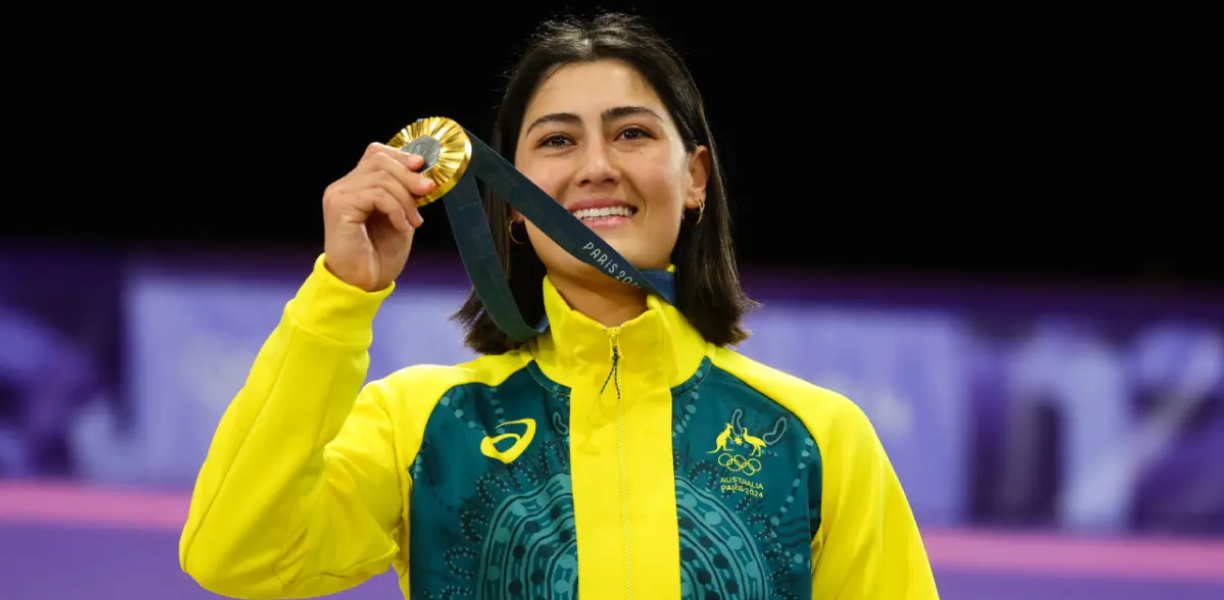
    Then in her Olympic debut in Tokyo, Sakakibara crashed in a semi-final, leaving the track on a stretcher.

    It started a run of concussions for the Australian and a fear of further setbacks.

    When we experience fear, the amygdala activates within our brain and fight, flight or freeze kicks in.

    This is a bi-product of our evolution as a species – the primal need to survive when faced with threats that would kill us. Survival of the fittest.

    Sakakibara almost took flight.

    Following another concussion in 2022, she almost quit the sport.

    Instead, she chose to fight.

    “Physically I was there, I was fast enough, I was doing quite well, so all I needed to do was focus on my mental side,” Sakakibara told CNN.

    “I gave it another go and that’s the push that I needed.”

    The fear of injury and failing hasn’t left Sakakibara, but it took a lot of work to push past the fear and compete in one of the world’s most dangerous sports.

    “I did a lot of research, reading books, listening to podcasts, talking to psychologists to find something that worked for me,” she said in an interview with Sports Hounds before the Olympics.

    “When I conquer my fear, it’s an amazing feeling. And I think that’s what drives me. And also, I hate the feeling of backing down from a challenge that I know I am capable of. So it’s a push and pull from both ends.”

    “I believe the biggest battle is the one inside my mind – with the Saya who wants to hold me back vs the Saya who wants to go get it.”

    The Saya in Paris, wanted to go get it.

    And she did.

    The 24-year-old crossing the line well clear of her competitors.

    She let out a primal scream as she crossed the finish line.

    “I just visioned this moment, visualized being on top of the podium, hearing the anthem and having the gold medal around my neck,” she said through tears on Australia’s Channel 9 after her win.

    “Every setback I had, the moment since I’m going to give this another crack, I had that in mind.

    “I didn’t want to leave here without giving it my everything. I didn’t want to leave here without making myself proud and making these setbacks worthwhile.”

    Sakakibara chose fight over flight. Embraced the fear and won gold.

  • How Did Yee Do That?!

    How Did Yee Do That?!

    Author – Ryan Miller

    Ryan Miller is an award-winning Journalist, Broadcaster and Photographer, and OMP’s Head of Content.


    Heading into the final kilometer of the Men’s Triathlon, New Zealand’s Hayden Wilde looked poised to win gold.

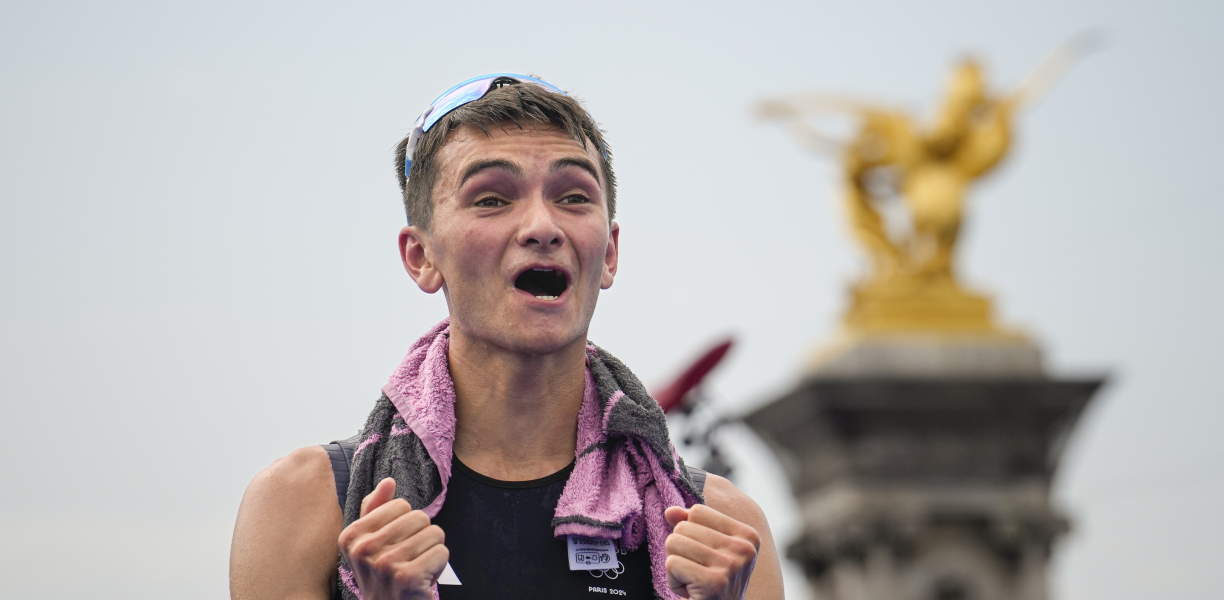
    Then as if from the clouds came Brit Alex Yee.

    The 15 second gap with 2km to go had evaporated and with the home stretch in sight Yee drew upon some incredible inner strength to power past Wilde and win Gold.

    “I was in quite a bad place to be fair,” Yee said afterwards. “I was going through a really bad patch. For me, I rode that wave and just said ‘one more try and let’s see if I can do it’.”

    “I didn’t give up.”

    The win came from a moment of introspection and a powerful use of positive self-talk.

    The mental side of his performance is something that the now 26-year-old has worked on.

    Yee has previously spoken of the importance of the mental side of his performance and how he has worked with a psychologist.

    In 2022 he told The Mirror that he had adopted a “what’s next” philosophy towards performing, aiming on always improving rather than looking to win.

    “I was able to try some different things and come up with some cues which, for me, bring me back to what I’m doing when things can come out of control,” he said.

    “I come back to a saying – ‘what’s next?’ Something can go wrong, something can go right but I need to be thinking, ‘whatever’s happened has happened and I can’t do anything about that, whether it’s good or bad’.

    “People don’t appreciate how much it (sport psychology) actually has an impact on how you train, your lifestyle and how you race.”

    So, what is next for Alex Yee?

    No doubt he will savor his precious new medal, but he will need to mentally and physically recuperate as he will also anchor Great Britain’s Mixed Relay team as they look to defend their title on August 5.

  • The Mindset Driving Summer McIntosh, Canada’s Teenage Swimming Sensation

    The Mindset Driving Summer McIntosh, Canada’s Teenage Swimming Sensation

    Author – Ryan Miller

    Ryan Miller is an award-winning Journalist, Broadcaster and Photographer, and OMP’s Head of Content.


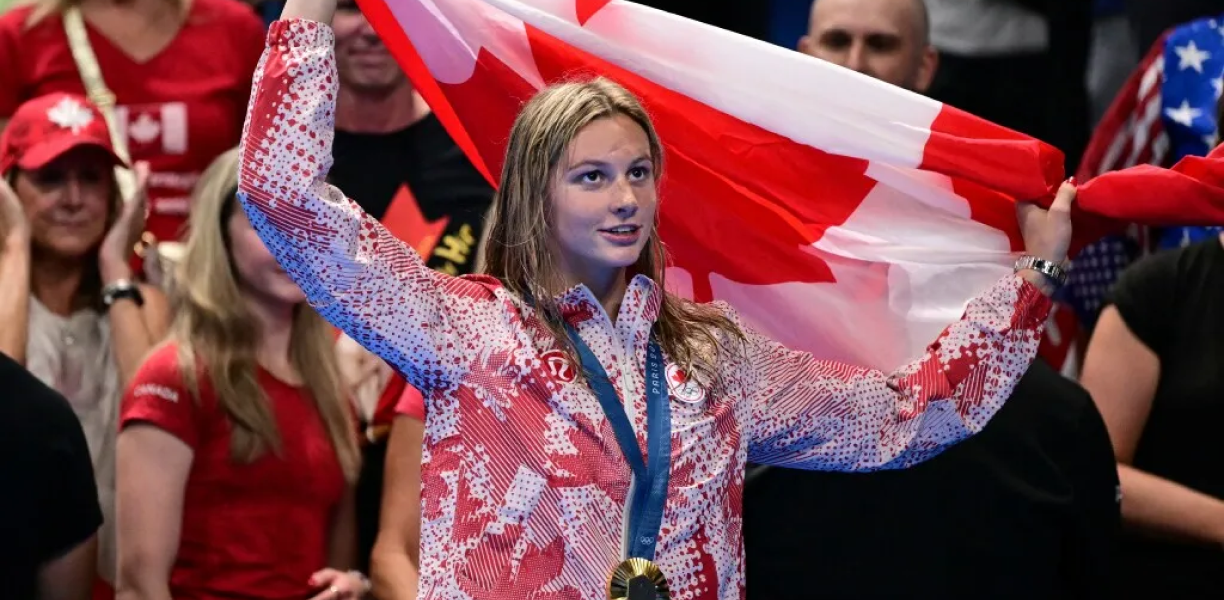
    Summer McIntosh is a swimming phenom.

    The 17-year-old is Canada’s newest Golden Girl having blitzed the field in the 400m Individual Medley and claiming silver in the 400m Freestyle ahead of US Legend Katie Ledecky.

    While she possesses elite physical skills it is her mindset and the mental skills that she applies to her performance that are outstanding.

    “Mental almost tops physical in some ways,” she said.

    “It’s super important because the body does what the mind believes for sure.”

    It’s made even more remarkable give that she doesn’t work with a mental performance coach or sport psychologist.

    The daughter of an Olympic Swimmer, Paris is her second Olympics having been Canada’s youngest Olympian at Tokyo at just 14-years-old.

    In the lead up to this games, McIntosh has often reiterated that her focus is not on winning gold medals but on the process.

    McIntosh has also said that her focus is never on the pressure attached to her performance or the performance of others, she’s just controlling what she can control.

    “By the time you get to the competition, all of the physical work is done, so it really can come down to what’s going on in your head,” she told Toronto Life in April 2023.

    “There are athletes who like to visualize everything, down to the second, in order to feel confident.

    “I try to disassociate and forget the actual competition; that way, it’s just another race, whether it’s a qualifying round or the Olympics.

    “I focus on all the training I’ve done, and that’s where my confidence comes from. Then I tell myself to just relax and have fun, which isn’t easy with all the pressure. But, the more you do it, the more you know what works for you.”

    It’s clear to see that McIntosh has a mature head on her shoulders.

    While she already has two medals to her name, there are still two more opportunities for McIntosh to claim more Olympic glory in the 200m Butterfly and 200m Individual Medley.

  • Pommel Horse Guy Didn’t Sleep on Mental Skills

    Pommel Horse Guy Didn’t Sleep on Mental Skills

    Author – Ryan Miller

    Ryan Miller is an award-winning Journalist, Broadcaster and Photographer, and OMP’s Head of Content.


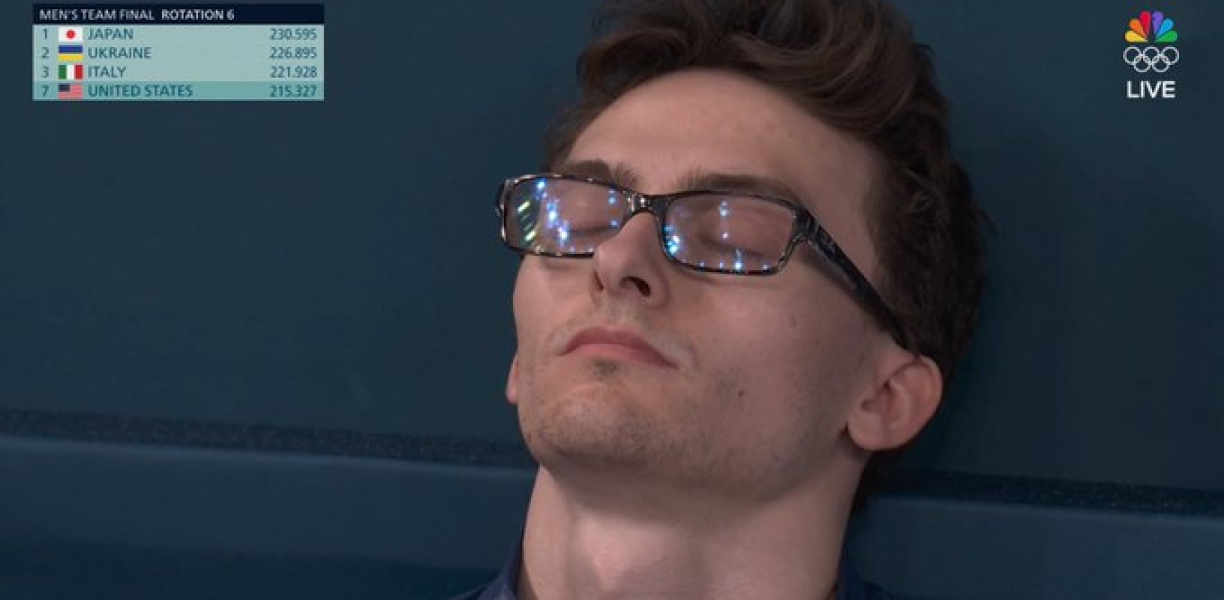
    Stephen Nedoroscik, who you may know as Pommel Horse Guy, delivered one of the most memorable moments of the Paris Olympics on Monday.

    The 25-year-old who was solely in the US Gymnastics team for his ability on the Pommel Horse, had to wait until all of his teammates had completed their disciplines before he could have his moment.

    If that wait wasn’t agonizing enough, Nedoroscik would have to complete his routine with near perfection – in the hardest disciplines in gymnastics – to get his team into a medal position.

    The first medal by a US Men’s Gymnastics team since 2008.

    U.S. high performance director Brett McClure said that Nedoroscik “probably had the most pressure than any other athlete tonight on the competition floor,”.

    So how did Nedoroscik overcome this pressure?

    He used mental skills.

    While viewers at home around the world thought that he was sleeping Nedorosick was using breathing techniques and meditation to settle his nerves.

    He also visualized his routine over 100 times.

    “I do it all the time,” Nedoroscik said according to the Washington Post.

    “Sometimes I think I do it too much, but what else am I to do with those empty spaces?”

    Pre-Olympics the often described ‘nerd’ – who on social media was described as being like Clark Kent – said he had one goal in mind in 2024:

    “I feel like I’ve gone to a lot of competitions, and I’ve done so many good routines in training, I’m just wanting to do one of those in front of a crowd.”

    With the world watching, Nedorosick did exactly that.

    A score of 15.166 delivering his team a drought breaking Bronze medal.

    Nedoroscik’s Olympics continues as he has qualified for the Pommel Horse final on August 3.

  • Aussie GOAT’s Mental Skill Mastery

    Aussie GOAT’s Mental Skill Mastery

    Author – Ryan Miller

    Ryan Miller is an award-winning Journalist, Broadcaster and Photographer, and OMP’s Head of Content.


    “It’s like a muscle, working on your mindset and working on your mental strength.”

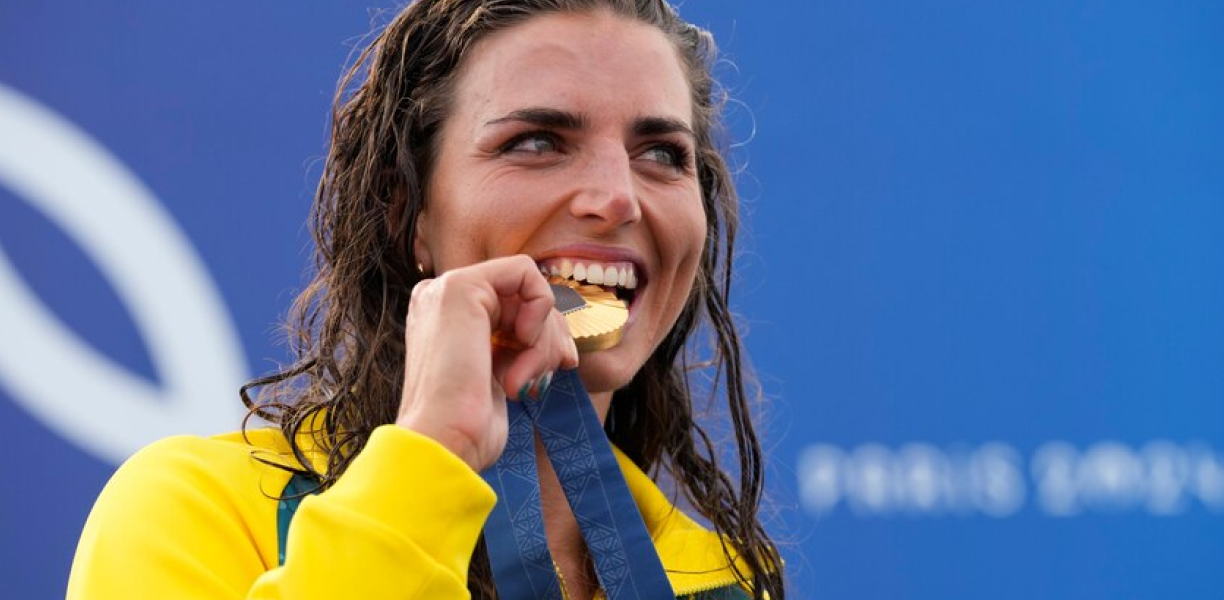
    Australian Olympic Icon Jessica Fox won gold in the Women’s Slalom K-1 in Paris on Sunday night.

    It’s Fox’s second Olympic Gold and fifth medal placing her as one of Australia’s most successful Olympic athletes of all time.

    But did you know uses three key mental skills as part of her pre-performance routine to be in the mindset to win.

    1 – Journaling

    Fox has said that she’s used a journal to process her thoughts before a performance.

    It was especially helpful in Tokyo when she missed out on Gold in the K1 and had to prepare for the C1 a few days later.

    2 – Breath Work

    Fox uses this before competing so that “when I’m in the start line, I can just feel calm and confident, and not distracted by the noise and the nerves.”.

    3 – Visualization

    “I usually try and visualize the run in my head,” she said on the Sam Gash Podcast back in 2020.

    “In my mind I’m looking at where the boat needs to be and what I need to do.”

    These three skills are easy to learn and practice for athlete at any level.

  • Using Mental Skills to Overcome Choking

    Using Mental Skills to Overcome Choking

    Authors – Vedika Jogani & Ryan Miller

    A recent graduate from Ithaca College with a Master’s degree in Sports and Exercise Science, specializing in Mental Performance, Vedika Jogani is OMP’s Product and Content Manager.

    Ryan Miller is OMP’s Head of Content and an award-winning content creator.

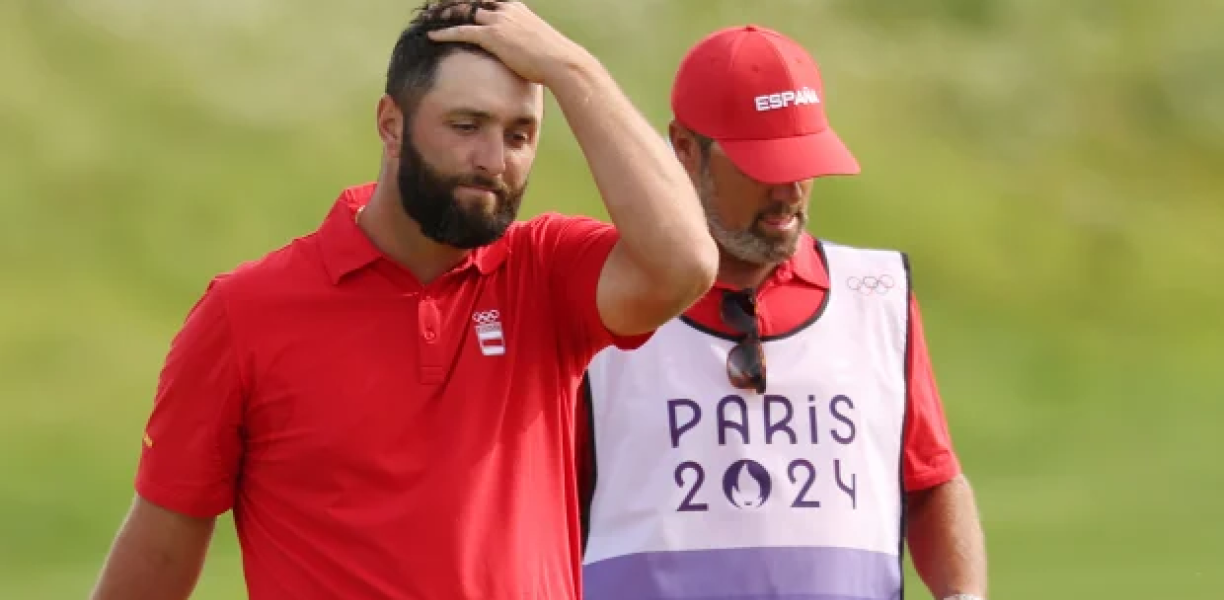
    Spain’s Jon Rahm was leading the Men’s Olympic Golf Tournament by four strokes. He looked bound for a place on the podium.

    Within two holes his lead had evaporated, and he would go on to finish equal fifth after adding another double bogey.

    Brandel Chamblee working on NBC’s US Broadcast of the event labelled Rahm’s loss of form as: “One of the biggest collapses, chokes of the year.”

    Rahm isn’t alone in chocking at the Olympics. Many athletes who are expected to finish with a medal around their neck have missed out on finals.

    In this Olympic Games many athletes who were expected to do well or were considered medal favorites have failed to live up to this expectation.

    The thing is that choking is a common experience among athletes of all levels and there is a way to avoid it.

    What is choking?

    Choking is defined as “an acute and considerable decrease in skill execution and performance when self-expected standards are normally achievable, and which is the result of increased anxiety under perceived pressure.” 

    The negative effects of choking on athletes include decreased well-being, diminished self-worth, increased maladaptive behaviors, emotional distress, and even suicidal thoughts. 

    A study involving 165 current and retired athletes from various sporting levels aimed to determine the frequency of choking under pressure and quantify the prevalence of psychological and behavioral consequences.

    The results revealed that 77% of athletes experienced choking. Among these, 59.8% reported a loss of enjoyment in their sport, and 7.1% reported suicidal thoughts. Choking also contributed to 39.4% of athletes not progressing and quitting their sport. 

    What mental skills can be used to prevent choking? 

    1. Reinterpreting Physical Responses: Athletes should recognize that feelings of nervousness and jitters are natural reactions to excitement, not merely anxiety. 
      By viewing these sensations as indicators of readiness or energy, athletes can build confidence. Using positive self-talk, such as affirmations like “I am ready,” helps to shift the mindset toward confidence. 
    1. Focus on Performance-Specific Training: It is essential to identify critical moments in performance and develop relaxation techniques.
      Methods like deep breathing or progressive muscle relaxation help in stress management and maintaining concentration.
      Effective attentional control, directing focus to relevant cues like technique or strategy, is crucial for optimal performance. 
    1. Structured Pre-Performance Routines: Creating personalized pre-performance routines is key.
      Cue words like “calm and confident” can evoke the desired mental state, while imagery techniques support positive mental rehearsal.
      Cognitive restructuring replaces negative thoughts with constructive ones, and focusing on process goals encourages concentration and achievement. 

    Choking is a common but often overlooked issue among athletes, characterized by a sudden drop in performance due to anxiety under pressure. 

    By integrating these strategies, athletes can handle pressure more effectively, enhancing their performance when it counts the most. 

  • Navigating Expectations & Stress at the Olympics

    Navigating Expectations & Stress at the Olympics

    Author – Vedika Jogani

    A recent graduate from Ithaca College with a Master’s degree in Sports and Exercise Science, specializing in Mental Performance, Vedika Jogani is OMP’s Product and Content Manager.

    For athletes, the journey to the Olympics represents the pinnacle of their careers, where the pressure to perform on a global stage can be immense.

    But how do they navigate this stress and expectation?

    A recent study delved into the coping mechanisms of 15 elite artistic swimmers during the qualifying period for the Tokyo 2020 Olympics, shedding light on their strategies for dealing with the pressure. 

    Researchers identified three main coping mechanisms: 

    1. Mastery coping: This involves strategies aimed at taking control of the situation and addressing stressors directly, such as planning actions and analyzing the situation thoroughly. 
    1. Internal regulation coping: These strategies focus on managing internal responses to stress, including regulating emotions, seeking support, and practicing relaxation techniques. 
    1. Goal-withdrawal coping: Here, athletes disengage from efforts toward goal attainment, which can include venting emotions and stepping back from the situation. 

    The study, conducted through an online questionnaire, explored various factors including perceived stress, stress mindset, perception of control, coping strategies, performance, and burnout. The results found that:

    1. Believing that stress can have benefits was associated with more effective coping strategies during the Olympic Games qualification period. 
    1. Positive perceptions of stress were linked to coping strategies that centered on tasks and goals, emphasizing a proactive approach to managing stress. 
    1. Athletes who viewed stress as enhancing performance tended to feel more individually successful, suggesting a mindset conducive to achievement. 

    Furthermore, seeing stress as enhancing was correlated with feeling more accomplished and experiencing less burnout, highlighting the importance of mindset in shaping athlete well-being. 

    With the Olympics beginning this week, these insights underscore the importance of equipping athletes with effective coping strategies.

    By fostering a positive mindset towards stress and emphasizing proactive coping mechanisms, athletes can better navigate the pressures of elite competition and strive towards peak performance on the world stage. 

  • What is Mental Toughness?

    What is Mental Toughness?

    Author – Vedika Jogani

    A recent graduate from Ithaca College with a Master’s degree in Sports and Exercise Science, specializing in Mental Performance, Vedika Jogani is OMP’s Product and Content Manager.

    I’m sure you’ve heard the term “mentally tough” tossed around casually in the world of sports.

    Commentators often use this umbrella term to differentiate good athletes from great ones, attributing their success to mental toughness. 

    But what does being mentally tough really mean? 

    A study conducted with players, coaches, and parents of a soccer team found that mental toughness is a multidimensional concept. 

    It is defined as “the presence of some or all of the experientially developed and inherent values, attitudes, emotions, cognitions, and behaviors that influence the way an individual approaches, responds to, and appraises both negatively and positively construed pressures, challenges, and adversities to consistently achieve their goals.” 

    Mental toughness encapsulates a range of characteristics, behaviors, situations, and cognitions: 

    Characteristics

    Certain traits are common in all mentally tough individuals, such as a winning mentality, desire, self-belief, physical fitness, work ethic, resilience, personal values, concentration and focus, performance awareness, sport intelligence, tough attitude, ability to handle pressure, competitive effort, risk-taking, and emotional intelligence and control. 

    Behaviors

    Mentally tough athletes display behaviors like playing and recovering from injuries, consistently delivering high performances, doing the “tough stuff,” making superior decisions, demanding the ball, dominating opposition players, inspiring others, coping with distractions, taking risks, displaying positive body language, responding well when players are down, and making sacrifices from a young age. 

    Situations

    Mentally tough athletes handle various situations effectively, such as injury and rehab, being dropped from the team, preparation, balancing commitments, dealing with media pressure, coping with distractions, playing overseas, scoring goals, managing external and internal pressures, being away from home, and handling peer and social pressures. 

    Cognitions

    Mentally tough athletes exhibit a strong will to win, self-belief, concentration, inspiration, tactical awareness, adaptability, positive body language, perseverance, determination, optimism, a down-to-earth perspective, valuing opportunities, love for the game, and acknowledging self-responsibility. 


    Mental toughness is a comprehensive concept that includes a variety of traits, behaviors, situations, and cognitive strategies. These elements collectively enable athletes to navigate challenges and adversities while consistently achieving their goals. 

  • Did Grimace help the Mets Rediscover Their Why?

    Did Grimace help the Mets Rediscover Their Why?

    Author – Vedika Jogani & Ryan Miller

    A recent graduate from Ithaca College with a Master’s degree in Sports and Exercise Science, specializing in Mental Performance, Vedika Jogani is OMP’s Product and Content Manager. During her studies, Vedika worked closely with Ithaca’s Men’s and Women’s Tennis Teams and Women’s Volleyball Team as their Mental Performance Consultant. Vedika is currently completing her Certified Mental Performance Consultant Certification.

    Ryan Miller is an award-winning Journalist, Broadcaster and Photographer, and OMP’s Head of Content.


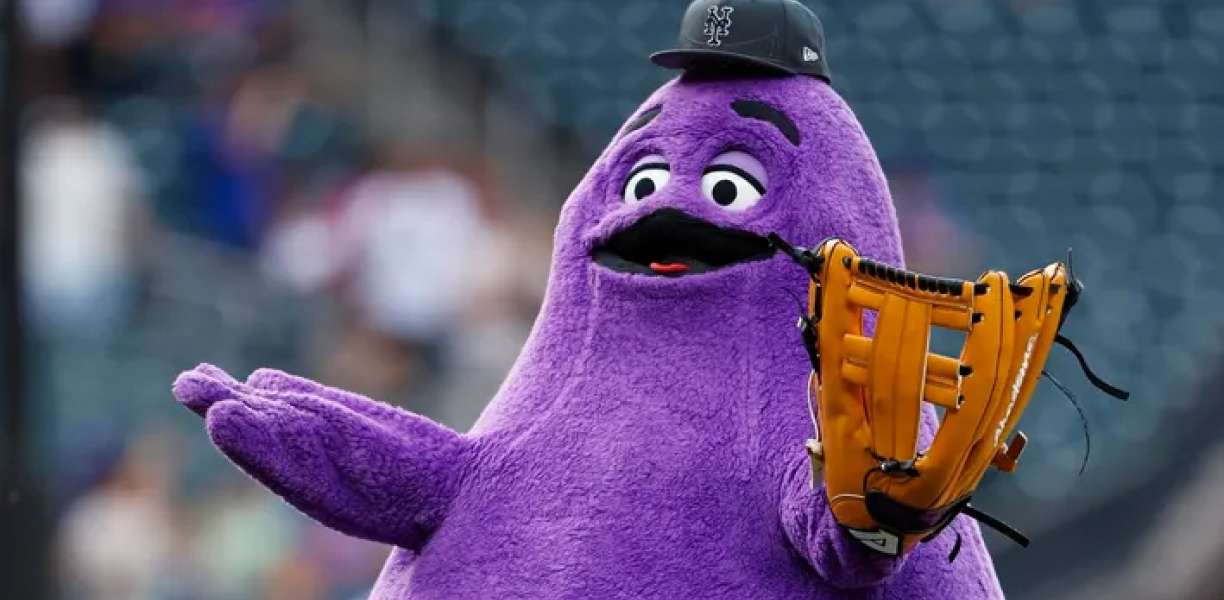
    If you watched the New York Mets sweep the New York Yankees during the Subway series this week, you would have seen many effigies of a familiar fast-food character amongst the long-suffering Mets fans.

    McDonald’s mascot Grimace – yes, the bright purple semi-humanoid blob – has become entrenched in the Mets’ fan folklore.

    Fans could be seen wearing home-made Grimace costumes and are carrying signs heralding the “Grimace Mets” and the “Grimace Era”.

    Why? Well, it’s all because of the Mets’ remarkable turnaround in form since Grimace threw the ceremonial first pitch at Citifield on June 12.

    Before we start saying that a mascot has had a tangible impact on the Mets’ mental performance, we need to dig a little deeper.

    Grimace’s gracing of the plate may have just come at the right time as Mets’ players were already shifting their mindset.

    Let’s take a step back to May 29 when they took on the LA Dodgers at home.

    The Mets had a record of 21-29 heading into the game and despite having a roster filled with talented players and the highest payroll in the MLB, they found themselves amongst the worst ranked teams in all of Major League Baseball.

    That evening they’d lose to the Dodgers 3-10, and the night got so bad that pitcher Jorge López was ejected from a game, threw his glove into the stands, called the team the “probably the worst team in the MLB” and was then DFA’d by the Mets.

    Immediately after the loss – their eight defeat in nine games – the players, led by four-time All-Star Francisco Lindor, held a team meeting during which they vented their frustrations.

    It’s understood that the meeting was about a potential shift in mindset for both the veterans and the newcomers.

    “I felt like it was the right time for us to, as a group collectively, to sit down and look each other eye to eye and hold each other accountable,” hindor told reporters afterwards.

    This is where the fortunes of the Mets truly started to turn.

    They would win six of their next ten games. Not perfect, but a great improvement.

    Then, like manna from heaven, came Grimace.

    As part of a marketing stunt to celebrate Grimace’s ‘Birthday’ the McDonalds’ mascor threw the first pitch ahead of the Met’s home game against the Miami Marlins.

    The Mets won 10-4.

    Including that night, the Mets have gone on a tear since Grimace’s loopy pitch, winning 11 of their next 13 games.

    If we throw it back further, they have lost just six games since the team meeting. Thier season record now stands at 39-39.

    From what we can tell from what the Mets players have said to reporters, part of the conversation during the team meeting must have been around simply enjoying the game.

    Following the meeting pitcher Adam Ottavino said:

    “I always think about the little kid inside me, I mean, it doesn’t matter what my results are, I would’ve killed to be here. My whole life, this is what you work for. So, keeping that in perspective, it really helps you show up the next day with the right attitude and to put in the hard work that is necessary.”

    Grimace’s opening pitch brought a much-needed element of fun to the field.

    While the Mets players weren’t aware of Grimace on that fateful evening, in the coming days the clubhouse has also embraced the Grimace legend.

    “We need to come out here and have fun… we all grew up with this being a kid’s game. I think it’s a lot of fun adding Grimace to this, so I’m all for it.” outfielder Brandon Nimmo said.

    Let’s get serious now.

    The team meeting and Grimace’s visit (and the impact it’s had on the entire organization) appears to have served as a catalyst for the Mets to remember why they started playing baseball in the first place.

    The pressures and expectations of professional sports can sometimes overshadow the joy that comes with playing the game.

    Grimace’s presence was a playful reminder that at its core, baseball is a game meant to be enjoyed.

    This shift in mindset is clear in the way the Mets have played since the team meeting and Grimace’s visit.

    They have approached the game with renewed enthusiasm and a lighter attitude. It’s been evident in all facets of their game, but particularly their offense.

    The Mets chalked up 21 runs against the Yankies in their two-game series. Prior to the series the Yankies were ranked either first or second in MLB Power Rankings.

    Instead of brushing aside the talk of Grimace having an impact on the team, they’ve embraced it and played into the narrative that a milkshake loving monster is the sole reason that a wildcard berth is within reach.

    Mic’d up during a game first baseman Pete Alonso played up Grimace’s effect on their fortunes: “Grimace got us hot.”

    This experience serves as a valuable reminder for all athletes: always remember your “why.”

    Reflect on why you started playing the sport you love and strive to keep that joy alive.

    Embrace the fun and passion that first drew you to the game, just as the Mets have with a little help from Grimace.
  • Developing Mindfulness Skills Boosts Performance in Athletes

    Developing Mindfulness Skills Boosts Performance in Athletes

    Authors – Vedika Jogani

    A recent graduate from Ithaca College with a Master’s degree in Sports and Exercise Science, specializing in Mental Performance, Vedika Jogani is OMP’s Product and Content Manager.

    I’m sure you’ve been told to “live in the present moment” or “live in the here and now.”

    This advice, often referred to as present moment awareness or mindfulness, is frequently linked to increased enjoyment and performance levels.

    But what does mindfulness really mean? 

    Mindfulness is defined as the focus of one’s attention on the experience occurring in the present.

    It’s about fully engaging with the here and now, rather than being preoccupied with the past or future.

    Over the years, research has highlighted four key characteristics of mindfulness (Bodner, 2000).

    The Four Characteristics of Mindfulness

    1. Novelty Seeking: This characteristic involves approaching each environment as an opportunity to learn something new. It means actively looking for new experiences and being open to discovering fresh aspects of familiar situations. 
    1. Novelty Producing: This refers to the process of generating new and useful information by processing information from the environment. It’s about being creative and innovative, finding new ways to understand and interact with the world around us. 
    1. Flexibility: This characteristic is assessed through one’s tendency to see situations from multiple perspectives. It involves being able to change perspectives easily, adapting to new information, and considering different viewpoints. 
    1. Engagement: This means paying intense attention to the fine details of an experience. It’s about being fully absorbed in what you’re doing, noticing the subtleties and nuances that might otherwise be overlooked. 

    To understand how these characteristics impact other aspects of our lives, a study was conducted to explore the relationship between mindfulness characteristics, flow disposition, and mental skills adoption.

    Flow disposition refers to a state where individuals are fully immersed in an activity, experiencing a balance between challenge and skill.

    The results of the study were enlightening: 

    1. Individuals who exhibited higher mindfulness characteristics scored higher on the flow disposition factors such as challenge-skill balance.
      They were better at setting clear goals, had improved concentration, an enhanced sense of control, and experienced a loss of self-consciousness.
      This means they were more likely to get into a state of flow, where they could perform at their best and enjoy the process more. 
      1. Additionally, those with higher mindfulness characteristics showed a greater adoption of mental skills.
        They demonstrated better attentional control, more effective goal setting, improved emotional control, and utilized positive self-talk more frequently.
        These skills are crucial for maintaining focus, managing emotions, and staying motivated, all of which contribute to better performance and well-being. 

      In essence, mindfulness is not just about being in the moment; it’s about enhancing our capacity to engage with and adapt to our environment, fostering creativity, flexibility, and deep engagement.

      By cultivating these characteristics, we can improve our overall mental and emotional functioning, leading to a more fulfilling and productive life.

      Athletes who develop mindfulness skills often experience better focus, enhanced emotional regulation, and a heightened ability to enter the state of flow, ultimately boosting their performance levels and enjoyment of their sport.