A recent graduate from Ithaca College with a Master’s degree in Sports and Exercise Science, specializing in Mental Performance, Vedika is OMP’s Product and Content Manager. During her studies, Vedika worked closely with Ithaca’s Men’s and Women’s Tennis Teams and Women’s Volleyball Team as their Mental Performance Consultant. Vedika is currently completing her Certified Mental Performance Consultant Certification.
In the competitive world of sports, the dynamics of personality traits plays a significant role in an adult’s behavior on and off the field.
Narcissism is characterized by excessive self-love and lack of empathy from others. This has an impact on an athlete’s interactions within a team and approach to competition. Narcissism coupled with anti-social behavior encompasses actions that violate social norms. In a sporting environment, it can create toxic team cultures hindering teamwork and camaraderie.
The Role of Self-Compassion
Self-compassion encompasses three core concepts:
Self-kindness: Being kind to oneself when experiencing a difficult time.
Common Humanity: Know you are not alone in your situations and others have experienced similar situations as you.
Mindfulness: Describing your situation in an objective and non-judgmental manner.
Athletes with higher levels of self-compassion tend to approach their mistakes and shortcomings with understanding and forgiveness fostering a positive self-image, and a reduced likelihood of engaging in harmful behavior.
This study found that athletes with higher self-compassion demonstrated a reduced likelihood of engaging in negative conduct. The findings of this study suggest that self-compassion acts as a protective factor reducing the impact of narcissism and anti-social behavior.
For Coaches
Coaches can play a pivotal role in promoting self-compassion with athletes through encouraging mindfulness, while self-reflective strategies as part of training regimens can help foster these feelings of self-compassion.
Self-compassion plays an important role in an athlete’s well-being. These have ripple effects on team culture and thereby performances. Coaches and athletes must recognize the positive effects of empathy, kindness and mindfulness in an athlete’s journey.
The research on narcissism, antisocial behavior, and self-compassion in sports has illuminated the intricate relationship between these psychological factors.
By acknowledging the presence of narcissistic traits and proactively nurturing self-compassion, athletes can not only improve their own well-being but also contribute to a more positive and inclusive sporting environment.
Coaches and athletes must recognize the importance of empathy, kindness, and mindfulness in fostering a sports culture where mutual respect and cooperation thrive.
Through these efforts, the sporting community can move towards a future where athletes not only excel in their physical abilities but also in their emotional intelligence, creating a truly enriching and supportive athletic experience for everyone involved.
Reference:
Zhang, S., Roberts, R., Akehurst, S., & Woodman, T. (2024). Narcissism and antisocial behaviour in sport: The moderating role of self-compassion. Psychology of Sport and Exercise, 70, 102528.
A recent graduate from Ithaca College with a Master’s degree in Sports and Exercise Science, specializing in Mental Performance, Vedika is OMP’s Product and Content Manager. During her studies, Vedika worked closely with Ithaca’s Men’s and Women’s Tennis Teams and Women’s Volleyball Team as their Mental Performance Consultant. Vedika is currently completing her Certified Mental Performance Consultant Certification.
In the world of high performers, a profound truth emerges – the ability to transform failures into steppingstones toward success.
Arguably one of the greatest athletes of all time, Michael Jordan gives us an insight into this mindset with his timeless quote, “I have failed over and over again, and that is why I succeed.”
Dr. Carol Deck, an esteemed American Psychologist sheds light on this mindset in her work, Mindset: The New Psychology of Success.
Through her book, she introduced the pivotal concepts of fixed vs growth mindset, ideas that have seeped into the realms of education and sport and have become guiding principles for personal and professional development.
What is a Growth Mindset?
A growth mindset is all about believing in the power of hard work, effort and feedback to develop your abilities and intelligence.
Think of it as seeing challenges as exciting opportunities, setbacks as temporary hurdles and effort as the key to mastering new skills.
Failures? They’re just the steppingstones on the path to learning.
Research conducted by Ng (2008) suggests that there are neural connects between having growth mindset and intrinsic motivation.
This kind of mindset allows individuals to embrace challenges, persevere in the face of setbacks, see effort as a path to mastery and view failure as a learning.
Individuals with a growth mindset can lead to higher achievements, increased motivation and a more positive attitude toward learning and personal development.
How Can Athletes Develop a Growth Mindset?
1. Commit to Lifelong Learning
Embrace every chance to learn, both on and off the field.
Don’t hesitate to approach coaches and teammates for valuable insights and resources. Cultivate a spirit of curiosity that fuels your enthusiasm for acquiring new skills and tackling challenges.
Stay open-minded and proactive, recognizing that every opportunity to learn is a step toward personal and athletic growth.
2. Persevere in the face of setbacks
Embrace setbacks as valuable chances to learn and grow.
Take the time to analyze what didn’t work and explore different approaches for next time.
Welcome feedback as a guiding light, illuminating the path to personal development. Always remember, it’s not a loss; it’s a lesson, a catalyst toward your ultimate success.
3. Challenge Your Beliefs, Skills and Knowledge
Recognize and confront any rigid beliefs that might hinder your growth, ensuring a continuous journey of skill and knowledge enhancement.
Transform your inner dialogue from self-doubt (“I can’t do it”) to unwavering confidence (“I can”). Embracing this positive mindset is the key to unlocking your full potential.
4. Celebrate Effort, Not Results
Recognize and celebrate the dedication and hard work you invest in your tasks and goals. Understand that effort is a vital component of your journey, irrespective of the result. By appreciating your continuous commitment, you honor the process and pave the way for future achievements.
In the world of sports, growth mindset is not something you master overnight; it takes consistent effort and time.
Athletes, just like anyone else on a journey of self-improvement, need to stay open to challenges and always be ready to learn and grow. So, keep on embracing the journey.
Optimize Mind Performance is excited to announce that the University of Nebraska-Lincoln has become the latest NCAA athletic program to integrate the OMP platform into their mental performance program.
OMP’s platform will assist the Cornhuskers’ mental performance team in their mission to provide science-driven psychological support for their student-athletes by amplifying their voices to their athletes and providing them access to OMP’s library of resources from some of the world’s leading mental skills coaches.
The Huskers, who compete in the Big Ten Conference, provide their athletes with comprehensive care for their mental performance through a multi-tiered approach but have – until now – been missing a digital solution to further deliver their word-class mental skills program.
Through their partnership with OMP, the Huskers’ program will be able to help their athletes feel more confident, motivated, focused and relaxed ahead of their next performance, regardless of where they are during their busy schedule using OMP’s game-changing dashboard and app.
“Like many leading college programs, the University of Nebraska has recognized the important role mental skills training plays in athletic performance,” Optimize Mind Performance’s Founder and CEO Jack Preddey said.
“They have built out a terrific team lead by Dr. Brett Haskell, so we are delighted that they have partnered with us to integrate the OMP platform into their program to assist them in servicing the mental skills of their athletes and coaches.”
“The Cornhuskers have a proud history of producing elite athletes and championship winning teams, and for us to be able to assist the next generation of stars to unlock their full potential through mental skills training is really exciting for us.”
Dr Brett Haskell, Director of Sport Psychology at University of Nebraska-Lincoln said: “We are delighted to partner with OMP and use their platform to further serve our student-athletes.”
“We pride ourselves in having one of the lowest ratios of student-athletes and teams to providers, and the OMP platform will assist all eight of our staff, including myself, to broaden our support for our 22 varsity teams across 15 sports.”
“We are excited to be working with OMP and helping them to develop this game-changing platform.”
A recent graduate from Ithaca College with a Master’s degree in Sports and Exercise Science, specializing in Mental Performance, Vedika is OMP’s Product and Content Manager. During her studies, Vedika worked closely with Ithaca’s Men’s and Women’s Tennis Teams and Women’s Volleyball Team as their Mental Performance Consultant. Vedika is currently completing her Certified Mental Performance Consultant Certification.
The world of sports is an arena where athletes push their limits always aiming for peak performance. For female athletes, there is an added layer of complexity that can have a profound impact on their psychological performance: The Menstrual Cycle.
Menstruation does not just bring physical challenges, it also affects an athlete’s mental and emotional state, playing a crucial role in their performance.
Research has found that 85% of menstruating women suffer from at least one symptom of pre-menstrual syndrome which includes emotional, behavioral or physical symptoms.
Here are some common psychological effects menstruation can have on an athlete’s sport performance:
Pain and Discomfort: Menstrual cramps can cause physical discomforts and distractions reducing an athlete’s ability to fully concentrate on their sport.
Heightened Worry and Anxiety: Some sports have regulated, pre-determined and standardized uniforms. These uniforms may be uncomfortable for female athletes causing worry and issues related to excessive blood loss.
Confidence and Self-Esteem: Some athletes may feel less confident during their cycle due to concerns related to changes in body image. This reduced confidence can affect their willingness to take risks and push their limits.
Fatigue, motivation and energy levels: Menstruation can lead to fatigue and decreased energy levels. Athletes might feel more tired than usual, affecting their overall performance, training sessions and motivation to perform.
Emotional Stress: Menstruation can cause severe emotional stress with athletes experiencing irritability and anxiety affecting overall well-being making it difficult to stay focused and positive.
Female athletes continually suffer from menstrual cycle related to symptoms which affects their performance. There are various coping strategies that can help athletes to cope with these symptoms.
Awareness and Education: athletes and coaches should be educated about the potential effects of performance. Understanding these changes can reduce anxiety and help athletes to understand what is happening with their body.
Tailored Training Programs: Coaches can design training programs to account for fluctuations in energy levels and physical capabilities.
Psychological Support: Athletes benefit immensely from psychological support, incorporating sport psychology and mental performance techniques. These tools help manage mood, stress, and anxiety, fostering mental resilience.\
Open Communication: creating a safe space for athletes to discuss their menstrual cycle-related concerns with coaches, trainers, and teammates is pivotal. Open communication diminishes stigma and strengthens the support network, enhancing coping mechanisms.
It is important to remember that the menstrual cycle is not a hindrance; it’s an integral part of the female athlete’s journey.
By acknowledging its profound impact on mental and emotional states, and by implementing targeted coping strategies, we empower these athletes to thrive despite the challenges.
Through education, understanding, and unwavering support, we can create a sports world where every athlete, regardless of their cycle, can conquer their dreams and break through barriers, one period at a time.
Optimize Mind Performance is excited to announce the signing of the University of Louisville Athletics as their founding partner.
The Cardinals are paving the way for mental performance programs within the highly competitive NCAA market. Through a recent partnership with UofL Health, the UofL Athletic Department now has five full-time mental performance professionals. OMP’s platform will further assist the mental performance team’s delivery of a world-class mental skills program to their student athletes and coaches.
The platform will allow the Cardinals’ mental performance coaches to amplify their voice to their athletes, receive insights and analytics, and ultimately provide them with a much-needed digital solution to their athletes complimenting their in-person sessions.
The Cards will also gain access to OMP’s extensive library of content featuring some of the world’s leading mental skills coaches and elite level athletes.
Optimize Mind Performance will be used across all of Louisville’s athletic programs, including its nationally ranked football, men’s soccer, women’s field hockey, women’s volleyball programs. Furthermore, OMP will be used to support local high school athletes supported by UofL Health – Sports Medicine.
“Louisville has placed great emphasis on the importance and benefits of mental skills training from both an athlete performance and wellbeing perspective,” Optimize Mind Performance’s Founder and CEO Jack Preddey said.
“We are delighted that Dr. Nichols and her team have recognized the need for a digital mental skills offering for athletes so that they can further work on this crucial element in their game in an accessible and engaging manner.”
Dr. Katie Nichols, Director of Mental Performance at Louisville said: “We pride ourselves on our care for the performance of all our student-athletes. OMP provides our department with a unique platform that will assist us in delivering our mental performance voices to coaches and players.
“Our ability to assign and recommend content to our athletes outside of our face-to-face sessions through the OMP platform, especially when they are on the road during the busy NCAA schedule, is a game-changer. Our sport psychologists work with hundreds of athletes at any one time and OMP allows them to have consistent and meaningful touchpoints with them. We look forward to working with OMP as their founding partner and assisting them to shape this much-needed product.”
A recent graduate from Ithaca College with a Master’s degree in Sports and Exercise Science, specializing in Mental Performance, Vedika is OMP’s Product and Content Manager. During her studies, Vedika worked closely with Ithaca’s Men’s and Women’s Tennis Teams and Women’s Volleyball Team as their Mental Performance Consultant. Vedika is currently completing her Certified Mental Performance Consultant Certification.
Have you ever found yourself in the groove, in total control of your performance? You know, those moments when you are so locked in that time seems to stand still, and you are just ‘in the zone.’.
If you’ve ever felt that way, you’ve experienced what psychologists call ‘flow’. In this state, external and internal distractions vanish, and you are completely immersed in the activity. Physiologically, the prefrontal cortex in your brain which is responsible for thinking and planning becomes less active. This allows other parts of your brain that are responsible for skill execution and focus to function better. In other words, it’s like your performance goes on autopilot, and you make it look effortless.
Here are a few ways to get yourself into a flow state:
Eliminate distractions
To enter this flow state, you need to confront distractions both internal and external. Internally, the clutter of thoughts and worries can pull your attention away from the task at hand. Practicing mindfulness and meditation can help you regain control by teaching you to observe your thoughts without getting lost in them, keeping you focused on the present moment. Externally, environmental distractions like the crowd can disrupt your flow. Eliminate these distractions to achieve a flow state.
Finding Enjoyment
Discovering joy in your sport is a gateway to attaining a flow state. When you relate to your underlying motivations and your values are aligned with your performance, the experience becomes deeply rewarding. When you do that, fun and enjoyment naturally flows making it easier to slip into that amazing flow zone where everything just clicks.
Setting Clear Goals
Clear, specific goals are like your ticket to the flow state. Goals help to keep you track of your progress and allows you to dive into your tasks with full focus and confidence. Participate in something with a clear goal so that your attention can be focused entirely on what you’re doing.
Challenge and Trust Yourself
Achieving the flow state requires a delicate balance of matching your skills to the challenges at hand. Embrace tasks that push your boundaries and provide just the right level of challenge. It is about welcoming those challenges and allowing yourself to grow through them.
In conclusion, embracing the flow state not only fuels your intrinsic motivation but also sharpens your emotional regulation. Use these strategies to tap into flow and elevate your overall performance.
An award-winning journalist, content creator and photographer, Ryan is OMP’s Head of Content.
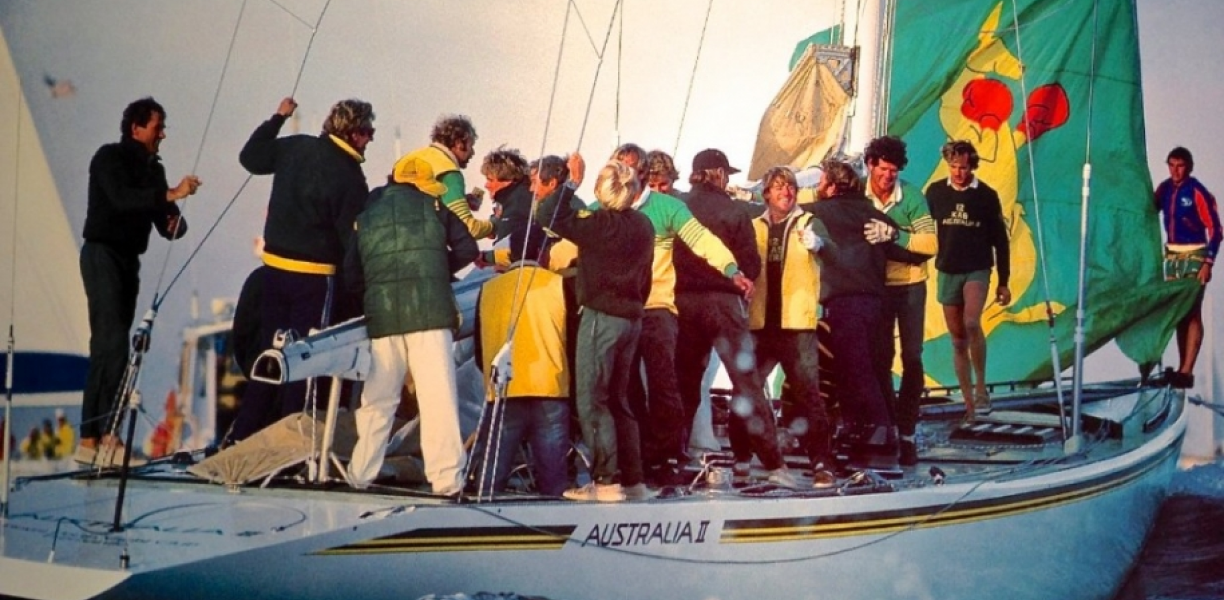
40-years ago in Newport Rhode Island a group of Australian sailors broke the world’s longest winning streak of any sport. The plucky crew of Australia II came from 3-1 down in a first to four race series, breaking the United States’ 132-year grip on the America’s Cup.
Australia II’s win in 1983 was a watershed moment for the sport of sailing, with the challenger’s victory previously seen as an impossible feat, especially since 24 previous challengers had tried unsuccessfully to beat the Americans.
The use of a revolutionary winged keel on the Australia II is well known, but the Australians were also ahead of the curve when it came to the use of mental skills training during preparation for the America’s Cup.
The crew, led by captain John Bertrand, included a Sport Psychologist and used Visualization extensively to prepare them for the ‘Race of the Century’.
Why Mental Skills Training?
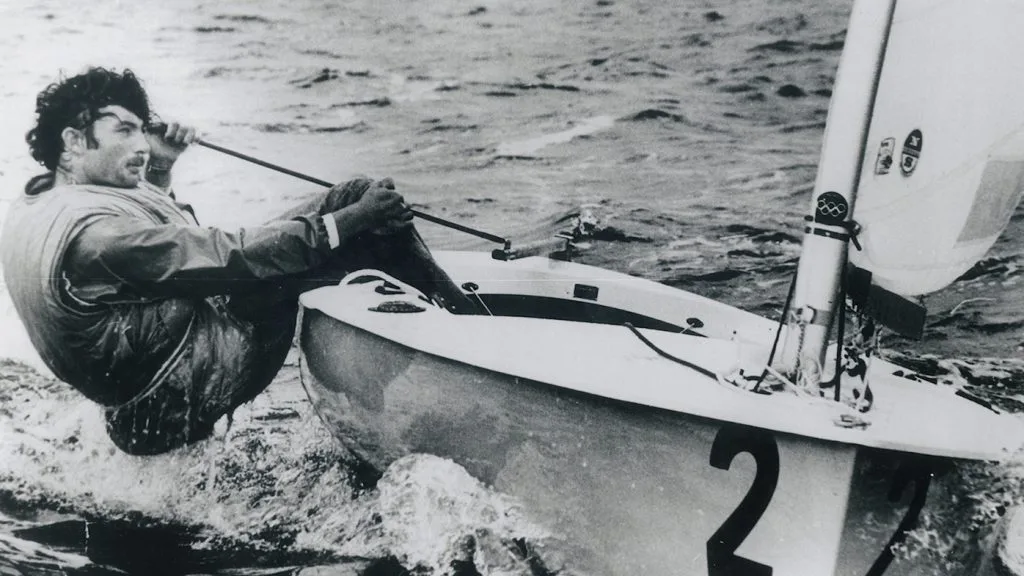
An experienced sailor, Bertrand won a Bronze Medal at the 1976 Montreal games in the Finn Class, while still an achievement to be proud of, Bertrand felt he should have performed better.
“I realised that I could have won Olympic Gold just as easily as the bronze if I had of been mentally tougher,” he told The Little Fish podcast in 2022.
In preparation for the 1983 tilt at the America’s Cup Bertrand sought out Laurie Hayden – then a consulting psychologist at the Carlton Football Club, an Australian Rules team based in Melbourne.
The addition of a sport psychologist to a team or organization may not raise eyebrows now but in 1983 it was questioned by the boat’s owner Alan Bond and the some of the Australia II’s management.
John Betrand was an accomplished sailor, having won bronze at the 1976 Olympics.
In his biography Born to Win Betrand explained that Syndicate Manager Warren Jones said to him: “Who needs a sports psychologist? We know all that needs to be known. I’ve played plenty of sport. Sure, we need a physical-fitness person for the crew but why should we have anyone screwing around with our minds? We are all tough enough ourselves. We can handle it.”
Regardless of the scepticism of Bony and Jones, Bertrand pushed on to ensure Hayden would be part of the team.
Identifying Key Areas to Improve
Together Bertrand and Hayden identified two areas of mental performance that the crew would need to work on if they were to beat the Americans led by Dennis Conner.
The first was “motivation without a tangible opponent”, essentially that during their training off the coast of Fremantle, Western Australia familiarising themselves with the yacht, they would not have an opponent, at least not one at the standard of the Americans.
The second was “Stress Control”, primarily during the America’s Cup races and potentially a seventh and final race, the Australian crew would be subjected to stress unlike any they’d faced before.
Part of “Stress Control” dealt with the Australians not knowing what it was like to lead a race, let alone win one. Before the 1983 America’s Cup, Australia’s six challengers had won just three of 22 races.
Bertrand, who had been a member of the 1970, 1974 and 1980 challenges identified that while he knew what it was like to be behind the American boat, he didn’t know what it was like to lead.
Visualization
Visualization would play a major part in the Australian’s preparation for the America’s Cup in Newport.
With Bertrand – the most experienced crew member – having little experience leading in an America’s Cup race, he knew that the race would feel and sound different if or when they took the lead.
In his biography, Bertrand describes that he knew what the race would sound and look like when chasing the American boat, Liberty. They were used to the voices of the American crew when they were losing a race so what would it be like when they were leading? What would those Americans say? This would add a new element of pressure.
The only way the Australian crew could become comfortable in a situation like this was to visualize it in their mind’s eye. As Bertrand put it in his biography – “Remember you cannot go anywhere if you have not first imagined yourself there. People achieve that which they have imagined themselves achieving over and over in their minds.”
Bertrand personally used visualization every night before bed, locking himself away for at least 15 minutes to see himself skippering his crew into the lead. The crew would also gather for group visualization sessions to imagine themselves and how they would win the America’s Cup.
Motivation & Confidence
The Australians were all too aware of the United States’ dominance of the America’s Cup and made sure that it did not play on their minds.
“The antidote to history is logic,” Bertrand said in his biography. “Past has no bearing on the now.”
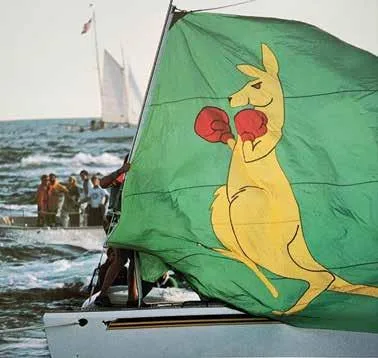
The now icon Boxing Kangaroo was the Australia II’s battle flag.
Part of making sure that his crew never slipped into being daunted by the prospect of creating history, Betrand had them complete an Attentional and Interpersonal Style Test with Hayden interpreting their responses to give Betrand a better understanding his crew mates’ personalities, reaction to multiple directives, reaction to stress, intrinsic motivations and how best to communicate with them.
This test led Betrand to understand that they responded better to complimentary communication from him and that his own test showed that he had lapses in concentration during the middle part of a race when fatigue and a tendency to linger on the negative thoughts associated with mistakes set in.
To help boost their confidence and motivate themselves, the crew adopted the Boxing Kangaroo flag as their insignia and would play “Land Down Under” by Men at Work when leaving port as a battle song. They also used the song to intimidate the American crew, blasting it towards the Liberty ahead of each race.
Fear of the Unknown
One of the psychological masterstrokes was hiding Australia II’s winged keel. When the boat was out of the water following the qualifying races and then the America’s Cup itself, the Australians kept the keel hidden under a sheet of fabric with around the clock security.
The intention was to instil the Americans with the fear of the unknown. As the Australians dominated their opponents in the qualifying races, the mystery of what was below the water played on the minds of the American crew and distracted the club they were representing.
As the races continued the Americans would never truly know what they were up against.
Performing Under Pressure
The Australians started both the first and second races strongly but lost both after experiencing equipment failure.
Australia II won the third race by a record margin, but then lost the fourth race and were on the praecipes of losing another challenge.
With the series standing at 3-1 the Australians were feeling the weight of pressure knowing that one mistake in the fifth race could be the end of their dream and were frustrated with their performance as they knew they were better than what the ledger showed.
To mitigate the pressure the crew was feeling, they shut out all external noise, removing all the televisions in the crew’s quarters, not allowing newspapers in and stopped all phone calls and focussed on controlling what they could control.
“Not being restricted by the consequences of losing,” Betrand said. “It’s like cancer. When you move into the world of winning and losing and the consequences of either being a national hero or being a bum.”
“We were in the business of trying to let it flow, maximizing the potential of what we had.
“If we did our job – we’re not talking about superhuman stuff – from the bow to the stern if everyone can complete their job as good as or better than the person in the opposition boat, we’ve got a good chance of being invited back tomorrow. (It was) A very simple philosophy.”
Race Seven
The ploy to shut out all external noise and “release the beast” worked.
Australia II would beat the liberty in the next two races, both by large margins. The wins meant that the 1983 America’s Cup would all come down to a fifth and final race.
The Americans, desperate be competitive in the final race made drastic changes to their boat. The changes worked and they would lead the final race by 57 seconds. Back home in Australia millions watched their TV sets thinking the race was lost.
Despite being so far behind the Americans, the Australian crew stuck to their process and waited for the Americans to make a mistake.
“Don’t give up, don’t panic and don’t do anything rash – just keep on sailing the boat,” Betrand said.
Eventually the American crew did make a mistake and with the Australians following a channel of wind they not only gained on the U.S but overtook them.
As they had visualized, they were in front of the Americans in the final race. Their mental preparation made them ready for the challenge, instead of caving into the pressure being on the cusp of a historic victory, each of the Australians continued to execute their role with excellence.
They continued to put distance between themselves and the American boat. When they crossed the finish line, they were 41 seconds ahead of the Americans and had sailed into the history books.
Victory
Australia II’s victory in race seven the 1983 America’s Cup was the culmination of the Australian crews’ physical and mental preparation.
The Liberty crew were spooked by the mystery that shrouded the winged keel, the Australians never wavered in their self-belief and maintained their composure under immense pressure, and most importantly when they were in the lead, they continued to control the controllables as they had been there before thanks to the use of visualization.
The achievement of Bertrand and his crew still stands as one of Australia’s greatest team or individual sporting triumphs.
References Born to Win – John Betrand as told to Patrick Robinson (Bantam Books, 1985)
A recent graduate from Ithaca College with a Master’s degree in Sports and Exercise Science, specializing in Mental Performance, Vedika is OMP’s Product and Content Manager. During her studies, Vedika worked closely with Ithaca’s Men’s and Women’s Tennis Teams and Women’s Volleyball Team as their Mental Performance Consultant. Vedika is currently completing her Certified Mental Performance Consultant Certification.
How true is the old saying, ‘practice makes perfect’? Is that what elite athletes do to reach that level? Does doing the same thing again and again make you perfect?
We often wonder what makes elite athletes so great. While genetic capabilities play a small role in their success, research has found that athletes go to extreme lengths to perform well consistently while improving their skills and knowledge. They do this through deliberate practice.
What is deliberate practice?
Deliberate practice refers to a special type of practice that is purposeful and systematic. It requires focused attention and is conducted with the specific goal of improving performance. It helps athletes to be more in tune with their body and mind, ultimately aimed at improving performance.
Four aspects of deliberate practice:
Structure: A structured plan, typically orchestrated by a coach or experienced practitioner serves as the foundation. These meticulously designed sessions may vary based on the specific skill in focus, but they all share a common thread of purposeful design.
Goals: The purpose of deliberate practice is to improve performance. This includes setting tailored, measurable goals which are paired with structured activities.
Feedback: The most important aspect of deliberate practice is getting clear feedback about your performance. This can mean getting feedback from your coaches, teammates and self-reflection. It is active engagement with this feedback that can help to improve performance
Repetition: Relentlessly dedicating time to improve performance on a specific skill means performing actions over and over again till you refine a specific skill.
What can you do to achieve deliberate practice?
Deliberate practice will boost your training and performance. Setting clear and measurable goals, engaging with feedback and cultivating intrinsic motivation to repeat the same task over and over again can allow you to practice with intent and purpose.
In the end, it’s not just about practicing – it’s about practicing with purpose and intent that can be the key to unlocking your full potential.
A recent graduate from Ithaca College with a Master’s degree in Sports and Exercise Science, specializing in Mental Performance, Vedika is OMP’s Product and Content Manager. During her studies, Vedika worked closely with Ithaca’s Men’s and Women’s Tennis Teams and Women’s Volleyball Team as their Mental Performance Consultant. Vedika is currently completing her Certified Mental Performance Consultant Certification.
The sporting season is in its full swing! August marked the start of the NCAA football season, the return of the English Premier League and the resumption of Formula 1 after its summer break and the NFL kicked off, bringing immense excitement to billions of fans around the globe.
However, for athletes this time can be mentally taxing.
It’s the moment when they get to put all of their off-season training to the test, meaning it’s natural for them to grapple with the fear of injury, failure and performing under pressure.
Here are three valuable tips to help that you as an athlete can stay confident and motivated:
Get Adequate Rest
You should not only prioritize physical recuperation but also embrace the invaluable concept of mental and emotional rest. This kind of rest allows for stress reduction and alleviating the symptoms of burnout and overtraining.
It also promotes mental rejuvenation leading to enhanced focus, concentration and heightening cognitive functioning. Embracing mental and emotional rest includes nurturing self-care rituals – like hobbies away from your sport – and seeking support from loved ones. This will allow your mind to remain nurtured, fresh and thoroughly rejuvenated.
Create Routines
In-season, you may deal with many challenges like tough training schedules, the pressure of competing, and the stress of travelling. Having regular routines can be like anchors that can help you be more prepared and feeling in control.
These routines can help you prepare physically and mentally for your games and make sure they have enough time for important things like rest, eating well, getting good sleep and preventing injury.
Focus on the process, not the outcome
At the start of your season, you may have set goals like winning a championship or getting better at the sport you play. But the season is full of surprises and challenges. It’s important that you remember the big picture, which means not letting one bad performance affect your whole season.
Keeping the big picture in mind helps them you to stay focused on your long-term goals, grow as an athlete and enjoy your sport. This approach leads to success and overall well-being.
In the midst of your season, it’s important for you to remember a few key things: First, taking care of your mind and body by getting adequate amounts of rest can help to reduce stress and perform at their best. Second, maintaining routines can help you to stay organized and better prepared for games and finally, keeping long term goals in mind can help you to focus on the process and not the outcome.
A recent graduate from Ithaca College with a Master’s degree in Sports and Exercise Science, specializing in Mental Performance, Vedika is OMP’s Product and Content Manager. During her studies, Vedika worked closely with Ithaca’s Men’s and Women’s Tennis Teams and Women’s Volleyball Team as their Mental Performance Consultant. Vedika is currently completing her Certified Mental Performance Consultant Certification.
Imagery stands as a powerful tool for elevating athletic performance. It is a psychological tool that is used by athletes through training, competition and injury rehabilitation. Many athletes have used imagery as part of their training.
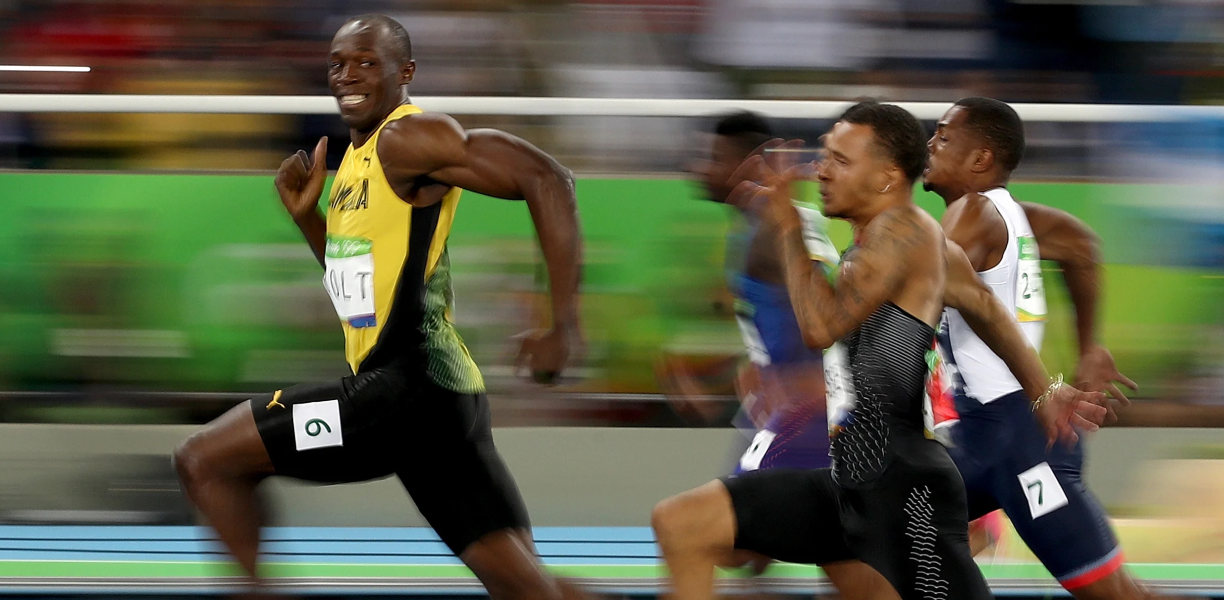
One of the greatest athletes of all time, Jamaican sprinter Usain Bolt has spoken about using imagery before races.
“I used to visualize every race before I ran,” he said.
“I would imagine the race and think about how I would run it.”
Usain Bolt
Another sporting great, boxer Muhammad Ali similarly used imagery before many of his bouts. “I used to visualize the mat and the opponents and the moves I wanted to use,” he said.
Sport Psychologists and Mental Performance Consultants often use the PETTLEP model of imagery put forth by Holmes and Collins (2001) when introducing athletes to imagery.
This acronym encompasses a comprehensive 7-point framework that serves as a guide to carry out imagery. Each letter of the PETTLEP model encapsulates a pivotal facet.
P: Physical
This is arguably one of the most important components of the PETTLEP model. To get the most out of the imagery experience, the imagery instructions should be loaded with the performer’s real time physiological responses. For example, wearing the same clothes as during a performance or holding any associated implements like a tennis racquet or a golf club.
E: Environment
This relates to the place where imagery is performed. The PETTLEP model suggests that this should be as similar to the performance environment. Imagery has been found to be most effective when the imagery script mirrors the actual performance environment. Many athletes find the use of video and audio to be useful in aiding mental simulation of the venue.
T: Task
The content of the imagery should be appropriate to the skill level and personal preferences of the athlete. This means that the content of the imagery should be specific to each performer.
T: Timing
This refers to the speed at which the imagery is completed. The model suggests that athletes perform the imagery in ‘real time’ as the performance.
L: Learning
This emphasizes that the content of the imagery should be adapted in response to learning. This means that when the content of the imagery should be adapted with learning. For example, changes in physical condition, skill level and physical fitness should be incorporated into the imagery content.
E: Emotion
Sport performance is an emotionally heavy experience and therefore, including realistic emotions in the imagery makes the imagery much more real which will lead to a more vivid imagery experience.
P: Perspective
This is dependent on the athletes’ individual preferences. Some athletes prefer a first-person experience (through the eyes of a performer) while the others prefer a third person experience (viewing oneself through video/film). The imagery experience should be catered to the athletes’ individual needs.
Leveraging the PETTLEP model for imagery empowers athletes to unlock their full potential. This approach has been proven to amplify performance efficacy, making it an integral tool in an athlete’s pre-performance routine.
Holmes, P. S., & Collins, D. J. (2001). The PETTLEP approach to motor imagery: A functional equivalence model for sport psychologists. Journal of Applied Sport Psychology, 13, 60–83.