Author: Ryan Miller

  • How the Chiefs can Mentally Prepare for their date with Destiny

    How the Chiefs can Mentally Prepare for their date with Destiny

    Authors – Vedika Jogani & Ryan Miller

    Vedika Jogani is OMP’s Product and Content Manager who has a Master’s degree in Sports and Exercise Science, specializing in Mental Performance.
    Ryan Miller is OMP’s Head of Content and an award-winning content creator.

    A Three-peat is a hard thing to achieve in any sport.

    Since the first Super Bowl in 1967, no team has won three championships in succession.

    The Kansas City Chiefs are hoping to become the first team to achieve this feat when they face the Philidelphia Eagles in Super Bowl LIX on Sunday night.

    Already a great team, the Chiefs, led by coach Andy Reid and star quarterback Patrick Mahomes, will reach untrodden ground if they can beat the Eagles.

    So how do the Chiefs deal with the pressure of trying to be the first to accomplish something that to this point has been impossible for even the greatest of dynasties like the Patriots of the 2000s and the Steelers of the 1970s?

    Confident but Not Overconfident

    One of the great sources of confidence that the Chiefs can draw upon is that they have won the past two Super Bowls and three of the past five.

    However, they cannot be too confident and fall into the trap of thinking that they can simply win because they’ve done it before.

    Confidence comes from preparation, execution, and trusting the process—not just past results.

    The Chiefs must stay focused on the finer details, from in-depth film study and refining routines to incorporating controlled breathing exercises.

    By maintaining a disciplined approach, they can ensure they treat this Super Bowl as its own distinct challenge rather than relying on past success.

    Comparison to Past Legends

    Mahomes already has three super bowl rings, a fourth at just 29 will continue to strengthen comparisons to Legendary Patriots QB Tom Brady.

    Meanwhile Reid could become just the third man to win four Super Bowls as Head Coach.

    How do these two men deal with these comparisons?

    The key to managing comparisons is learning to control external noise and focus on the things within your control.

    First, athletes can practice mindfulness, which helps them stay grounded in the present moment rather than becoming overwhelmed by comparisons to others.

    Second, cognitive reframing can be used to shift the mindset, viewing comparisons as motivating factors rather than distractions.

    Third, having mental reset routines in place—such as using focus cues and engaging in positive self-talk—enables athletes to quickly regain concentration and refocus when distractions arise.

    Pre-Performance Jitters

    The lead up to a Super Bowl is intense and players often carry themselves with bravado during press conferences and appearances.

    But while they may convey an air of confidence publicly, the day of the Super Bowl can bring about great anxiety and intense nerves for even the most experienced players.

    The pressure of the Super Bowl can trigger intense anxiety and nerves, even for the most seasoned players.

    Managing pre-game anxiety will be crucial to success. Techniques like controlled breathing, visualization, and well-structured warm-up routines can help players enter an optimal mental state ahead of kickoff.


  • OMP Partner With Team Blue Rising

    OMP Partner With Team Blue Rising

    Authors – Vedika Jogani

    Vedika Jogani is OMP’s Product and Content Manager who has a Master’s degree in Sports and Exercise Science, specializing in Mental Performance.

    Optimize Mind Performance is delighted to announce that we are now the official Mental Performance Partner of Team Blue Rising, a leading contender in the UIM E1 Series.

    Co-owned by cricket icon Virat Kohli and sports-tech entrepreneur Adi K Mishra, Team Blue Rising’s pilots Sara Misir and John Peeters will use OMP to ensure they are mentally ready for the challenges that electric raceboating brings.

    Team Blue Rising is the first motorsport team to partner with OMP, showing the versatility of the platform in being able to assist all high-performing athletes.

    The E1 Series debuted in 2024 with sportspeople and celebrities like Tom Brady, Will Smith, Rafa Nadal and Didier Drogba owning teams in the competition that focuses on sustainable racing.

    John Peeters, Pilot and Team Principal of Team Blue Rising said:

    “I know firsthand the mental demands of competing at the cutting edge of electric race boating.

    “It is not just about speed or strategy, it is about focus, resilience, and making split-second decisions under pressure.

    “Partnering with Optimize Mind Performance ensures that our team, from pilots to engineers, is equipped with the mental tools to excel. This partnership reflects our commitment to building a winning culture, on and off the water.”

    Optimize Mind Performance CEO Jack Preddey said:

    “We are thrilled to partner with Team Blue Rising, a team that stands on innovation and excellence in electric raceboating.

    “Competing in such a high-pressure and strategic environment demands unwavering mental preparedness.

    “We look forward to supporting both John and Sara, as well as the entire team, in their pursuit of success this season.”

  • Playing Higher Ranked Opponents

    Playing Higher Ranked Opponents

    Authors – Vedika Jogani

    Vedika Jogani is OMP’s Product and Content Manager who has a Master’s degree in Sports and Exercise Science, specializing in Mental Performance.

    The Australian Open is in full swing.

    For some players, the draw is particularly cruel, pitting them against top-ranked opponents in the very first round.

    The daunting challenge of facing a world number one as an unranked player is interesting: What goes through the mind of an underdog, and what does it take for a top-ranked player to maintain their dominance?

    The Underdog’s Perspective

    For an unranked player, stepping onto the court with a world number one can feel like entering a lion’s den.

    On paper, the underdog has nothing to lose, but the reality is more nuanced.

    Challenges for the Lower-Ranked Player:

    1. Freedom from Expectations: The lower-ranked player often comes into the match with little external pressure to win. This freedom can be liberating, allowing them to play with a “nothing to lose” mindset. However, this can also lead to a lack of structure or focus if not channeled effectively.
    2. Everyone is Watching: While the world’s expectations may rest on the ranked player’s shoulders, the unranked player must still grapple with being under an intense spotlight. Every shot is scrutinized and every reaction analyzed. Knowing millions are watching can either fuel confidence or magnify nerves.
    3. Mental Resilience: Playing against a higher-ranked opponent requires extraordinary mental resilience. The unranked player must focus on executing their game plan rather than being overwhelmed by the opponent’s reputation or the occasion itself.

    The Ranked Player

    Famous players often remark that reaching world number one is tough but staying there is even tougher.

    The top-ranked player is expected to dominate, and any deviation from perfection invites criticism.

    Challenges for the Higher-Ranked Player:

    1. Managing Expectations: The higher-ranked player faces immense pressure from every angle: their team, fans, sponsors, social media, and even their own high standards. They’re expected to perform flawlessly and justify their ranking.
    2. Playing Not to Lose: When you’re at the top, every opponent wants to take you down. Ranked players can fall into the trap of playing cautiously, trying to avoid mistakes rather than playing their natural, aggressive game that got them to the top.
    3. Staying Motivated: Maintaining focus and drive is a constant challenge for top-ranked players, especially when they’re facing opponents they’re expected to beat. They have to play their own game and not mirror that of the opponent.

    Mental Skills That Can Help:

    1. Stick to Your Routines: Routines provide stability amidst chaos. From pre-match rituals to in-game resets, sticking to tried-and-tested habits helps players stay grounded and focused, regardless of the opponent’s or their own ranking.
    2. Visualize Past Successes: Both ranked and unranked players can benefit from recalling moments when they performed at their best. Visualization not only boosts confidence but also reinforces the belief that success is achievable, even in high-pressure situations.
    3. Remember Your Why: In moments of doubt, reconnecting with your “why” – the reason you play the sport – can be a powerful motivator. For some, it might be the love of the game; for others, it’s the pursuit of excellence or representing their community. Keeping this purpose at the forefront can inspire resilience and determination.

    As players face higher-ranked opponents, the ability to perform under pressure and maintain focus often becomes the deciding factor between victory and defeat.

  • Nick Kyrgios’ Source of Confidence

    Nick Kyrgios’ Source of Confidence

    Authors – Ryan Miller & Vedika Jogani

    Ryan Miller is OMP’s Head of Content and is an award-winning content creator.

    Vedika Jogani is OMP’s Product and Content Manager who has a Master’s degree in Sports and Exercise Science, specializing in Mental Performance.

    “My confidence comes from my belief in my own ability.”

    This may sound like hubris, especially when it comes from the mouth of one of the most divisive tennis players in the world, but it does come from a deeply rooted sport psychology technique.

    Nick Kyrgios is on his way back from nearly two years out with injury and ahead of the Australian Open the former world number 17 fronted the media on Friday.

    Known as one of the most entertaining players in the world, Kyrgios was asked if his time out of the game has shaken his belief in his own ability to perform and if the game had passed him by.

    “I’ve beaten pretty much everyone that the sport has put in front of me before, I am always going to back my ability,” the 29-year-old replied matter-of-factly.

    “People always say ‘be realistic’, or ‘it’s not going to be the same’, I unfortunately don’t have that mindset.

    “I’m confident in my ability, if I’m playing my style of tennis and my unpredictability, I’ve got a chance against anyone.

    “I have to have that mindset otherwise I will get blown off the court.”

    This mindset is actually a perfectly reasonable one to hold and reveals where Kyrgios gets his confidence from.

    He is drawing on his past successes.

    As he also mentioned during his press conference, Kyrgios had to beat at least one of the Big Three (Roger Federer, Rafael Nadal and Novak Djokovic) during the early days of his career just to make a Grand Slam Final.

    Beating Federer, Nadal and Djokovic, all considered amongst the greatest tennis players of all time, was an achievement in itself and past victories like ones against the best in the are great sources of confidence.

    Athletes of any level can look back upon great performances as a way to remind themselves of their abilities.

    These victories can then provide a great basis for a visualization script, as athletes recall the sounds, smells, temperature, feel of the Raquet in hand and even what they could taste during that performance.

    Nick Kyrgios’ confidence draws heavily from his past successes, a technique that is commonly used in sports psychology.

    By revisiting key moments of achievement, athletes can strengthen their belief in their abilities, even after setbacks like injuries or time away from the sport.

    This process not only enhances confidence but also activates neural pathways associated with the positive emotions and sensations of those past performances.

    Research has shown that the same parts of the brain are activated when recalling these moments as when actually performing them, reinforcing the athlete’s connection to their skills and strengths.

    Visualization, a technique where athletes mentally rehearse past performances, helps to boost motivation, focus, and resilience.

    By integrating this mental practice into their routine, athletes like Kyrgios can maintain a mindset that pushes them to stay confident, no matter the challenges they face

    While time will tell if Kyrgios is truly back and at the level he once was, there is no doubt that he’ll have a deep well of inspiration and confidence to draw upon.

  • 5 Ways to Keep Your New Year’s Resolutions on Track

    5 Ways to Keep Your New Year’s Resolutions on Track

    Authors – Ryan Miller & Vedika Jogani

    Ryan Miller is OMP’s Head of Content and is an award-winning content creator.

    Vedika Jogani is OMP’s Product and Content Manager who has a Master’s degree in Sports and Exercise Science, specializing in Mental Performance.

    With the first week of 2025 already behind us, athletes and non-athletes alike are already struggling to keep their new year’s resolutions.

    New Year’s resolutions see those who practice this tradition try and maintain a good habit, change or improve upon a bad habit, like giving up drinking.

    Regardless of what the resolution is, a goal has been set.

    Unfortunately, new year’s resolutions are more often than not broken, so we’ve put together 5 ways to keep your New Year’s Resolutions on Track:

    1. Re-evaluate your Resolution

    Some resolutions are unachievable in their current form.

    Setting a goal is important but having something that is realistic and achievable is critical.

    If you are starting to fall behind with your resolution, then perhaps you have set a goal that is unrealistic.

    2. Stay Patient & Persistent

    Results don’t happen overnight, so stick with your resolution and be patient.

    One way to stay on track is by setting process goals, which focus on the daily actions you control, like exercising or eating better. These small steps help you monitor progress.

    Performance goals, on the other hand, are measurable outcomes, such as running a faster mile or lifting heavier weights, which allow you to track improvements and stay motivated.

    Both types of goals work together to build consistency and drive progress.

    3. Visualize Your Success

    Visualization is a powerful tool. Spend time each day picturing yourself achieving your resolution. Imagine how it feels, what you see, and the positive impact it has on your life.

    To get the best results, use the PETTLEP model of visualization (Physical, Environment, Task, Timing, Learning, Emotion, Perspective) and ensure all your senses are activated.

    For example, imagine the sights, sounds, smells, and even physical sensations associated with your success.

    This mental rehearsal can boost your motivation and confidence, helping you stay committed to your goals.

    4. Control the Controllables and Surround Yourself with Support

    Focus on what you can control: your attitude, effort, and daily actions.

    Let go of worrying about things outside your influence.

    Surround yourself with people who encourage and inspire you—whether friends, teammates, or communities with similar goals.

    A supportive environment can make all the difference in staying on track.

    5. Be Flexible and Practice Self-Kindness

    Resolutions come with setbacks, and that’s okay.

    Instead of being hard on yourself, use them as opportunities to learn and adjust.

    Progress isn’t linear, so be kind to yourself to stay motivated.

    Make the process enjoyable by finding ways to infuse fun.

    Flexibility is key; if things don’t go as planned, adapt your approach rather than giving up on your goal.


    Staying committed to your New Year’s resolutions takes patience and flexibility.

    Set realistic goals, focus on controllable actions, and use setbacks as chances to adjust.

    With the right mindset, 2025 can be the year you achieve all your goals!

  • Great Expectations: Strategies to Overcome External Pressures

    Great Expectations: Strategies to Overcome External Pressures

    Authors – Ryan Miller & Vedika Jogani

    Ryan Miller is OMP’s Head of Content and is an award-winning content creator.

    Vedika Jogani is OMP’s Product and Content Manager who has a Master’s degree in Sports and Exercise Science, specializing in Mental Performance.

    Imagine being compared to one of the greatest athletes the world has ever seen.

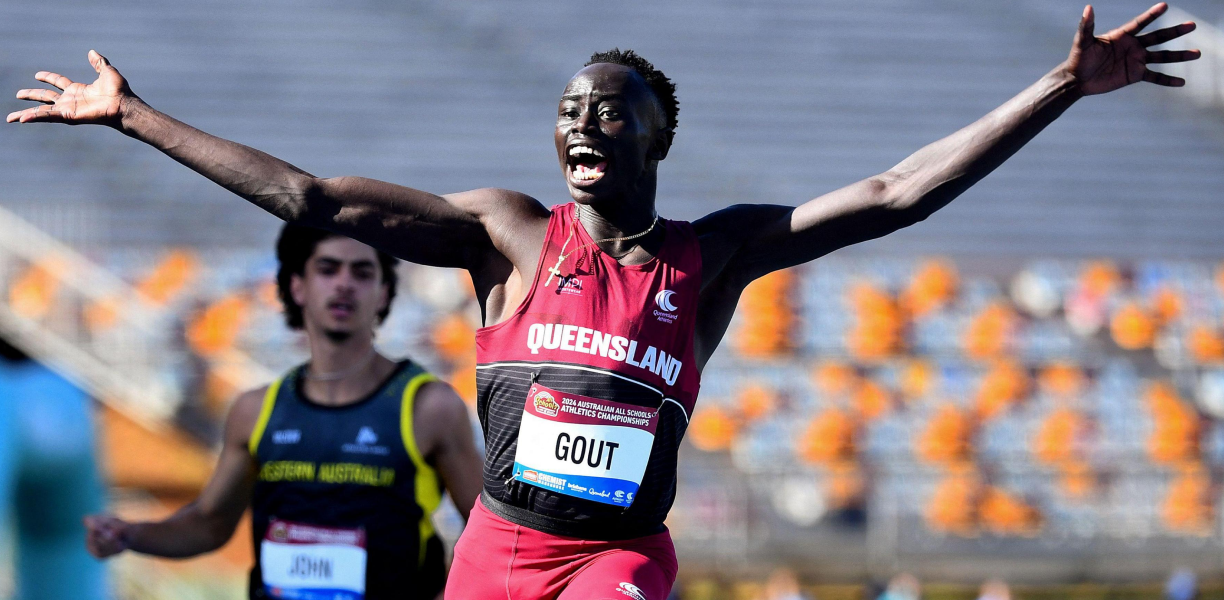
    For 16-year-old Australian sprinter Gout Gout, he is already drawing comparisons to Usain Bolt.

    The Queensland running phenom is creating global news headlines, having videos of his exploits on the track go viral and is netting deals with global brands.

    In early December Gout ran 10.04 in the 100m and then broke the national 200m record – held by Olympic Silver Medalist Peter Norman since 1968 – with a run 20.04.

    It was the second fastest Under 18 time ever recorded and Gout became just the second person to surpass Bolt’s own personal best in that age bracket.

    Bolt – who won three consecutive Olympic Golds in the 100 and 200 meters – even commented “He looks like young me,” on an Instagram video of Gout’s running.

    With Gout to be 20 at the next Olympics and then just 24 when his hometown Brisbane is set to host the 2032 games, there are great expectations that he will not medal at the games but bring home a rare track Gold for Australia.

    Expectations like these bring great pressure.

    Sport is, unfortunately, littered with stories of wonderkids who squander their athletic talents or failed to live up to the expectations placed upon them.

    So how can Gout Gout – and athletes just like him – block out and overcome these potentially derailing distractions and meet these great expectations?

    5 Strategies to Meet and Exceed Great Expectations

    Building a Strong Identity

    Gout himself offers a great example of how to build a healthy sense of self through his words: “I’m just me trying to be me, trying to be Gout Gout.”

    By reinforcing this identity through positive self-talk, he can continue to separate himself from comparisons and maintain confidence in his individuality.

    Control the Controllables

    Comparisons to legendary athletes like Usain Bolt can create pressure because they’re external and out of the athlete’s control.

    Gout must focus instead on things he can directly influence—like his training, recovery routines, nutrition, and race execution.

    By shifting attention to these “controllables,” athletes maintain clarity and reduce the weight of external expectations.

    Reframe Expectations

    High expectations can feel like a burden, but reframing them as an opportunity to showcase progress can help.

    Instead of thinking, ‘I have to live up to Usain Bolt’s legacy‘, Gout could think, ‘I get to carve my own path and show what Gout Gout can achieve‘.

    This shift helps turn pressure into purpose, excitement and motivation.

    Develop Pre-Performance Routines

    Establishing consistent mental and physical routines before races can help block out distractions.

    These routines serve as an anchor, allowing athletes to enter a state of focus and confidence, even in high-stakes moments.

    Breathwork, visualization, or listening to a specific playlist can all help Gout tune into the present and quiet the noise around him.

    Limit and Filter Social Media and Media Consumption

    With the buzz around his performances, Gout may feel overwhelmed by constant media attention and viral videos.

    By limiting his time spent on social media or filtering what he engages with, he can shield himself from unnecessary distractions. Staying grounded and focused on his goals will be key.

  • Rain, Rain Go Away: Beating the Frustrations of Rain Delays

    Rain, Rain Go Away: Beating the Frustrations of Rain Delays

    Authors – Ryan Miller & Vedika Jogani

    Ryan Miller is OMP’s Head of Content and is an award-winning content creator.

    Vedika Jogani is OMP’s Product and Content Manager who has a Master’s degree in Sports and Exercise Science, specializing in Mental Performance.

    The third test between cricket giants Australia and India has been one of frustration for players and fans alike.

    Rain in Brisbane has meant that the ground staff have seen more time in the middle of the Gabba than veteran Indian batter Virat Kohli.

    Almost the entirety of day one was washed out, whilst days two, three and now four have had numerous delays, forcing players off the field.

    Mitch Starc was a picture of frustration as rain fell yet again on the fourth day and players were instructed to leave the field in the middle of an over for the fourth time.

    Rain delays are not unique to cricket with baseball also enforcing rain delays so that grounds crew can cover the infield.

    So how do cricket and baseball players alike stay motivated, focused and positive during the frustrating breaks in performance?

    Keeping Routines Flexible

    While routines help build consistency, delays and breaks require adaptability.

    Flexible routines allow athletes to adjust their focus without feeling thrown off and create space to handle unexpected circumstances effectively.

    Remember to account for these uncontrollable when creating your personal routine.

    Control the Controllables

    Focusing on what you can control like staying hydrated, stretching, or going over game strategies allows athletes to stay productive and grounded.

    By concentrating on controllable actions, athletes can maintain focus on the game and avoid getting distracted or frustrated by unforeseen circumstances such as weather delays.

    Visualization and Breathing Exercises

    Using imagery, visualization and breathing exercises helps athletes to stay calm, grounded and focused during delays.

    Athletes can visualize themselves succeeding in key situations like bowling the perfect delivery or executing a clutch play and can use breathing exercises to stay composed, grounded and mentally ready for when it’s time to get on the field.

    Engaging in Positive Self-Talk:

    During frustrating breaks, it is easy for athletes to slip into negative thinking.

    Using positive self-talk, affirmations and mantras can remind them of their preparation.

    Positive self-talk can help reframe the situation, turning frustration into an opportunity of growth.

  • Psychological Well-being for Coaches

    Psychological Well-being for Coaches

    Author – Vedika Jogani

    Vedika Jogani is OMP’s Product and Content Manager who has a Master’s degree in Sports and Exercise Science, specializing in Mental Performance.

    When we discuss psychological health in sports, we often focus on athletes’ well-being.

    However, we sometimes overlook the well-being of coaches — key figures who play an integral role in athletes’ lives and team success.

    Coaches dedicate immense time and personal sacrifice to their teams, juggling travel, administrative duties, and emotional support.

    Yet, their contributions often go unappreciated. When a team excels, coaches may receive little credit, but when a team struggles, they frequently become the focus of criticism.

    This imbalance highlights the importance of supporting coaches in managing their stress and well-being, not only for their own health but also for their ability to positively influence athletes and teams.

    Insights from a Study on Coaches’ Stress and Coping

    A recent qualitative study followed coaches over 28 days to explore their stressors, primary appraisals, coping strategies, and overall well-being.

    The findings revealed that coaches experience stressors almost daily.

    These challenges often stem from:

    • Preparing for major events.
    • Administrative responsibilities.
    • Balancing work and personal life.
    • Competitive pressures.

    Coaches’ appraisals of these situations varied—sometimes viewing them as challenges to overcome, while at other times requiring specific coping strategies.

    These strategies included:

    • Accommodation (adjusting to the situation).
    • Escape (mentally or physically stepping away).
    • Information seeking (gathering insights to address issues).
    • Isolation (taking time alone to process).
    • Negotiation (finding compromises).
    • Problem-solving.
    • Seeking support from others.

    The Power of Reflection

    One key takeaway from the study was the transformative role of reflection.

    Regular reflection enhanced self-awareness among coaches, helping them better understand their stressors, appraisals, and coping mechanisms.

    This self-awareness is a crucial step toward personal growth and resilience.

    Practical Implications for Coaches and Teams

    The study underscores the importance of fostering collaboration and raising self-awareness among coaches.

    By prioritizing their well-being, coaches can not only better manage their own stress but also create a more positive and supportive environment for athletes and teams.

    A well-supported coach is better equipped to guide their team to success—both on and off the field.

    Investing in coaches’ mental health is not just about their personal growth; it has ripple effects that can elevate the entire team. Let’s not forget that a thriving coach contributes to thriving athletes.

  • Playing to Your (Super) Strength

    Playing to Your (Super) Strength

    The phrase, “play to your strengths,” is common in sports and life, but what does it actually mean for athletes?

    More importantly, how does focusing on one’s strengths impact athletic performance and psychological well-being?

    Research in recent years has shown that a strengths-based approach not only enhances desirable traits, such as positive emotions, resilience, and engagement, but also can serve as a powerful tool for improving overall performance in competitive settings.

    In a recent qualitative study, researchers explored how a “super strengths” approach—where athletes identify, develop, and focus on their unique strengths—can affect both their psychological characteristics and their performance outcomes.

    Through semi-structured interviews, athletes shared their experiences, and the findings revealed fascinating insights into how embracing strengths fundamentally shifts an athlete’s mindset and approach to competition.

    1. Increase in Confidence and Motivation:

    Athletes reported a notable increase in confidence and motivation, feeling more capable and ready to tackle challenges.

    Knowing they were excelling in specific areas fueled their drive and desire to achieve, bringing a renewed sense of purpose and determination.

    By focusing on the positive elements of their skills, they felt an edge over competitors, gaining a unique advantage that extended beyond physical ability to a sharper, more resilient mental state.

    2. Mindset Shift, Team Confidence and Goal Direction:

    Interestingly, the study also highlighted improvements not only in individual confidence but in team morale as well.

    Athletes described how this strengths-based mindset shifted the team dynamic, fostering a collective confidence that lifted the entire group.

    Identifying and leveraging strengths encouraged athletes to think differently, promoting a mindset of growth and progress.

    This newfound clarity helped them zero in on purposeful training, refine competition strategies, and set more focused goals, enhancing both individual and team performance.

    3. Coping with Pressure and Setbacks:

    Furthermore, this approach proved to be a powerful buffer against stress. Athletes reported feeling more equipped to handle pressure and setbacks, with a stronger sense of control over their responses and actions.

    With enhanced resilience, they faced challenges with a balanced mindset, viewing them not as obstacles but as opportunities to further reinforce their strengths.

    In high-stakes situations, they were able to stay calm, maintain focus, and respond with clarity, finding that a strengths-based approach gave them tools to manage competition stress more effectively.


    In summary, a strengths-based approach empowers athletes by enhancing confidence, resilience, and team morale, leading to improved performance and a growth-oriented mindset.

    This focus not only helps them excel individually but also fosters a supportive, cohesive team dynamic, enabling athletes to better handle pressure and setbacks in competition.

  • Watch How You Set the Tone

    Watch How You Set the Tone

    Author – Vedika Jogani & Ryan Miller

    Vedika Jogani is OMP’s Product and Content Manager who has a Master’s degree in Sports and Exercise Science, specializing in Mental Performance.

    Ryan Miller is OMP’s Head of Content

    Hugo Lloris, France’s World Cup Winning captain and long serving Tottenham Hotspur shot stopper, has released his autobiography Earning My Spurs.

    In an exclusive excerpt published in The Guardian the goalkeeping great has revealed his frustrations at the mindset of some of Tottenham’s hierarchy in the lead up to the 2019 Champions League Final.

    Four days before the biggest match in the club’s history Spurs Chairman Daniel Levy gifted the playing group luxury watches with “Champions League Finalist 2019” engraved across its back.

    After Spurs lost to Liverpool 2-0, Lloris questioned if the club “really want to win”.

    “As magnificent as the watch is, I have never worn it,” Lloris wrote.

    “I would have preferred there to be nothing on it. With an engraving like that, Levy couldn’t have been surprised if we had been 1–0 down after a couple of minutes: so it was written.”

    There are many factors that influence an athlete’s mindset and performance, ranging from family and coaches to management.

    Can something as simple as an inscription on a watch really set a tone that could be perceived as negative or discouraging before a high-stakes match?

    Let’s break this down from a sports psychology point of view:

    1. External Distractions and Lack of Psychological Support:

    The engraving of “Finalist” on the watches is a crucial moment to analyze in terms of psychological preparedness.

    In sports psychology, it’s vital that athletes focus on the effort, growth, and journey, not just the final outcome.

    The gesture could have been demotivating for the players (Lloris said it didn’t just affect him “I still haven’t got over it, and I’m not alone”) subtly implying that the final result was already predetermined, reinforcing the idea that the team was destined to lose.

    Rather than emphasizing the importance of striving for victory, the engraving prematurely defined their success by focusing on a “finalist” status instead of a “winner” mentality.

    This can contribute to a sense of defeatism, undermining motivation and fostering a mindset that accepts failure as a likely outcome.

    2. Post-Loss Emotional Disconnect:

    The aftermath of the final revealed a troubling emotional disconnection within the club.

    Lloris described feelings of isolation and frustration as the team did not experience the necessary emotional support following the loss: “At the post-match reception at the hotel, I had the impression that some people from the club and certain players were not sufficiently despondent at having lost.”

    In sports psychology, emotional resilience is key to bouncing back after a tough setback, but in this case, there appears to be a lack of collective bonding and a shared commitment to recover and move forward.

    Without the proper psychological recovery mechanisms in place, it became harder for the team to regain their focus and determination to pursue future success, which ultimately hindered their ability to grow from the experience.


    Lloris’ revelations are a lesson that staff across organizations can impact the psyche of players and that while their intentions may have been good, they have can have negative effects on the playing group.

    To cultivate a positive mindset before games, athletes can focus on these strategies:

    • Visualization of Success: Athletes should spend time mentally rehearsing positive scenarios, imagining themselves performing well and executing key skills under pressure. This mental practice builds confidence and primes the brain for success.
    • Positive Self-Talk: Replacing negative or self-doubting thoughts with affirmations and constructive statements can boost confidence and foster a mindset focused on capability and resilience, reducing anxiety and enhancing performance.
    • Focus on the Process, Not the Outcome: Shifting attention from the results (winning or losing) to the execution of skills, effort, and present-moment focus helps alleviate pressure and keeps athletes grounded in what they can control, improving their ability to perform under stress. After the game, it’s important for athletes to take time for self-reflection, celebrate achievements, and process emotions. They can do this through:
    • Allow Emotional Processing: Give yourself permission to feel whatever emotions arise after the game—whether disappointment or frustration. Acknowledge and accept these feelings, but don’t dwell on them. This helps release negative emotions and clears the way for reflection.
    • Celebrate Successes: Reflect on what went well, whether it was a key play or staying focused under pressure. Celebrating successes, no matter how small, helps maintain motivation and reinforces positive behavior.
    • Reflect, Learn, and Seek Feedback: Analyze what worked and what didn’t, focusing on areas for improvement. Get constructive feedback from teammates and coaches, using it to identify specific actions for growth. This turns mistakes into learning opportunities and helps you prepare more effectively for future performance.

    By better understanding the impact of such psychological elements, athletes and teams, and staff from the wider organization can learn to navigate their mental game more effectively, ensuring that external influences don’t undermine their potential for success.